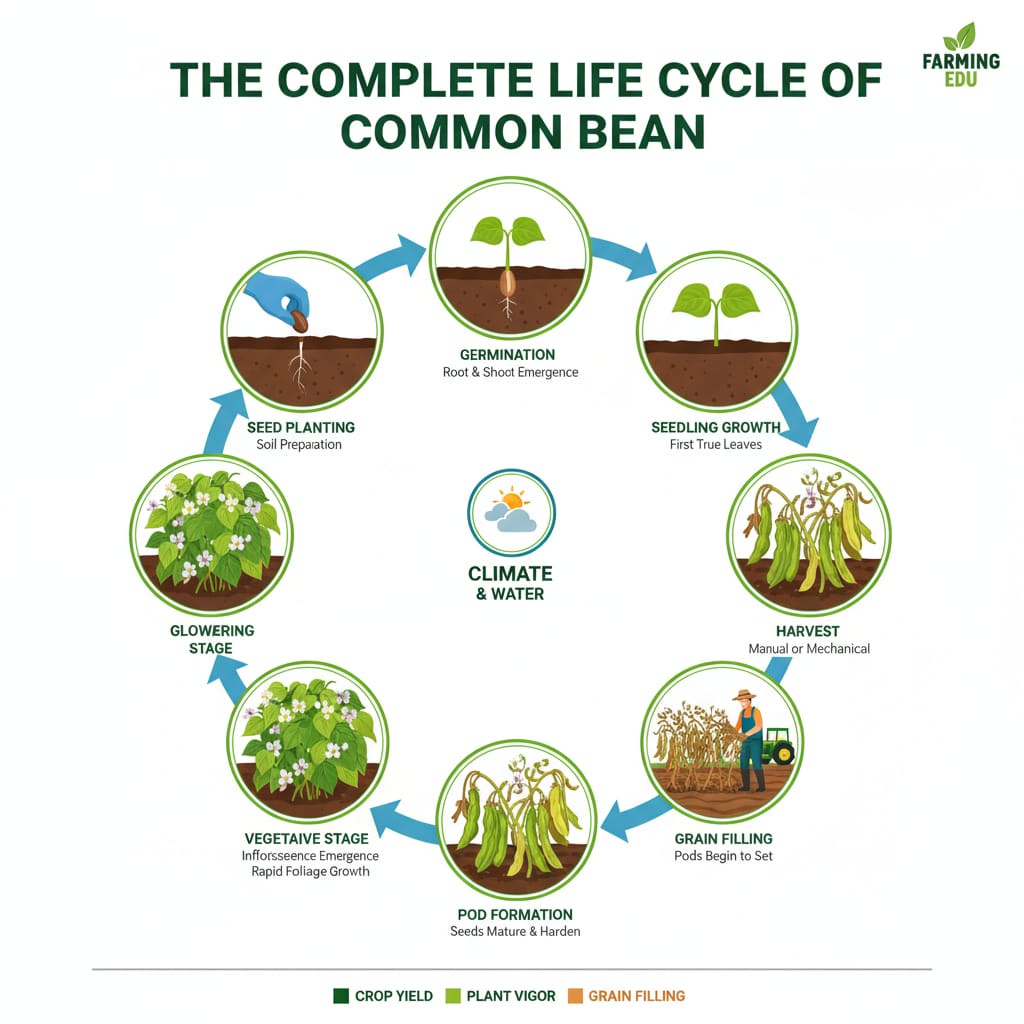
1. Site Selection and Climate
Beans prefer well-drained loamy soils with a pH of 6–7. They require moderate temperatures between 18–30°C and full sunlight for healthy growth and pod formation.
Beans are sensitive to waterlogging, so fields with proper drainage are essential. Sandy loams and loam-clay mixes allow better root penetration and aeration.
Moderate rainfall of 500–800 mm annually is suitable, with supplemental irrigation during dry spells to maintain uniform soil moisture.
Choosing a proper site ensures high germination rates, uniform growth, and optimal pod yield.
2. Land Preparation
Clear previous crop residues and weeds. Beans are sensitive to competition from weeds during early stages.
Plow or till the soil lightly to loosen the topsoil and improve aeration for seedling establishment.
Harrow the field to create a fine, level seedbed for uniform planting depth and spacing.
Incorporate organic manure or compost to improve soil fertility and structure, ensuring nutrient availability throughout the crop cycle.
3. Seed Selection and Sowing
Select high-quality, disease-free seeds with good germination rates. Choose varieties suitable for your climate and desired harvest type (green pods or dry beans).
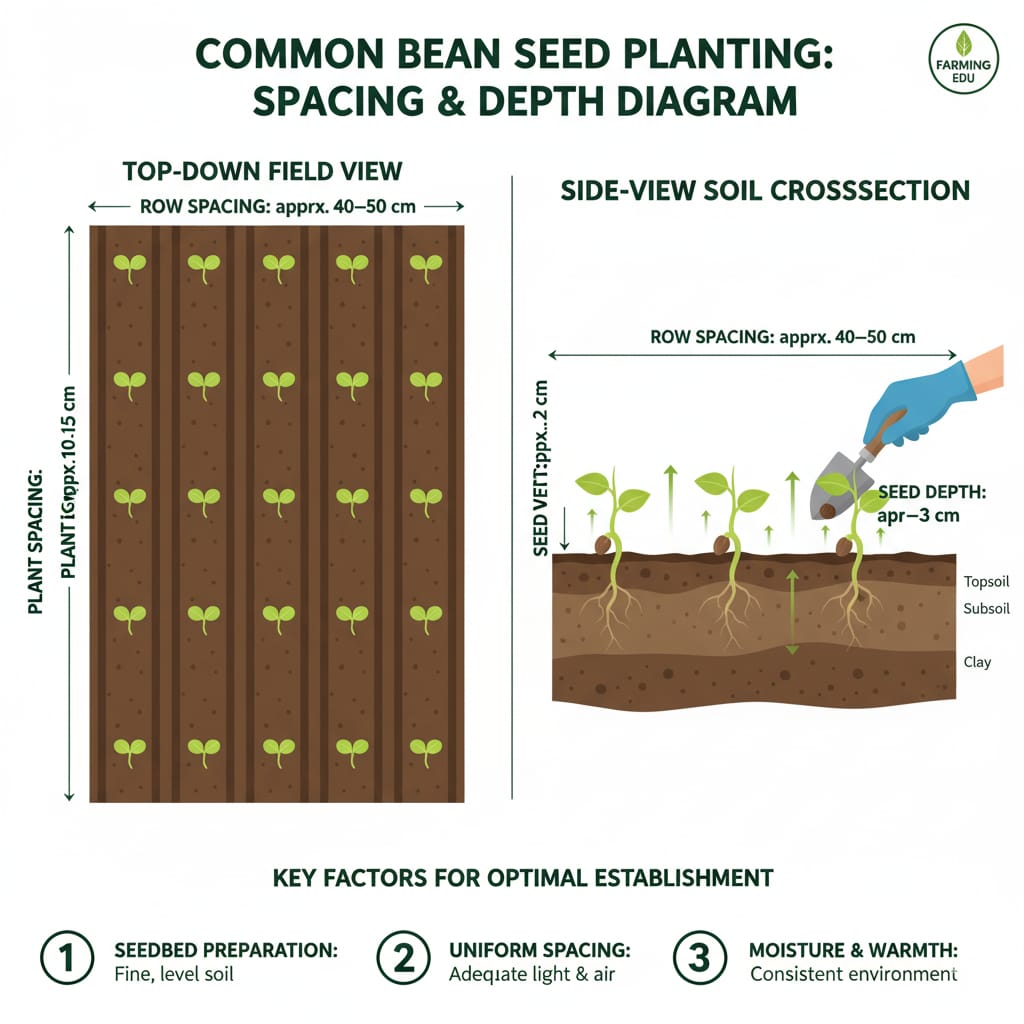
Sow seeds 2–3 cm deep in rows 45–60 cm apart with intra-row spacing of 10–15 cm, depending on variety.
Sowing can be done manually or using a seed drill. Plant after the last frost when soil temperatures are warm.
Uniform spacing ensures good aeration, reduces disease incidence, and facilitates mechanized harvesting if applicable.
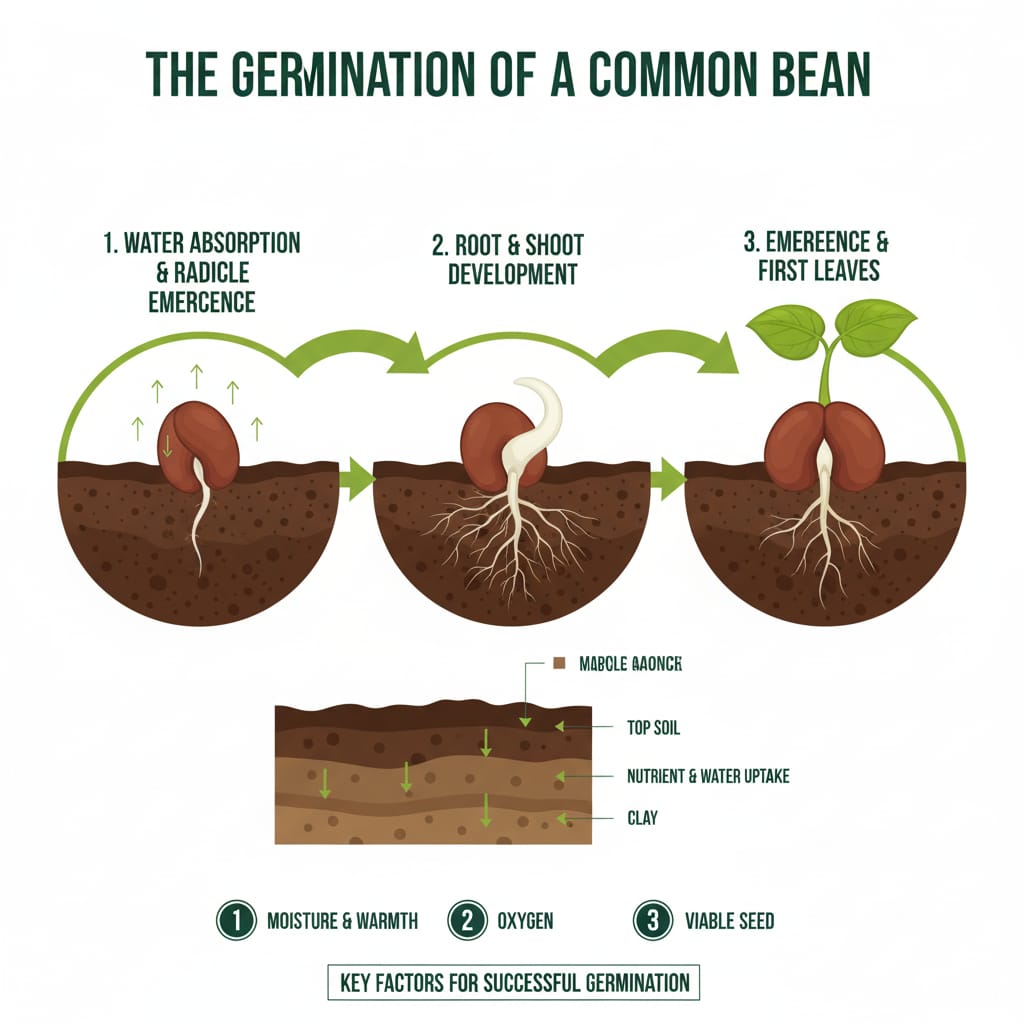
4. Water Management
Beans require consistent moisture during germination and flowering but avoid overwatering to prevent root rot.
Irrigation may be necessary during dry periods, particularly during pod filling to maximize yield.
Beans are relatively drought-tolerant once established but perform best under uniform soil moisture.
Mulching can help conserve soil moisture and reduce weed growth.
5. Fertilization and Nutrient Management
Beans can fix nitrogen naturally, but supplemental fertilization of phosphorus and potassium enhances root growth and pod formation.
Apply well-rotted compost or manure before planting to improve organic matter content.
Micronutrients like zinc and boron may be applied if soil tests indicate deficiencies.
Balanced nutrient management ensures high yields, disease resistance, and improved seed quality.
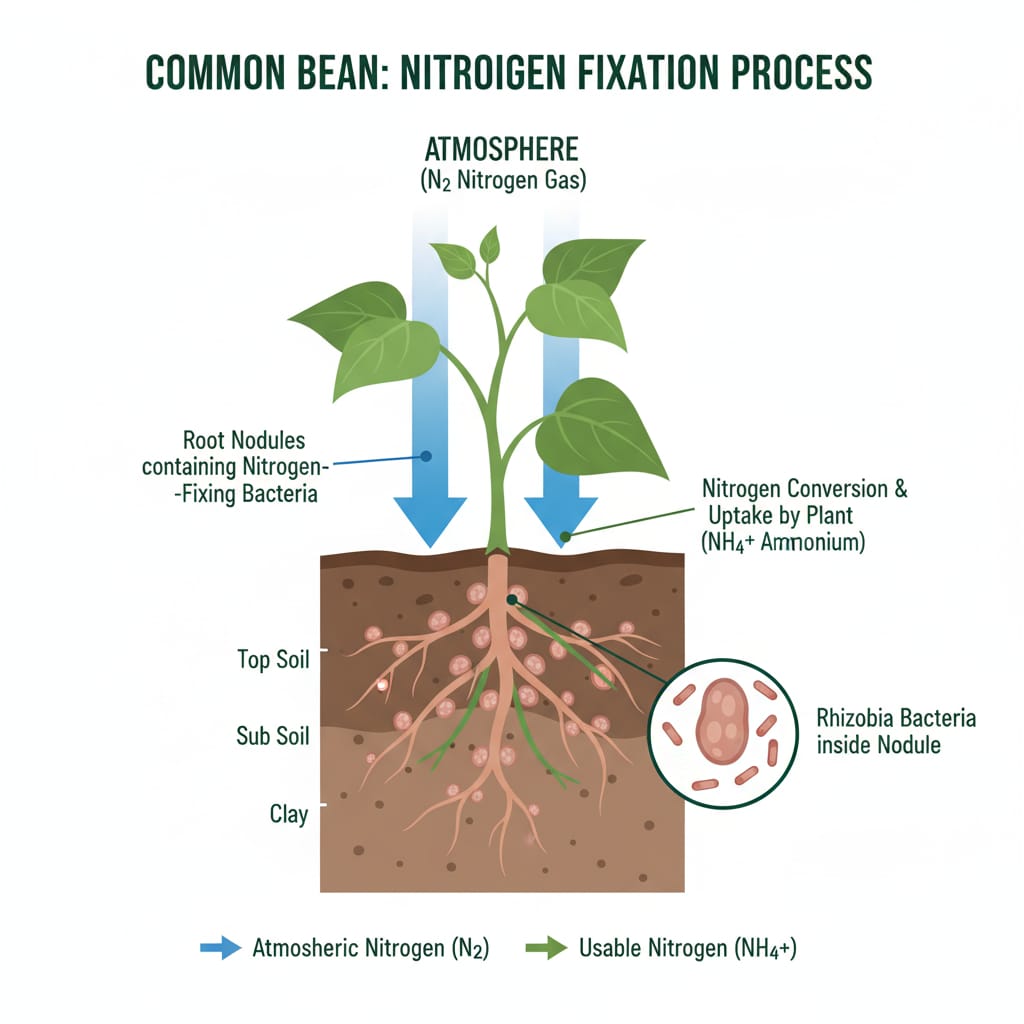
6. Weed, Pest, and Disease Management
Manual weeding or light cultivation reduces early competition. Mulching also suppresses weeds.
Common pests include aphids, bean beetles, and caterpillars. Monitor regularly and employ integrated pest management.
Diseases such as leaf spots, rust, and root rot can occur, especially in poorly drained fields.
Crop rotation and use of resistant varieties reduce disease incidence and improve soil health.
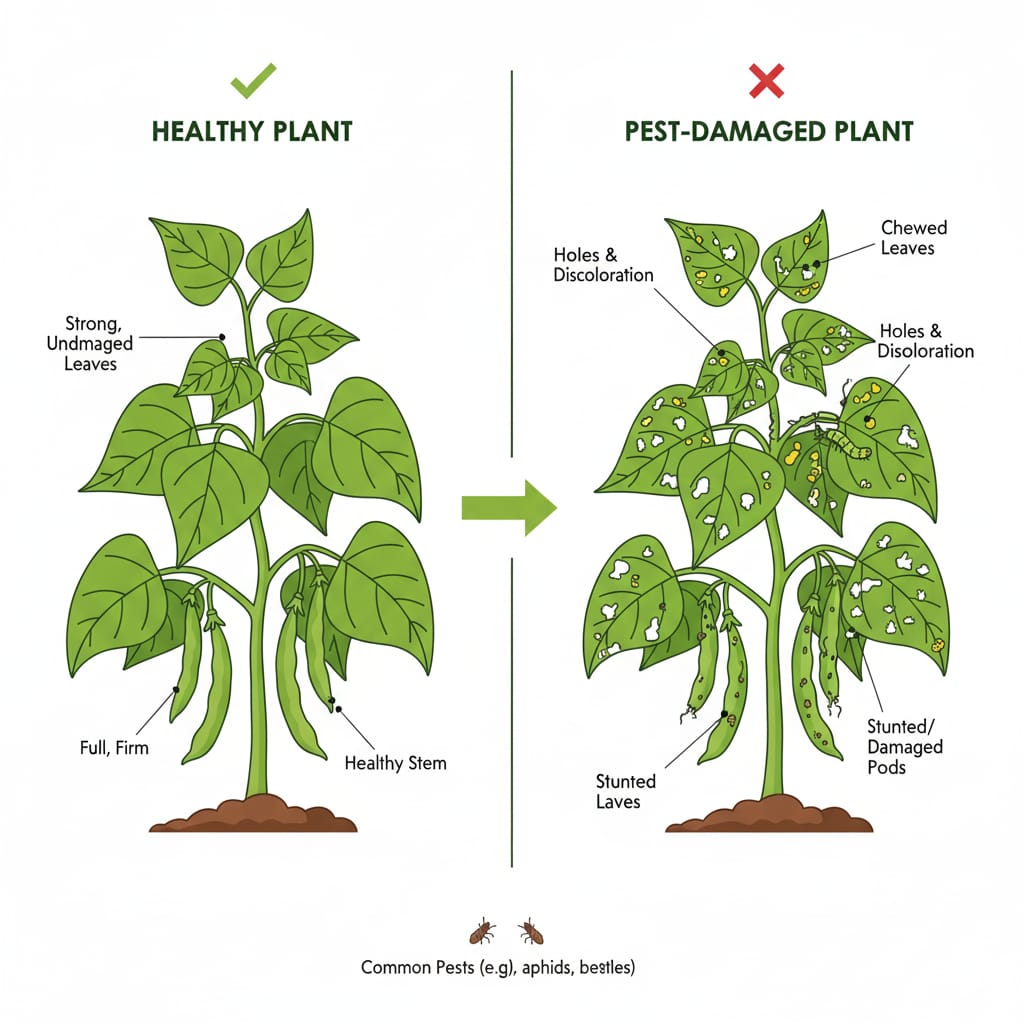
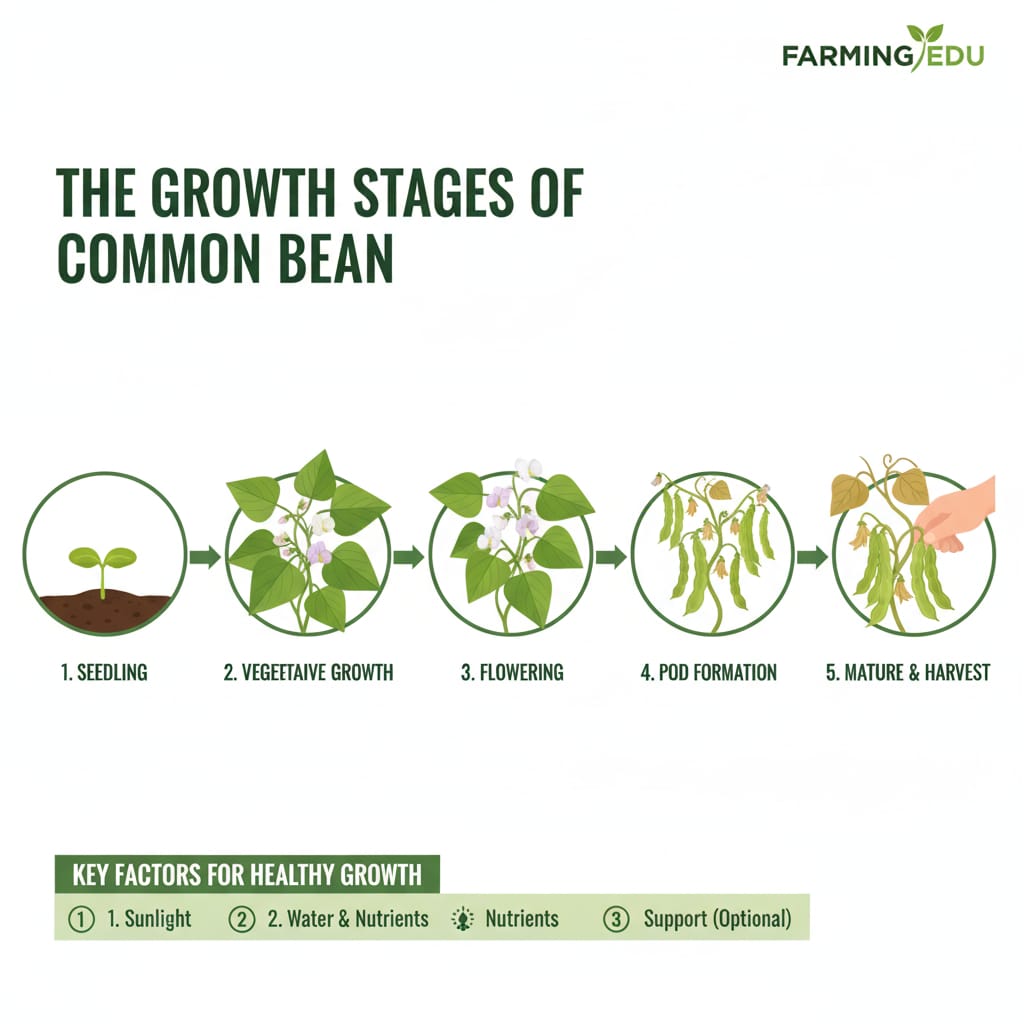
7. Growth Stages and Maturity
- Germination: 5–10 days
- Vegetative stage: 3–4 weeks
- Flowering: 4–6 weeks
- Pod formation: 6–8 weeks
- Pod filling: 2–3 weeks
- Physiological maturity: 8–12 weeks depending on variety
Total crop cycle varies from 60–90 days for short-duration varieties and up to 120 days for long-duration varieties.
8. Harvesting
Harvest green beans when pods are tender and seeds are immature. For dry beans, harvest when pods have dried and seeds are firm.
Manual harvesting is common for small farms; mechanized harvesters can be used for large-scale production.
Timely harvest prevents shattering and preserves seed quality.
After harvesting, beans are threshed and winnowed to remove pods and impurities.
9. Post-Harvest Processing and Storage
Dry beans should be reduced to 12–14% moisture for safe storage. Leafy beans can be packed fresh or dried for preservation.
Store beans in airtight containers, cool, dry locations to prevent pest infestation and mold growth.
Regularly check stored beans for moisture and pests to maintain quality.
Proper post-harvest handling ensures long shelf-life and market-ready produce.
10. Uses of Beans
- Human consumption: cooked as a protein-rich food, soups, stews, and snacks.
- Animal feed: leaves and pods can be fed to livestock.
- Soil improvement: legumes enrich soil nitrogen, supporting subsequent crops.
- Economic value: high demand in local and export markets.
Frequently Asked Questions (FAQ)
What soil type is best for beans?
Well-drained loamy soils with a pH of 6–7 are ideal.
When should beans be sown?
After the last frost when the soil is warm; beans require full sunlight for growth.
How long does it take beans to mature?
60–90 days for short-duration varieties, 100–120 days for long-duration varieties.
What are the main uses of beans?
Human consumption, animal feed, soil nitrogen enrichment, and market income.
Explore More on FarmBook
Try FarmBook tools to plan your planting, track growth stages, and estimate yields.
Join the FarmBook community to share experiences and get expert farming tips.