1. Site Selection and Climate
Chickpeas grow best in semi-arid and arid regions with moderate rainfall of 400–600 mm annually.
They prefer well-drained loamy soils with a pH of 6–7. Heavy clay or waterlogged soils increase the risk of root rot.
Chickpeas thrive in temperatures between 10–30°C. They are sensitive to frost, especially during flowering and pod formation.
Choosing the right site ensures higher germination, healthy vegetative growth, and optimum pod yields.
2. Land Preparation
Remove previous crop residues, weeds, and stones from the field.
Plow or till the soil to a depth of 15–20 cm to loosen it and improve aeration.
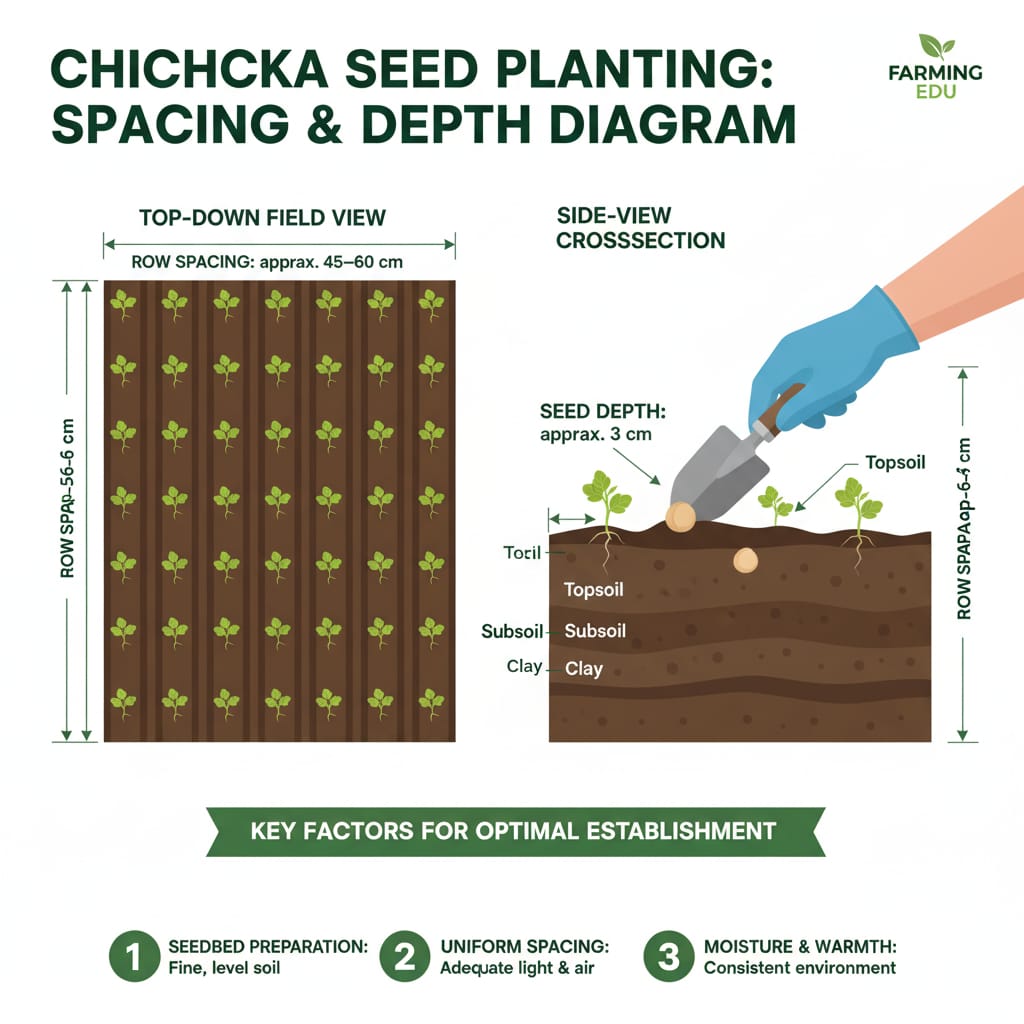
Harrow to level the soil and create a fine seedbed for uniform sowing depth.
Incorporate well-decomposed compost or farmyard manure to enhance soil fertility and microbial activity.
3. Seed Selection and Sowing
Use certified, disease-free seeds with high germination rates. Select varieties adapted to your climate and desired harvest time.
Sow seeds 3–5 cm deep in rows spaced 30–45 cm apart, with intra-row spacing of 10 cm.
Planting should be done at the onset of the rainy season or when irrigation is available to ensure adequate moisture.
Proper spacing promotes airflow, reduces disease, and allows uniform pod development.

4. Water Management
Chickpeas are drought-tolerant but require moisture during germination, flowering, and pod formation.
Avoid waterlogging, which can lead to root diseases. Supplemental irrigation may be applied during dry spells.
Mulching helps conserve soil moisture and protects seedlings from temperature fluctuations.
Maintaining proper soil moisture at critical stages ensures better flowering, pod set, and yields.
5. Fertilization and Nutrient Management
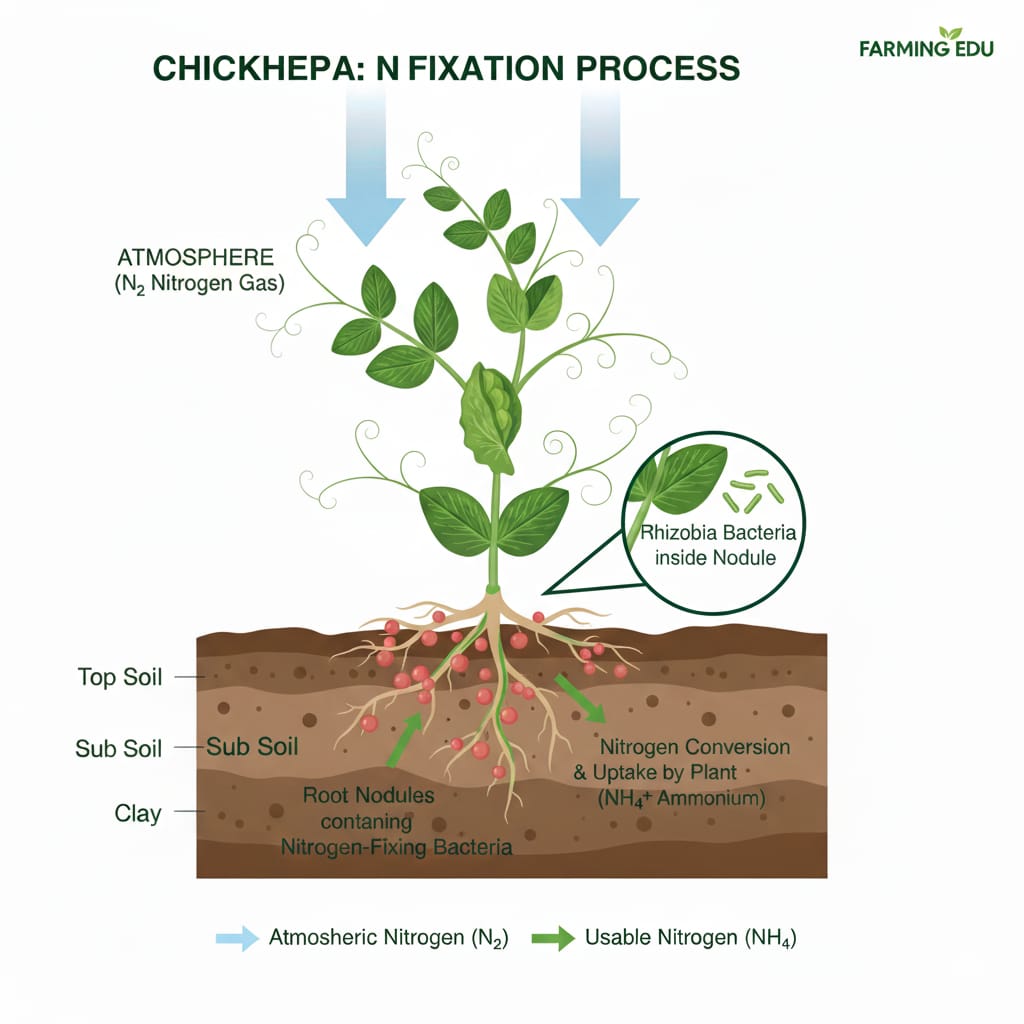
Chickpeas can fix atmospheric nitrogen, reducing the need for nitrogen fertilizers.
Phosphorus is critical for root development and early growth, while potassium aids in pod filling.
Apply compost or organic manure before planting to improve soil fertility and structure.
Micronutrients such as zinc and boron may be added if deficiencies are detected to maximize yield.
6. Weed, Pest, and Disease Management
Manual weeding or light cultivation reduces early-stage competition from weeds.
Common pests include aphids, pod borers, and cutworms. Use integrated pest management for control.
Diseases like fusarium wilt, root rot, and Ascochyta blight can affect chickpeas. Resistant varieties and crop rotation help mitigate these risks.
Healthy plants minimize pest pressure and improve yield and seed quality.
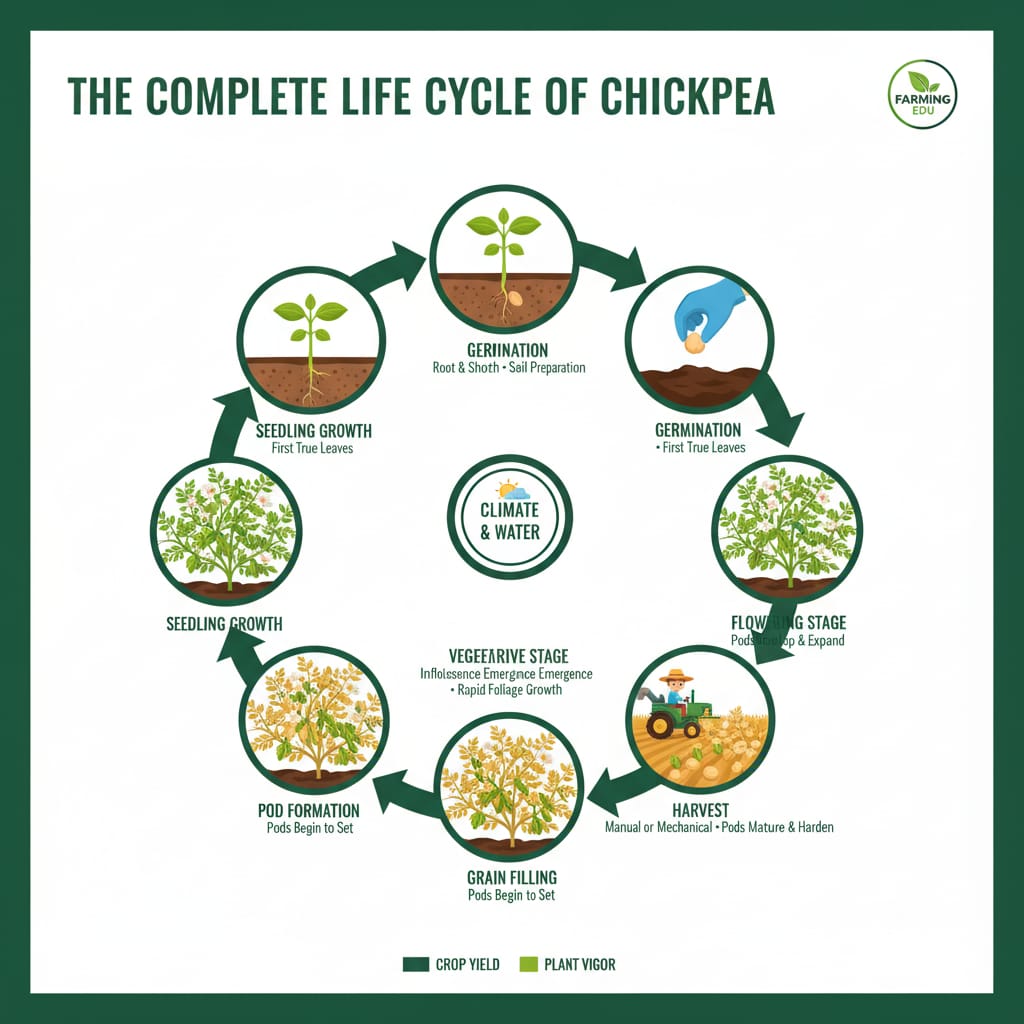
7. Growth Stages and Maturity
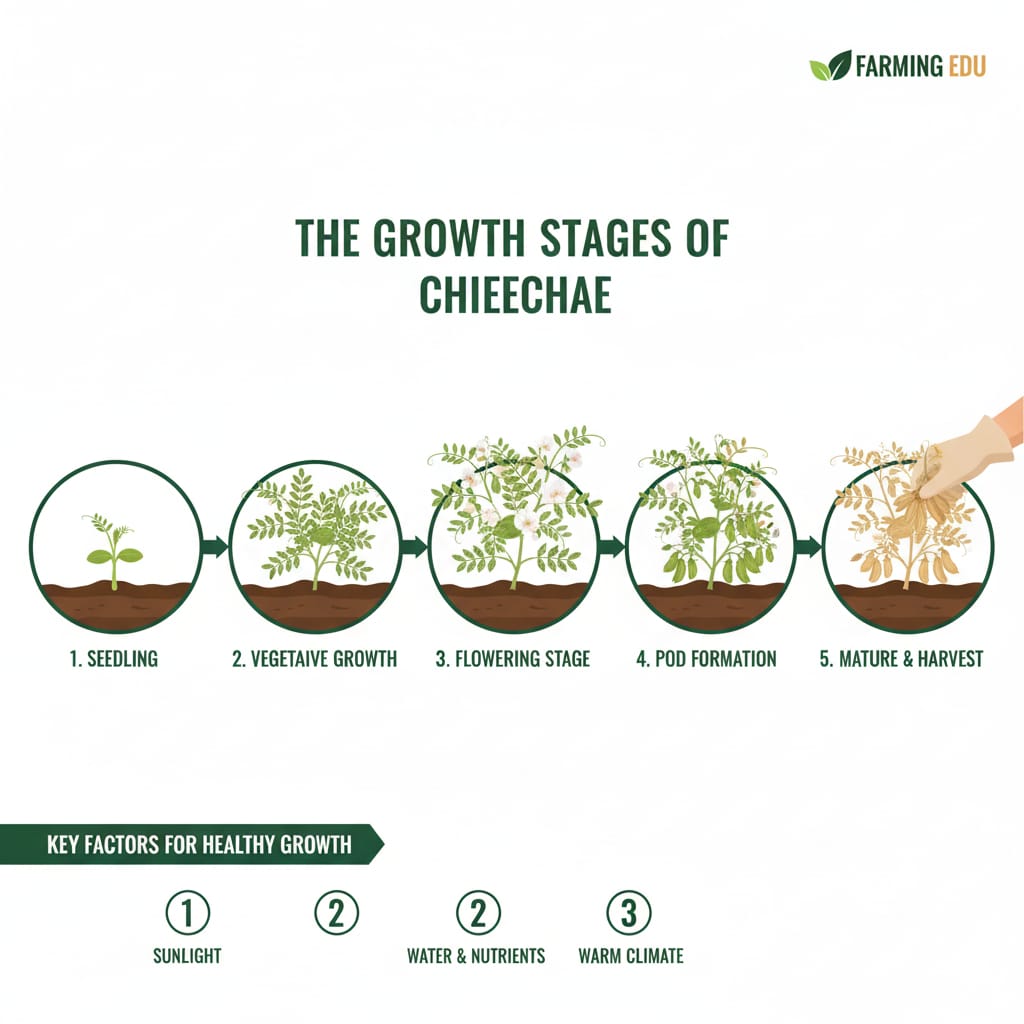
- Germination: 7–10 days
- Seedling stage: 2–3 weeks
- Vegetative growth: 3–5 weeks
- Flowering: 4–6 weeks
- Pod formation: 5–7 weeks
- Pod filling: 2–3 weeks
- Maturity: 90–120 days depending on variety
The crop cycle varies with variety, soil fertility, and climatic conditions.
8. Harvesting
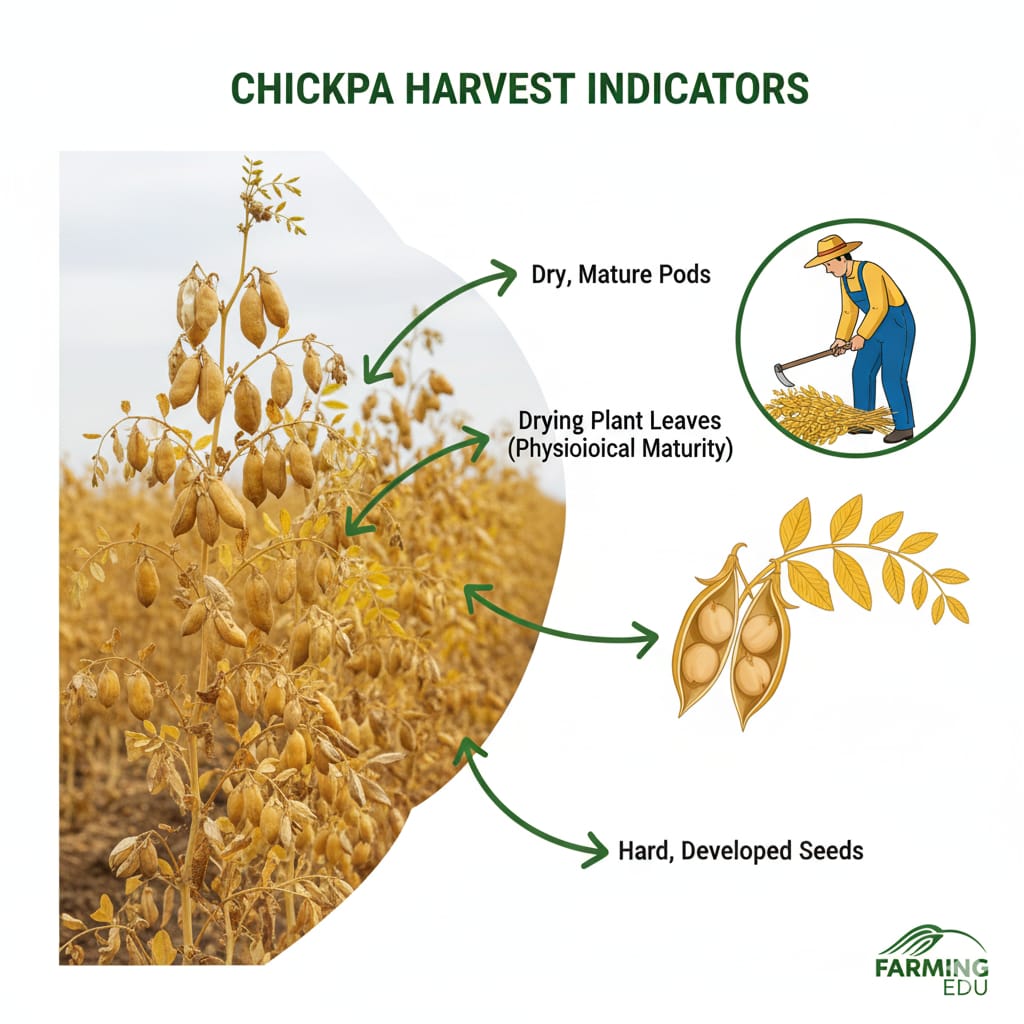
Harvest green chickpeas for consumption when pods are tender.
For dry seeds, harvest when pods have dried and seeds are firm.
Timely harvest prevents seed shattering and quality loss.
After harvesting, pods are threshed and cleaned for storage or sale.
9. Post-Harvest Processing and Storage
Dry seeds to 12–14% moisture content for long-term storage. Green pods can be consumed fresh, canned, or frozen.
Store seeds in airtight containers in cool, dry areas to prevent mold and pests.
Regular monitoring maintains seed quality and prevents loss.
Proper post-harvest handling ensures market-ready produce and viable planting seeds.
10. Uses of Chickpeas
- Human consumption: soups, stews, salads, roasted snacks, and flour for baking.
- Animal feed: leaves and pods for livestock feed.
- Soil improvement: enriches soil nitrogen for subsequent crops.
- Market income: high demand locally and for export.
Frequently Asked Questions (FAQ)
What soil type is best for chickpeas?
Well-drained loamy soils with pH 6–7 are ideal.
When should chickpeas be sown?
At the onset of the rainy season or when irrigation is available; soil must be well-drained.
How long do chickpeas take to mature?
90–120 days depending on variety.
What are the main uses of chickpeas?
Human consumption, animal feed, soil nitrogen enrichment, and market income.