1. Site Selection and Climate
Cowpeas thrive in warm tropical and subtropical climates with temperatures between 20–35°C. They are drought-tolerant but perform best with 500–700 mm annual rainfall.
Well-drained sandy loam or loamy soils with pH 5.5–7 are ideal. Heavy clay soils can impede root growth and increase susceptibility to diseases.
Choosing a sunny location ensures strong vegetative growth, flowering, and pod set.
Good site selection minimizes pest pressure and maximizes yields.
2. Land Preparation
Clear the land of previous crop residues, weeds, and stones.
Light plowing or tilling breaks compacted soil layers, allowing better root penetration.
Harrowing smooths the soil surface for uniform sowing depth.
Incorporate well-rotted manure or compost to improve soil fertility and microbial activity.
3. Seed Selection and Sowing
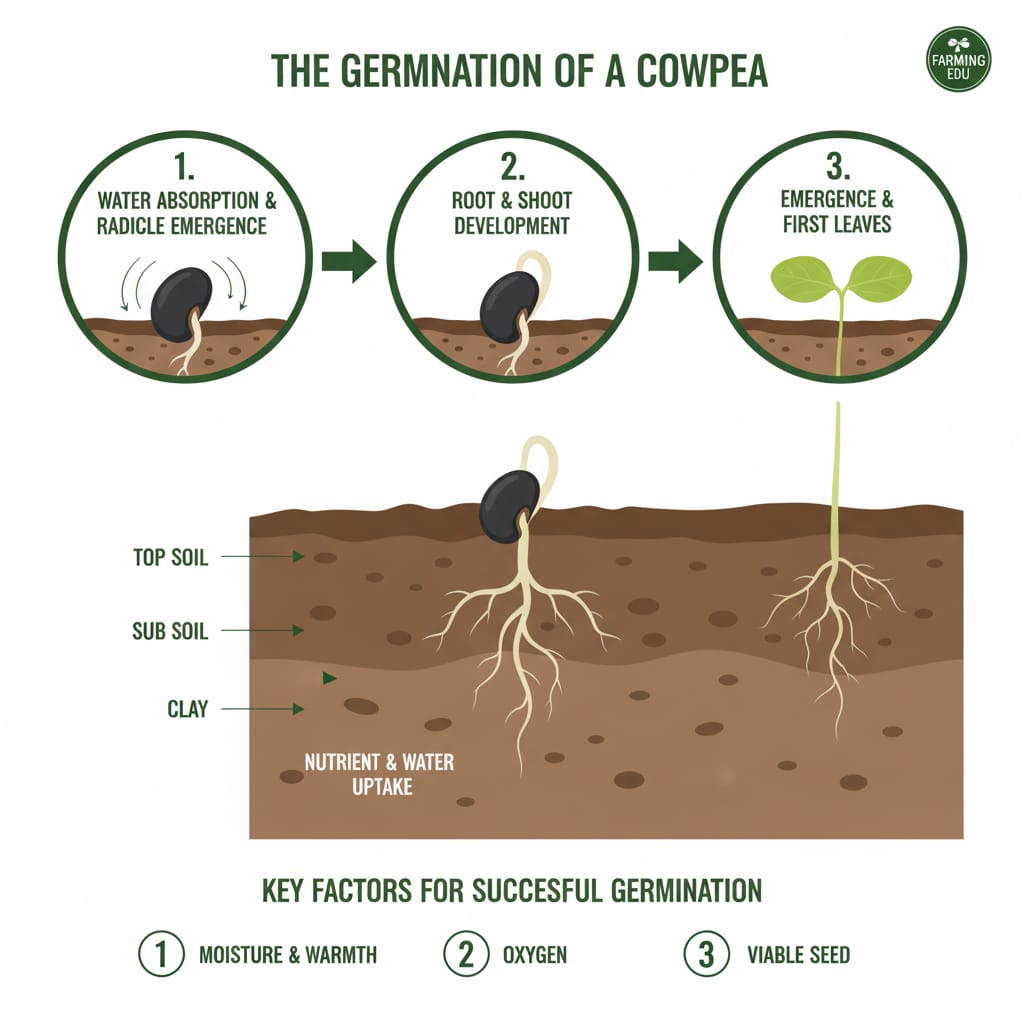
Use certified seeds with high germination rates and free of pests or diseases.
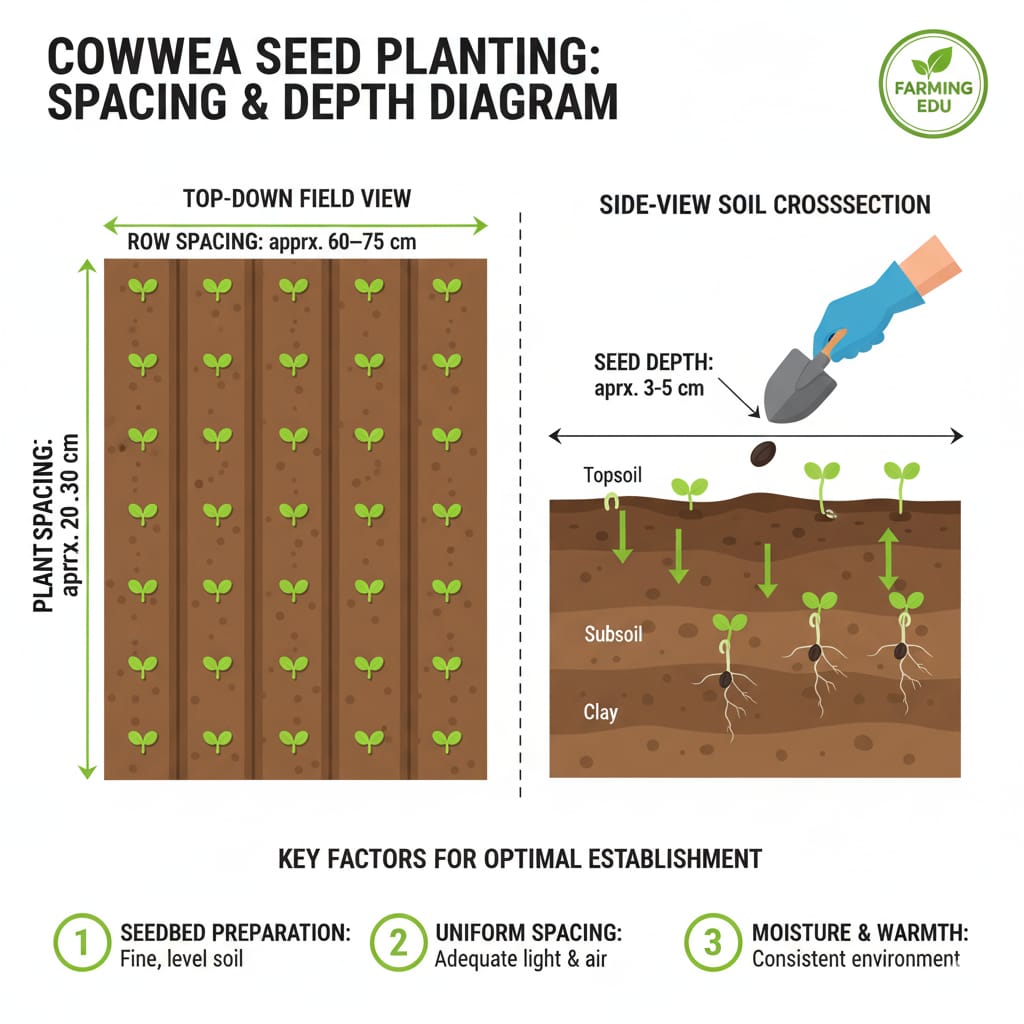
Sow seeds at 2–3 cm depth in rows spaced 60–75 cm apart, with 15–20 cm between plants in a row.
Plant after the last frost when soil is warm. Cowpeas can tolerate some drought but need moisture during flowering and pod filling.
Proper spacing ensures good airflow, reducing disease incidence and improving pod development.
4. Water Management
Cowpeas require consistent moisture during germination and flowering but avoid waterlogging.
Supplemental irrigation during dry periods enhances pod set and seed development.
Drought-tolerant varieties can withstand short dry spells once established.
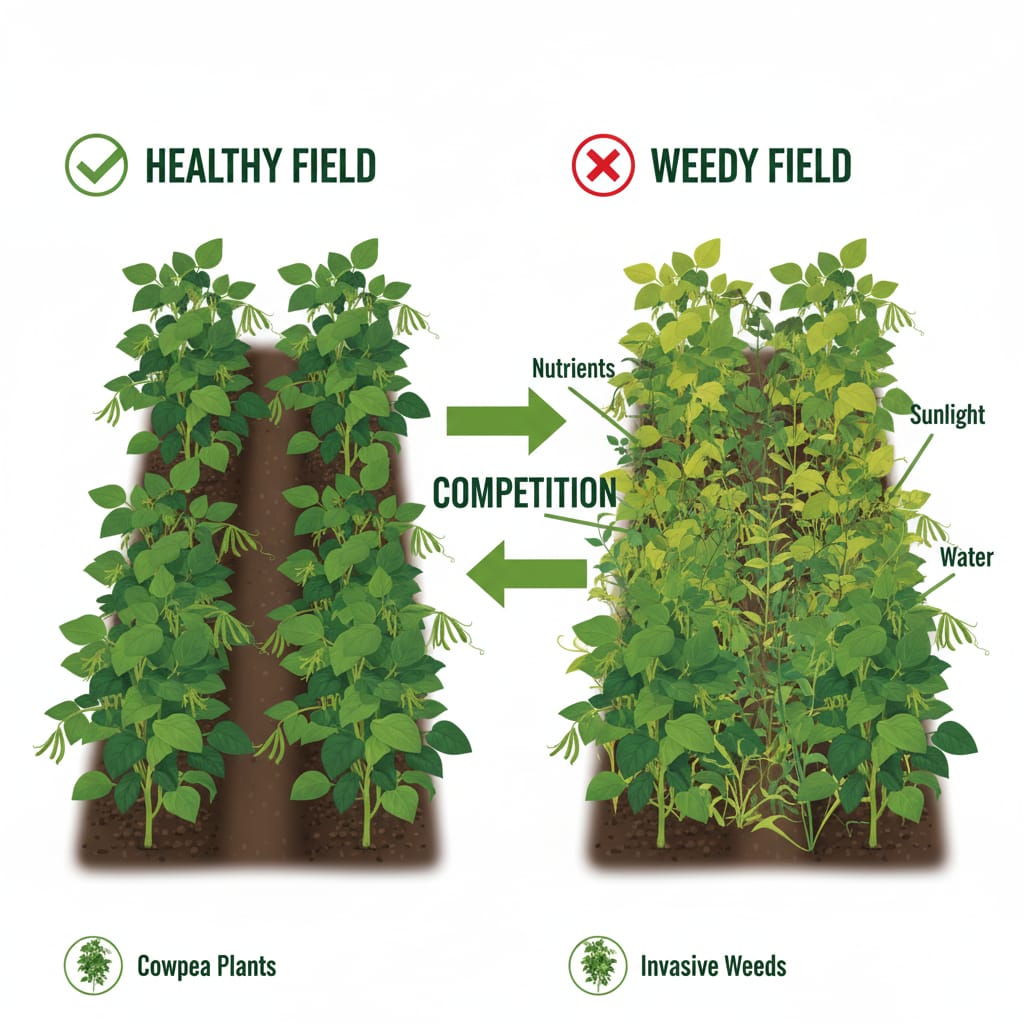
Mulching conserves soil moisture and reduces weed competition.
5. Fertilization and Nutrient Management
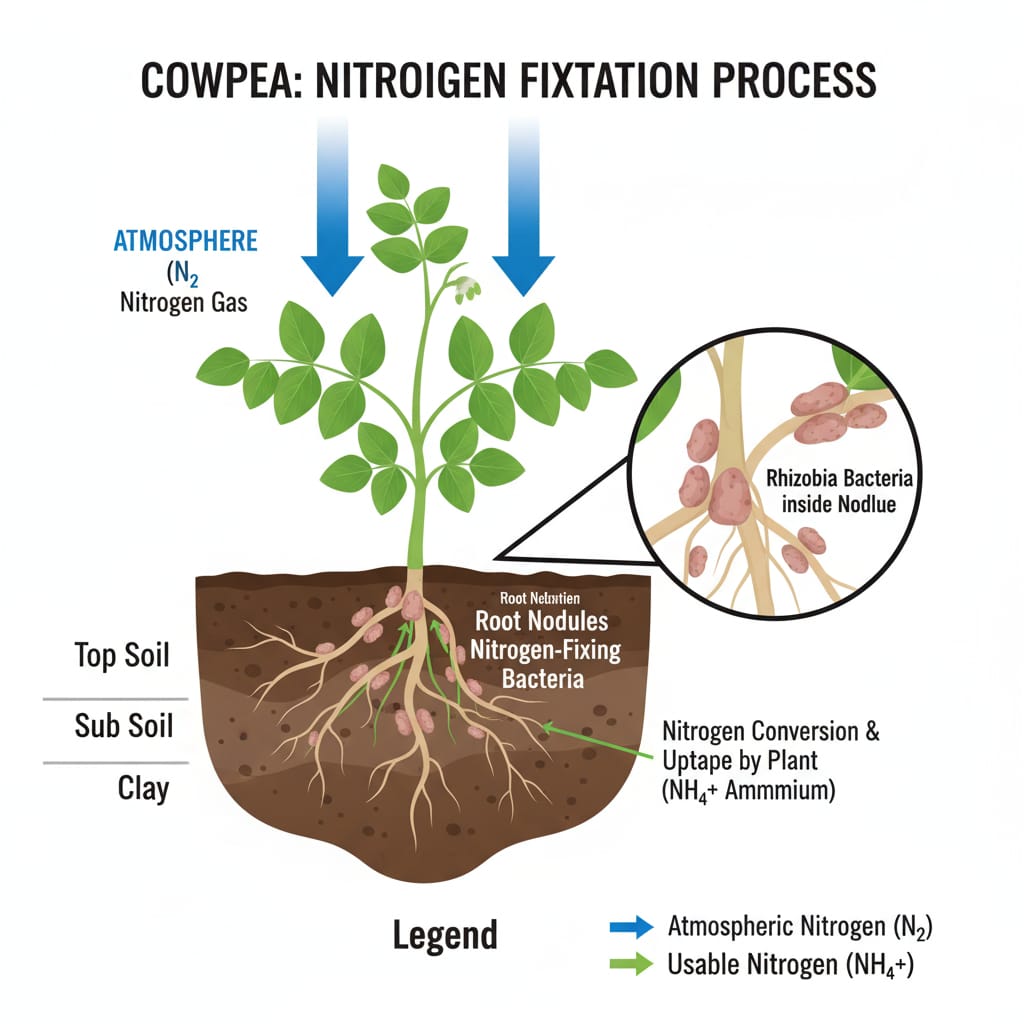
Cowpeas fix atmospheric nitrogen, reducing the need for nitrogen fertilizers. However, phosphorus and potassium boost root development and pod filling.
Apply compost or green manure before planting to improve soil structure.
Micronutrients may be added if soil tests indicate deficiencies.
Balanced fertilization improves yield, disease resistance, and seed quality.
6. Weed, Pest, and Disease Management
Manual weeding or shallow cultivation helps reduce early competition.
Common pests include aphids, pod borers, and leafhoppers. Monitor crops regularly and apply IPM strategies.
Diseases such as root rot, leaf spots, and mosaic virus can occur. Crop rotation and resistant varieties minimize losses.
Maintaining healthy plants prevents pest outbreaks and ensures high-quality harvests.
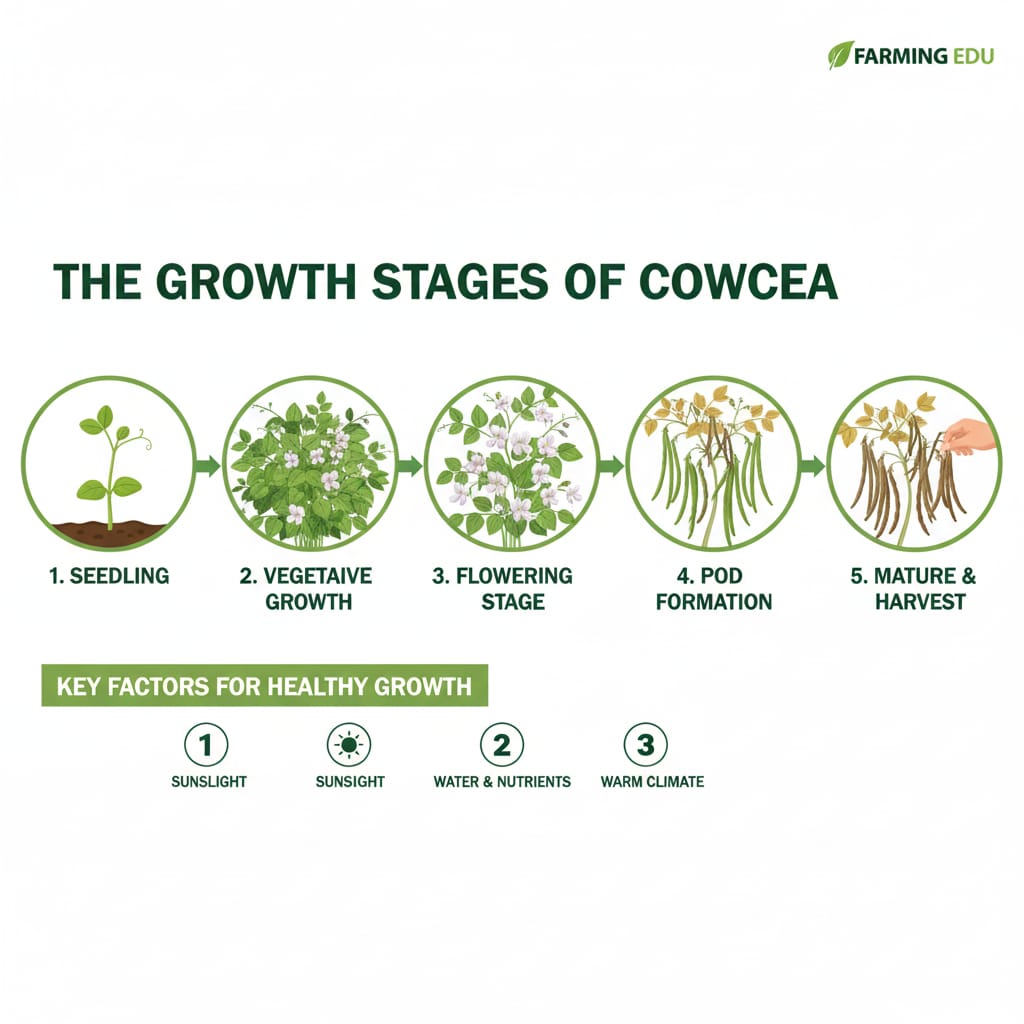
7. Growth Stages and Maturity
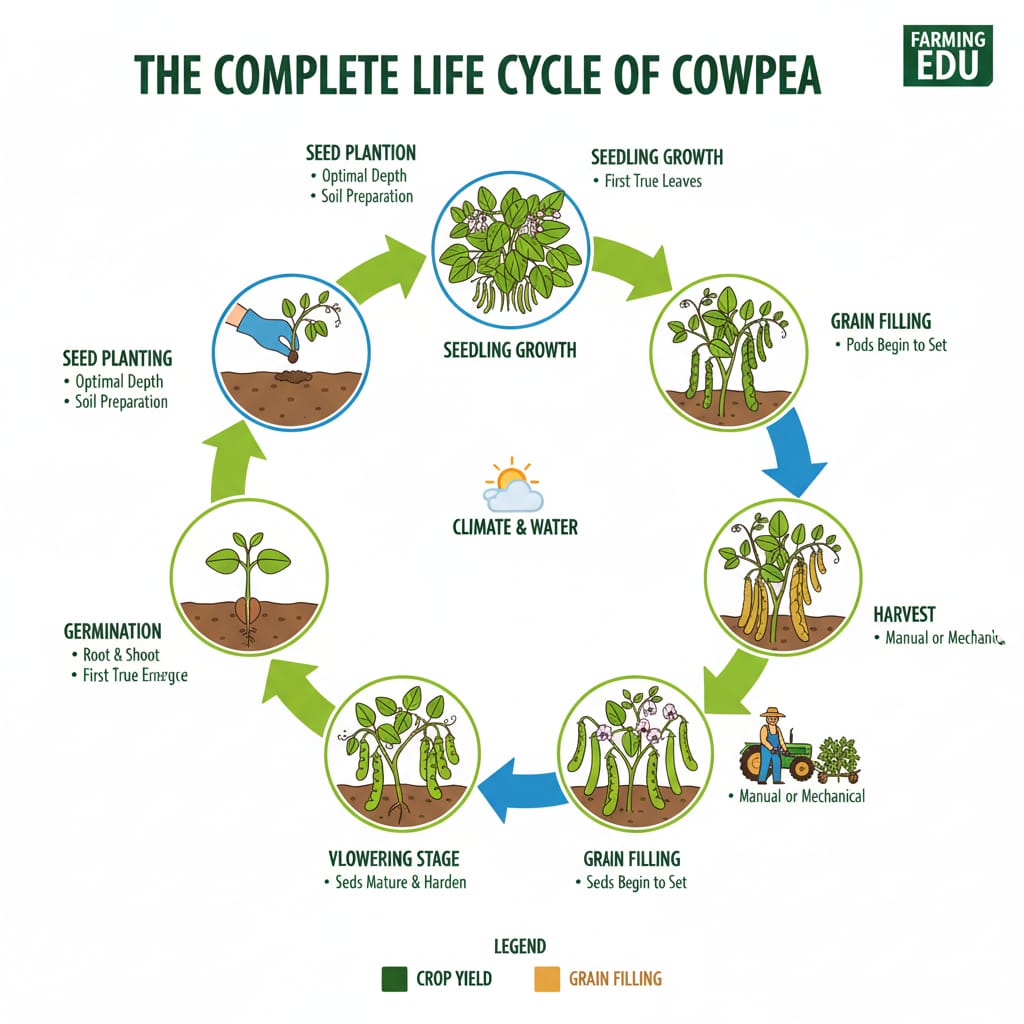
- Germination: 5–8 days
- Seedling stage: 2–3 weeks
- Vegetative growth: 3–5 weeks
- Flowering: 4–6 weeks
- Pod formation: 6–8 weeks
- Pod filling: 2–3 weeks
- Maturity: 8–12 weeks depending on variety
Total crop cycle ranges from 70–120 days depending on variety and purpose.
8. Harvesting
Harvest leafy cowpeas selectively for fresh greens. For dry beans, harvest when pods are dry and seeds are firm.
Hand-picking is common for small-scale farms; mechanized harvesting is possible for large-scale production.
Timely harvest prevents seed shattering and loss.
Post-harvest, pods are threshed and winnowed to separate seeds from pods.
9. Post-Harvest Processing and Storage
Dry seeds to 12–14% moisture before storage. Leafy greens can be packed fresh or dried.
Store seeds in airtight containers in a cool, dry place to prevent pests and mold.
Regular checks for moisture and insect infestation maintain quality.
Proper handling ensures seeds retain viability and quality for planting or sale.
10. Uses of Cowpeas
- Human consumption: cooked as a protein-rich legume in soups, stews, and porridge.
- Animal feed: leaves and pods for livestock consumption.
- Soil improvement: enriches soil nitrogen for subsequent crops.
- Market income: highly valued locally and for export.
Frequently Asked Questions (FAQ)
What soil type is best for cowpeas?
Well-drained sandy loam or loamy soils with pH 5.5–7 are ideal.
When should cowpeas be sown?
After the last frost when soil is warm; they require full sunlight for optimal growth.
How long do cowpeas take to mature?
70–120 days depending on variety.
What are the main uses of cowpeas?
Human consumption, animal feed, soil nitrogen enrichment, and market income.