1. Site Selection and Climate
Groundnuts grow best in warm, subtropical to tropical regions with well-distributed rainfall of 500–1000 mm annually.
They prefer light sandy loam or loamy soils with good drainage and pH of 6–7. Heavy clay or waterlogged soils increase risk of diseases.
Groundnuts require temperatures of 20–35°C during growth and are sensitive to frost.
Proper site selection ensures optimal pod development, high yield, and disease reduction.
2. Land Preparation
Clear weeds, crop residues, and stones from the field.
Plow the soil to 20–25 cm depth to loosen the soil for pegging pods.
Harrow to level the field and create a fine seedbed for uniform germination.
Incorporate well-decomposed compost or manure to enhance soil fertility and microbial activity.
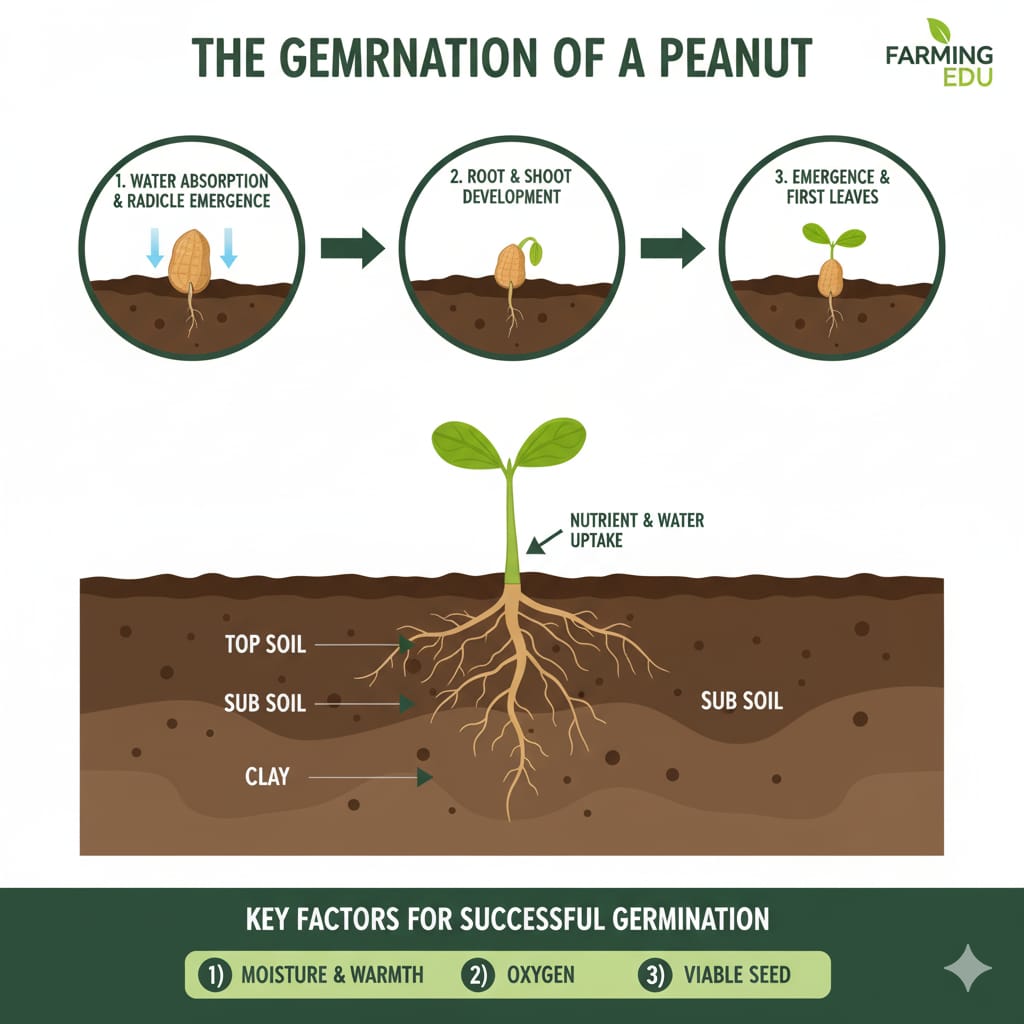
3. Seed Selection and Sowing
Use high-quality, disease-free seeds of varieties adapted to your region and season.
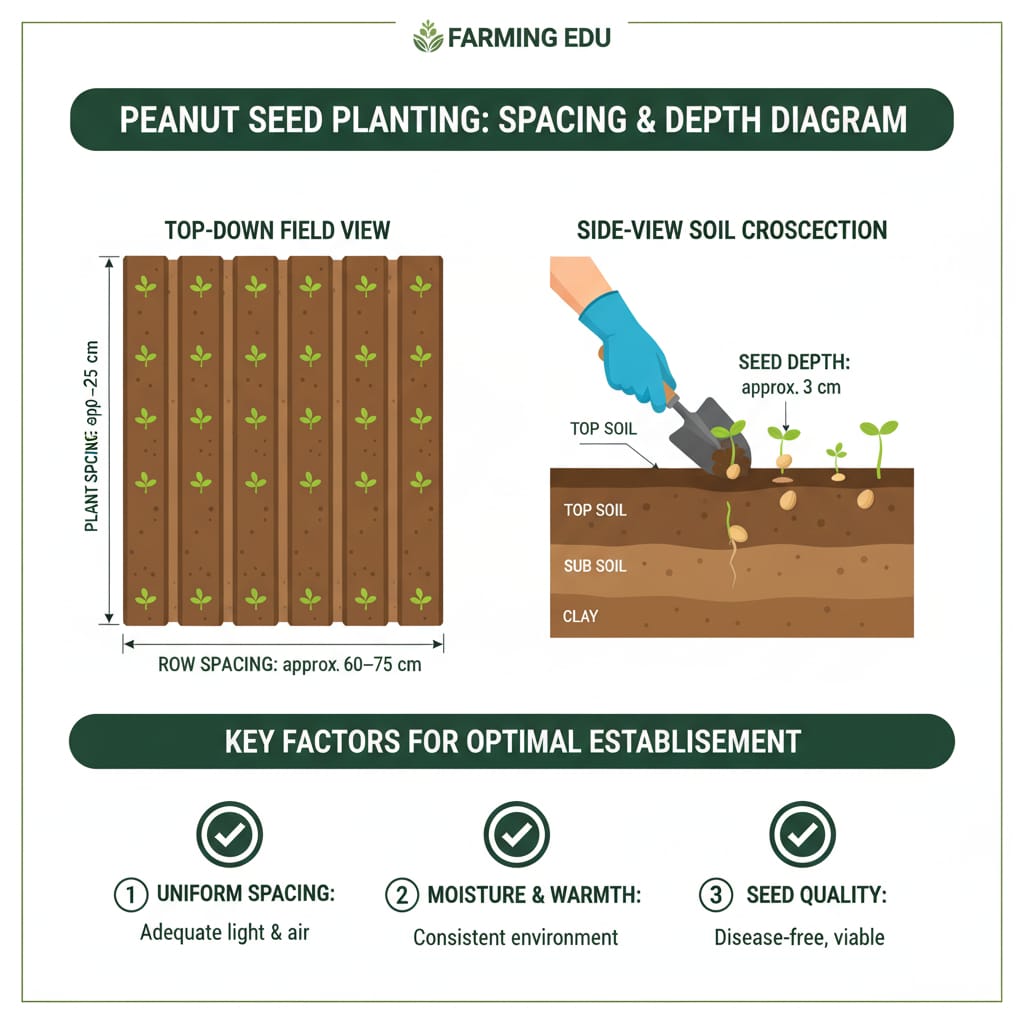
Sow seeds 3–5 cm deep in rows spaced 45–60 cm apart with 10–15 cm between plants.
Plant at the onset of rains or under irrigation for uniform germination.
Good seed selection and correct spacing promotes proper peg formation and higher yields.
4. Water Management
Groundnuts need moderate soil moisture, especially during germination, flowering, and pod formation.
Avoid waterlogging, which can cause fungal infections and root rot.
Supplemental irrigation may be applied during prolonged dry spells to prevent stress.
Mulching helps conserve soil moisture and reduces weed pressure.
5. Fertilization and Nutrient Management
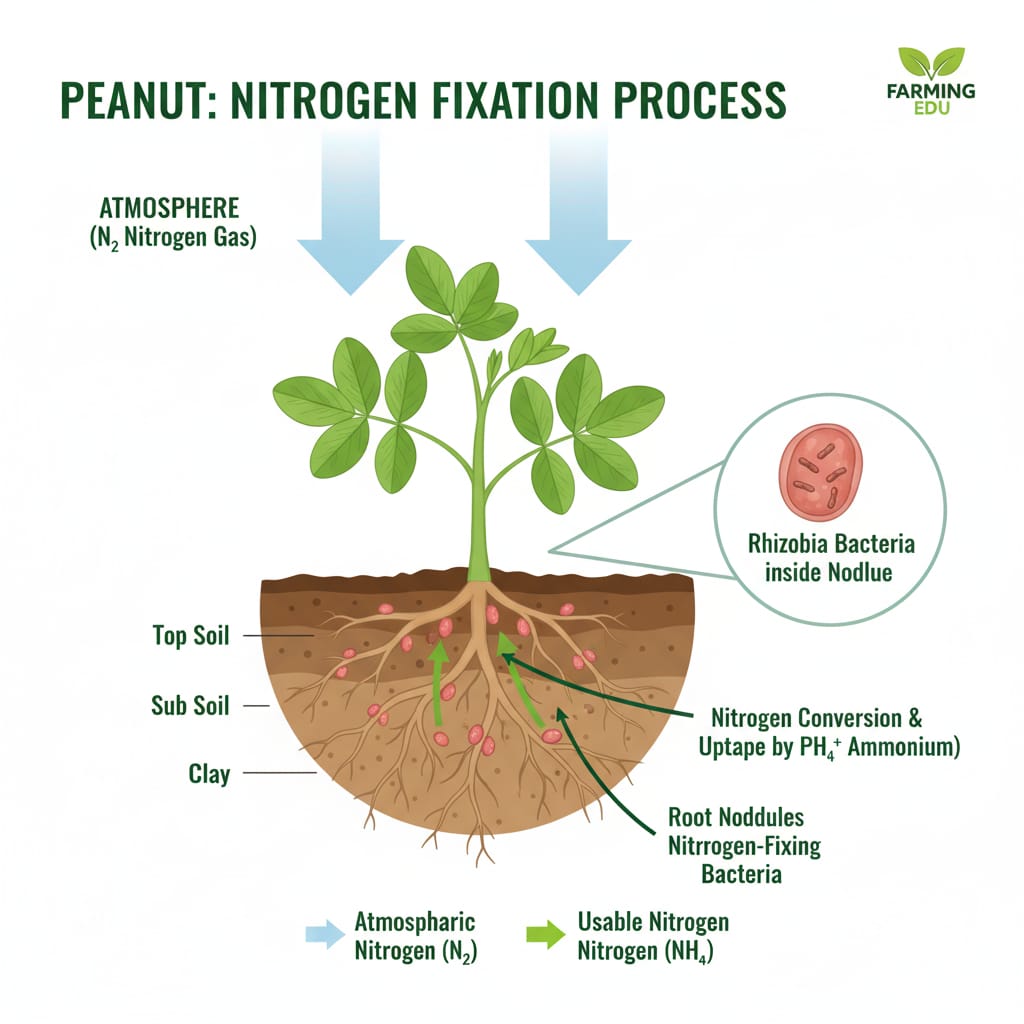
Groundnuts fix atmospheric nitrogen but respond to phosphorus and potassium fertilization for better pod formation.
Apply compost or organic manure before planting to improve soil fertility.
Micronutrients like zinc and boron may be added if soil tests indicate deficiencies.
Balanced nutrition supports vegetative growth, flowering, peg formation, and seed quality.
6. Weed, Pest, and Disease Management
Manual weeding or shallow cultivation controls early-stage weeds.
Common pests include aphids, leaf miners, and pod borers. Integrated pest management is recommended.
Diseases such as leaf spot, rust, and aflatoxin contamination can reduce yields. Resistant varieties and crop rotation help prevent outbreaks.
Healthy crop management reduces chemical usage and ensures quality pods.
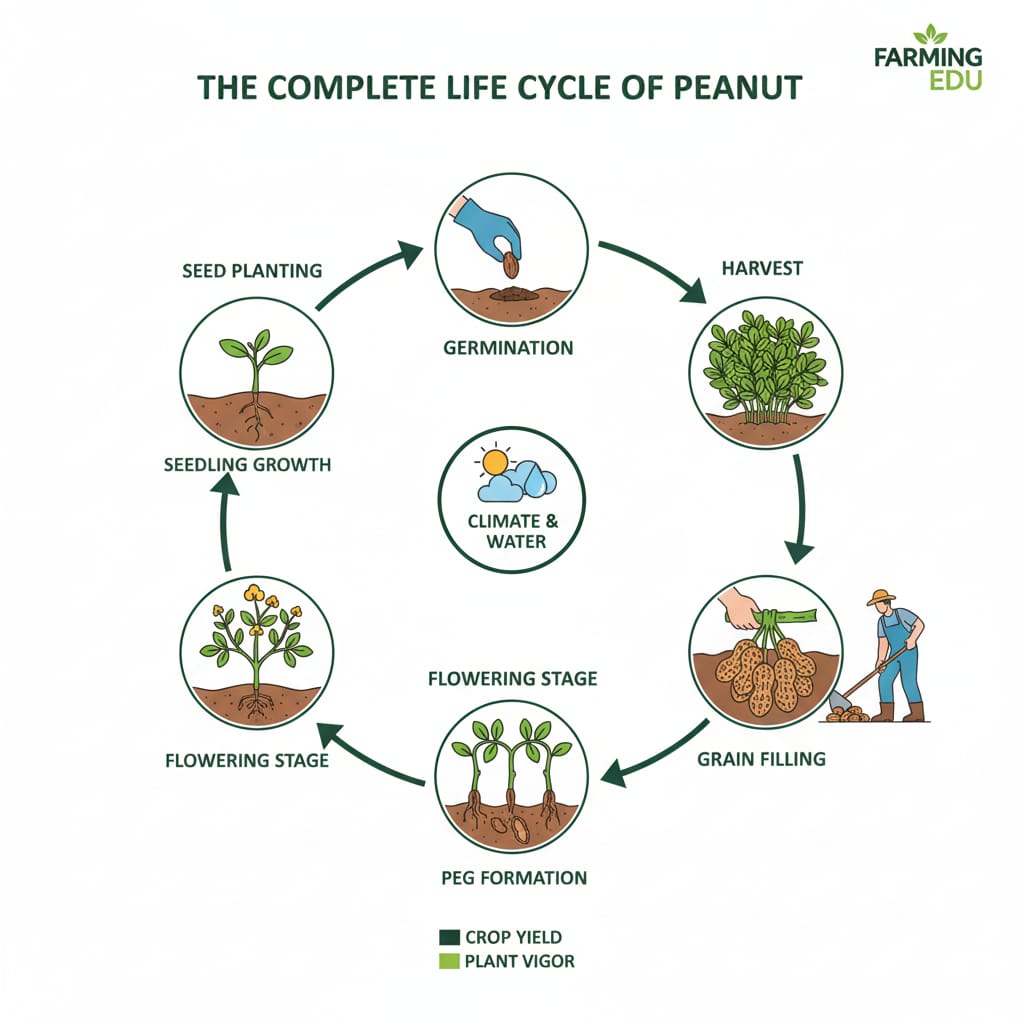
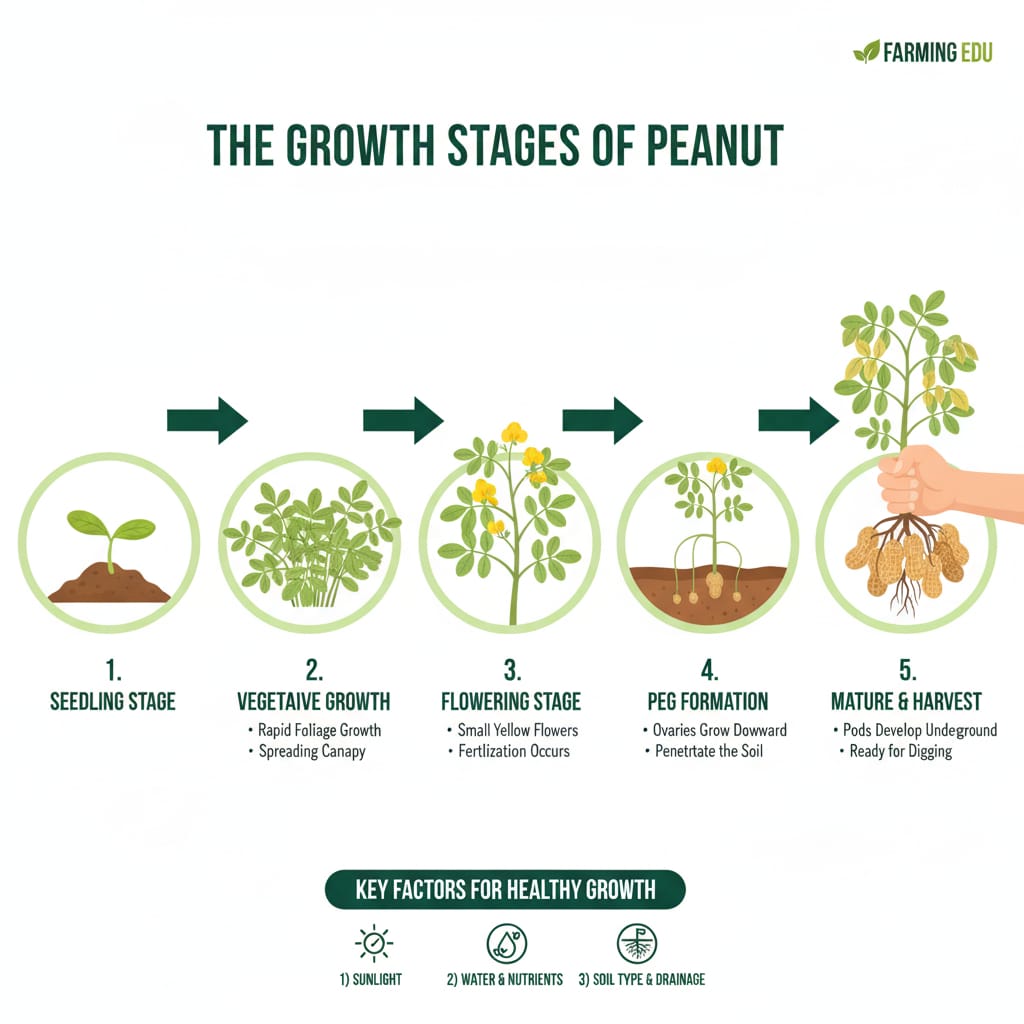
7. Growth Stages and Maturity
- Germination: 5–10 days
- Seedling stage: 2–3 weeks
- Vegetative growth: 4–6 weeks
- Flowering: 5–7 weeks
- Peg formation: 6–8 weeks
- Pod filling: 3–4 weeks
- Maturity: 110–140 days depending on variety
Overall crop cycle depends on variety, soil fertility, and climatic conditions.
8. Harvesting
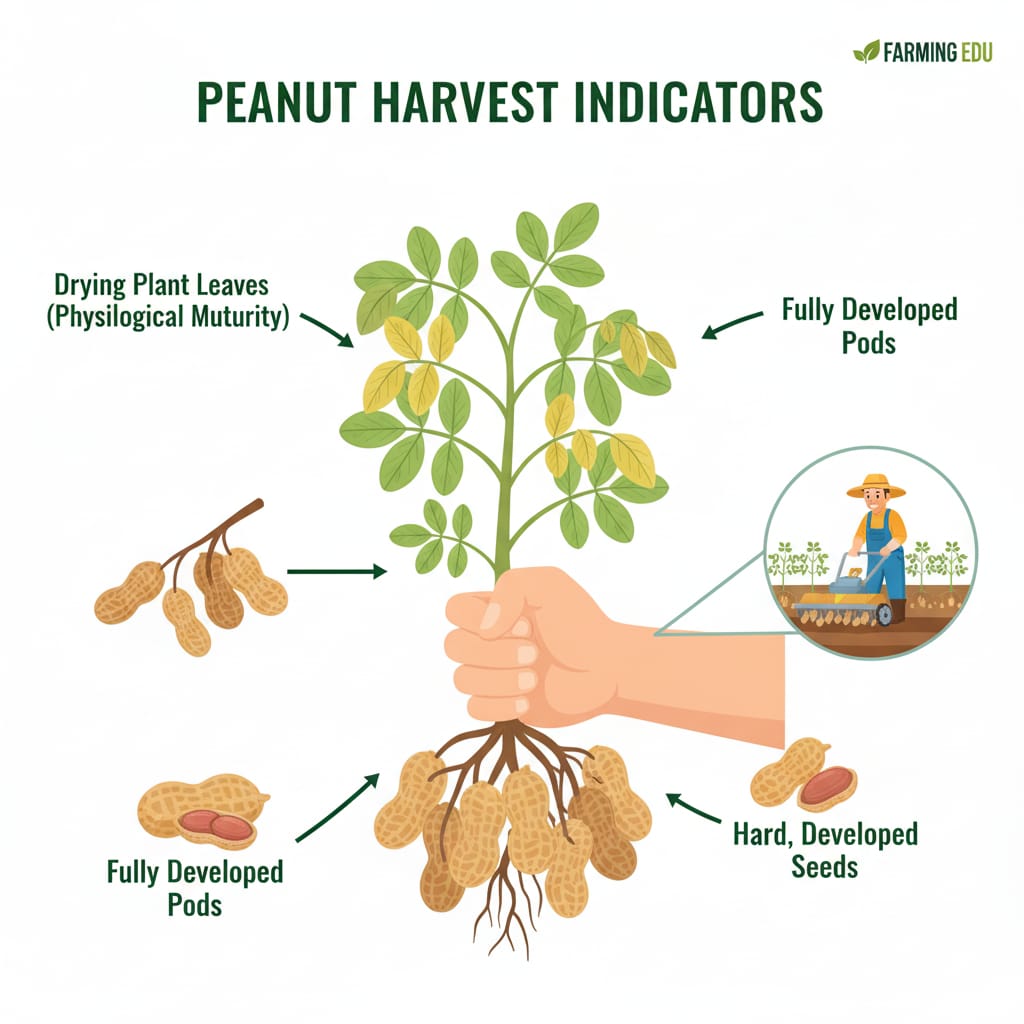
Harvest when leaves start yellowing and pods have matured. Dry pods indicate seed maturity.
Careful harvesting avoids pod damage and loss of quality.
Pull up plants, dry them in the sun, and separate pods from vines.
Timing ensures maximum yield and reduces risk of aflatoxin contamination.
9. Post-Harvest Processing and Storage
Dry pods to reduce moisture content to 10–12% for safe storage.
Remove debris and damaged seeds, then store in well-ventilated, dry areas.
Regular inspection prevents pests and mold.
Proper handling preserves seed quality, shelf life, and market value.
10. Uses of Groundnuts
- Human consumption: roasted snacks, peanut butter, oil extraction, and confectionery products.
- Animal feed: residual cake and leaves as livestock feed.
- Soil enrichment: fixes nitrogen for future crops.
- Commercial value: high demand locally and for export.
Frequently Asked Questions (FAQ)
What soil type is best for groundnuts?
Light sandy loam or loamy soils with good drainage and pH 6–7.
When should groundnuts be sown?
At the onset of the rainy season or under irrigation for uniform germination.
How long do groundnuts take to mature?
110–140 days depending on variety.
What are the main uses of groundnuts?
Human consumption, animal feed, soil enrichment, and commercial sales.