1. Site Selection and Climate
Soybeans grow best in warm temperate regions with rainfall between 500 and 900 mm annually.
They require well-drained loamy soils with pH between 6 and 7.
Optimal temperature for soybean growth ranges between 20°C and 30°C.
2. Land Preparation
Clear weeds and crop residues before planting.
Plow soil to a depth of 15–20 cm to improve root penetration.
Harrow soil to create a fine seedbed.
3. Seed Selection and Sowing
Use certified high-germination soybean seeds suitable for your region.
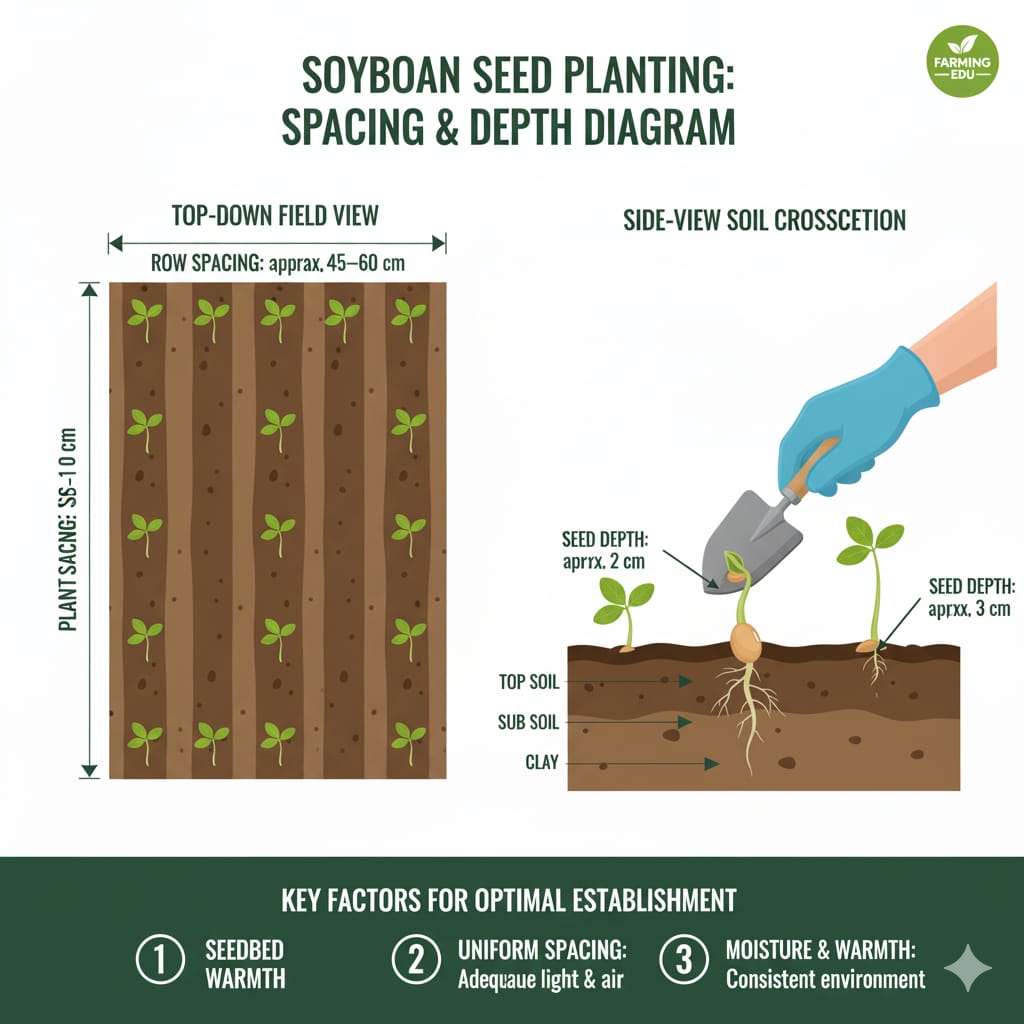
Sow seeds 2–4 cm deep in rows spaced 45–60 cm apart.
Plant spacing between soybean plants should be 5–10 cm.
4. Water Management
Soybeans require consistent soil moisture during germination, flowering and pod filling stages.
Avoid waterlogging because excessive moisture encourages root diseases.
5. Fertilization and Nutrient Management
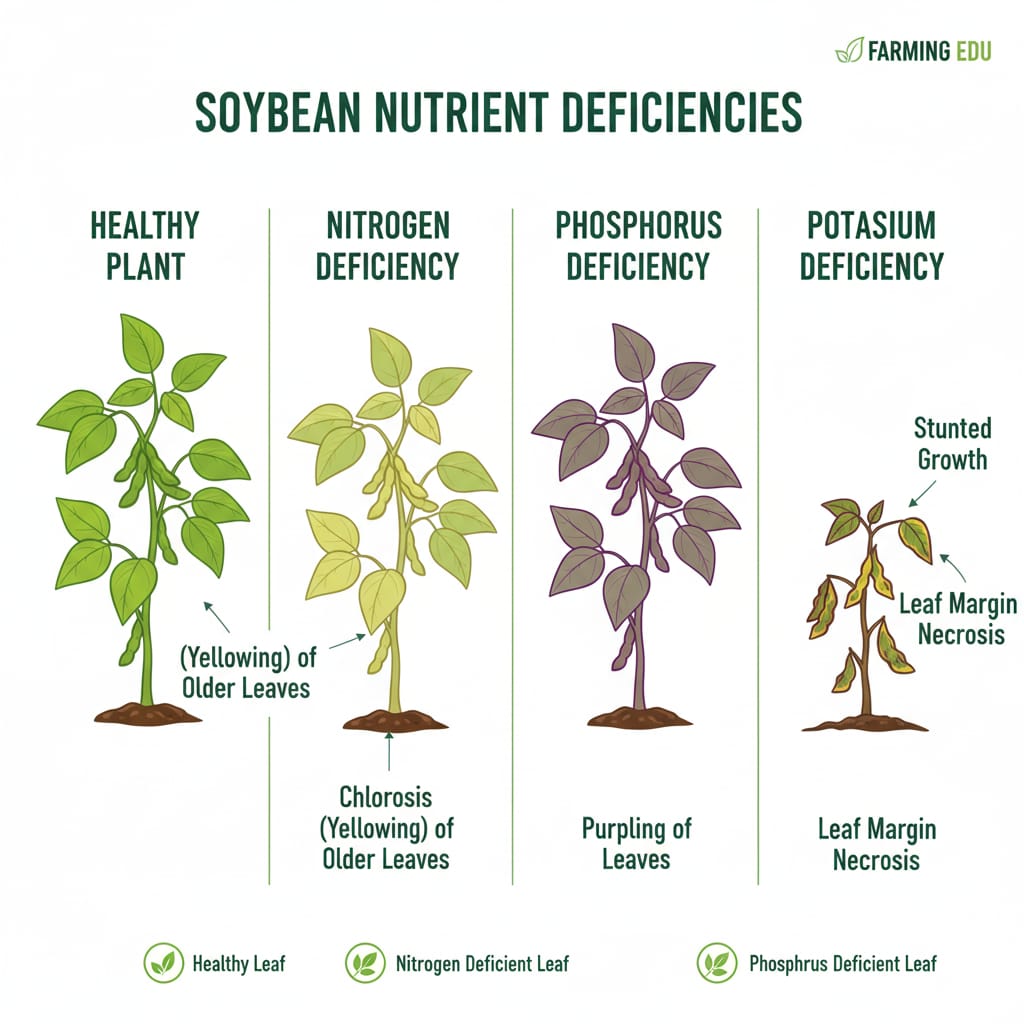
Soybeans fix atmospheric nitrogen through symbiosis with rhizobium bacteria.
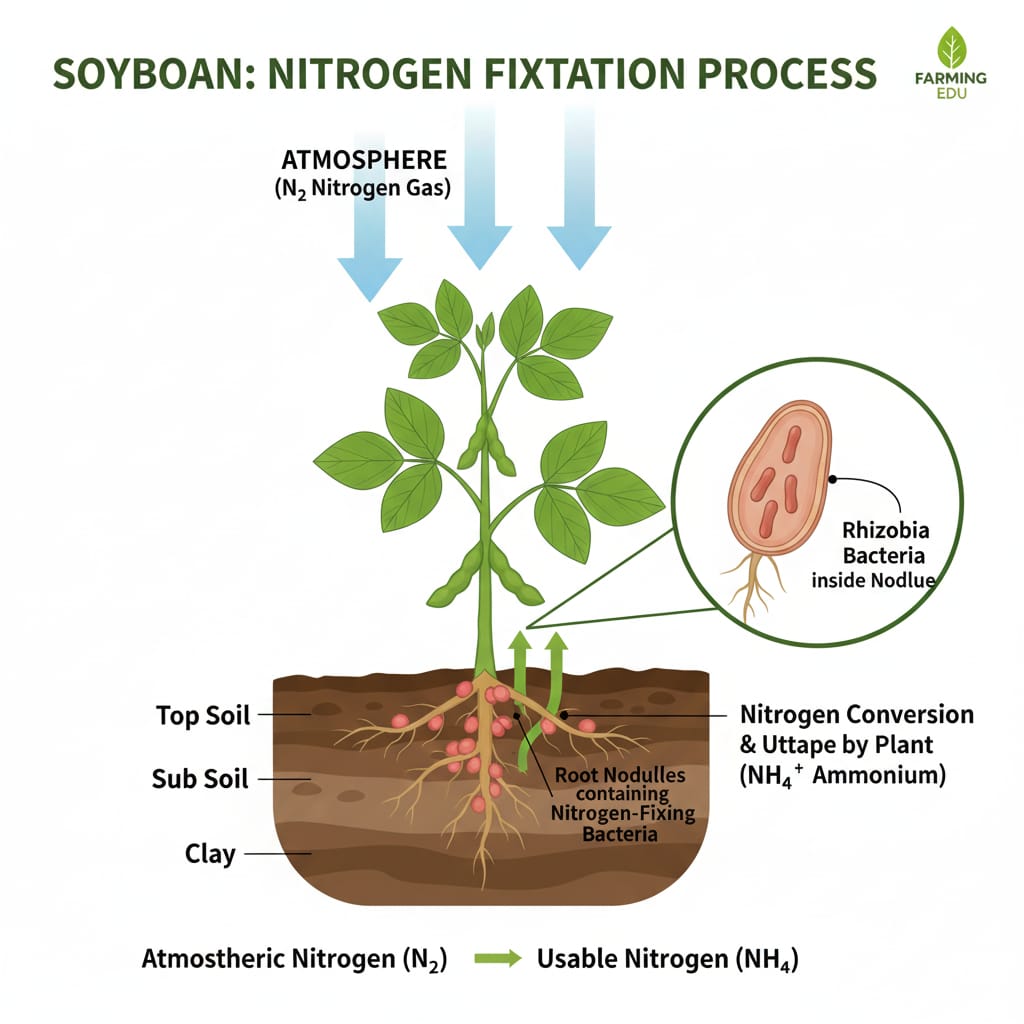
Soybeans also require phosphorus and potassium nutrients for proper growth.
6. Weed, Pest, and Disease Management
Early weeding reduces crop competition and improves plant growth.
Common soybean pests include aphids, leaf beetles and pod borers.
Crop rotation and resistant varieties help reduce disease pressure.
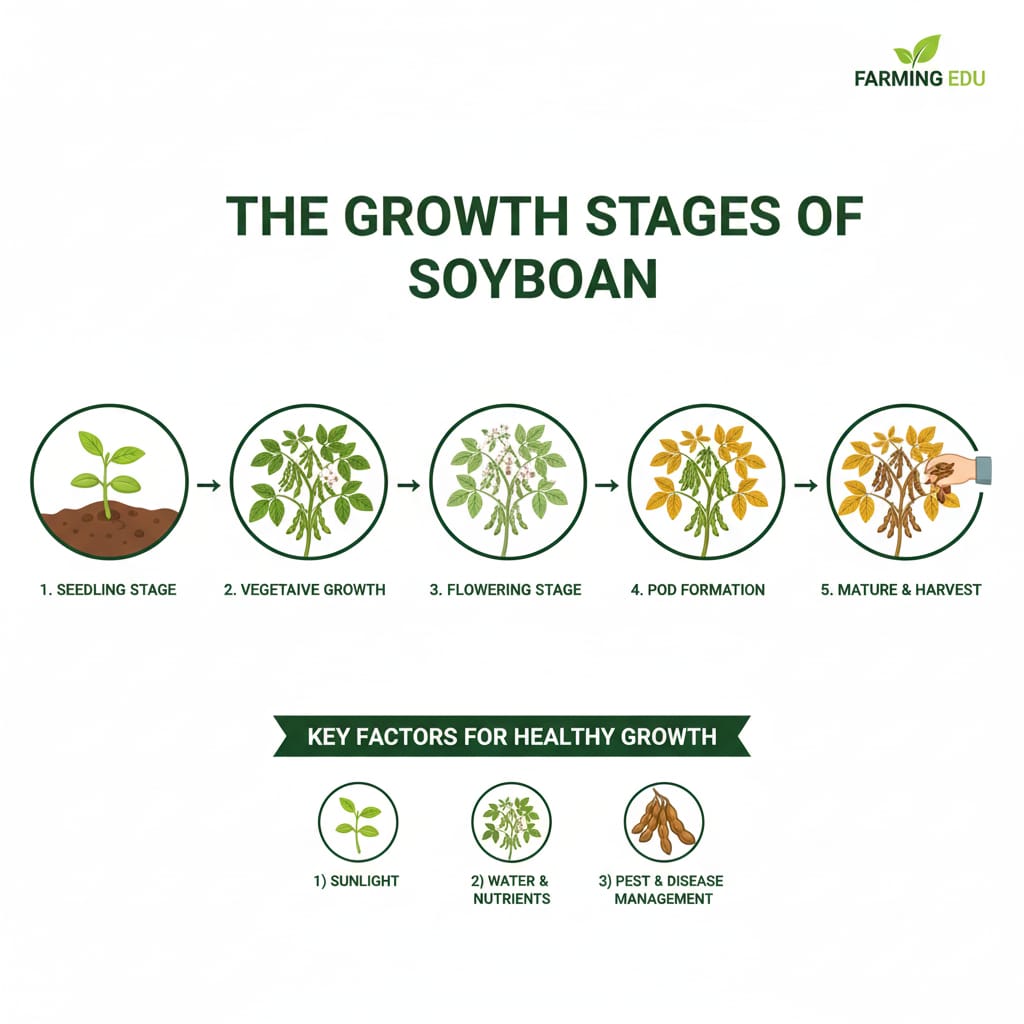
7. Growth Stages and Maturity
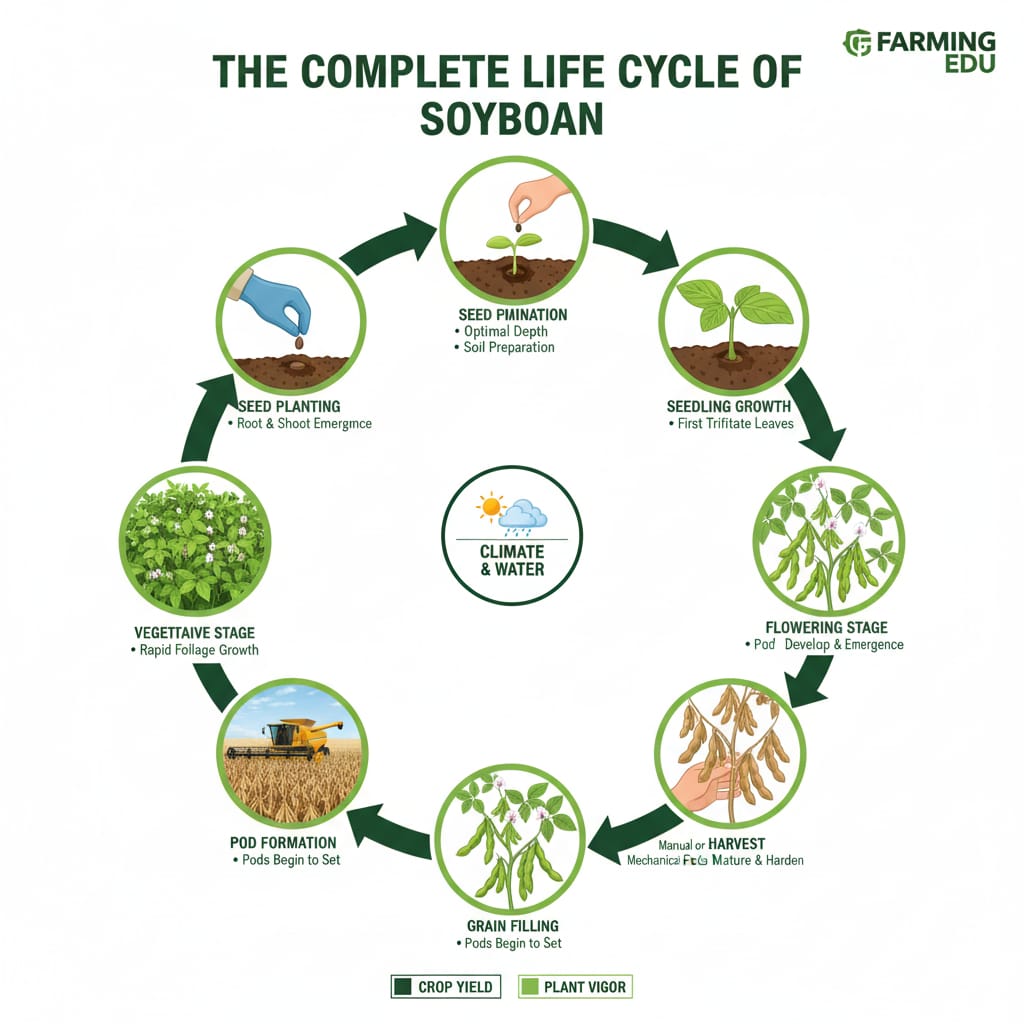
- Germination – 7 to 10 days
- Seedling stage – 2 to 3 weeks
- Vegetative growth – 4 to 6 weeks
- Flowering – 5 to 7 weeks
- Pod formation
- Pod filling
- Maturity – 100 to 120 days
8. Harvesting
Harvest soybean crops when pods turn brown and seeds become hard.
Seeds should have moisture content between 12 and 14 percent.
9. Post Harvest Processing and Storage
Dry seeds before storage to prevent mold development.
Store soybean seeds in airtight containers in cool dry conditions.
10. Uses of Soybeans
- Human consumption including soy milk tofu and soy flour.
- Animal feed through soybean meal.
- Soil fertility improvement similar to other legumes like beans, cowpeas, groundnuts and chickpeas.
- Crop rotation partner with cereals such as maize.
Frequently Asked Questions (FAQ)
What soil type is best for soybeans?
Well-drained loamy soils with pH between 6 and 7 are ideal.
When should soybeans be planted?
Soybeans should be planted at the onset of the rainy season.
How long do soybeans take to mature?
Soybeans usually mature in 100–120 days depending on the variety.
What are the main uses of soybeans?
Soybeans are used for food, livestock feed, soil improvement and commercial production.