Maize Diseases: Causes, Infection Cycles and Integrated Management
Maize diseases are major biological constraints affecting global maize production. These diseases are primarily caused by fungi, viruses, and bacteria. When environmental conditions favor disease development, severe outbreaks can reduce grain yield, compromise grain quality, and increase production costs. Understanding how diseases develop and spread is essential for effective prevention and management.
Unlike insect pests, which visibly feed on plant tissues, diseases often begin as microscopic infections that gradually weaken the plant. By the time visible symptoms appear, internal damage may already be significant. Therefore, preventive measures and early detection are critical components of disease management.
Understanding the Disease Triangle
For any maize disease to develop, three elements must be present simultaneously: a susceptible host (maize plant), a virulent pathogen, and favorable environmental conditions. This concept is known as the Disease Triangle.
If one of these three components is removed, disease development is interrupted. For example, planting resistant varieties removes host susceptibility. Crop rotation reduces pathogen survival. Managing irrigation and spacing reduces favorable environmental conditions.
1. Fungal Diseases of Maize
Fungal pathogens are responsible for the majority of maize diseases worldwide. Fungi reproduce through spores that spread via wind, rain splash, insects, or contaminated tools. Warm temperatures and high humidity greatly increase fungal growth and infection rates.
Maize Rust
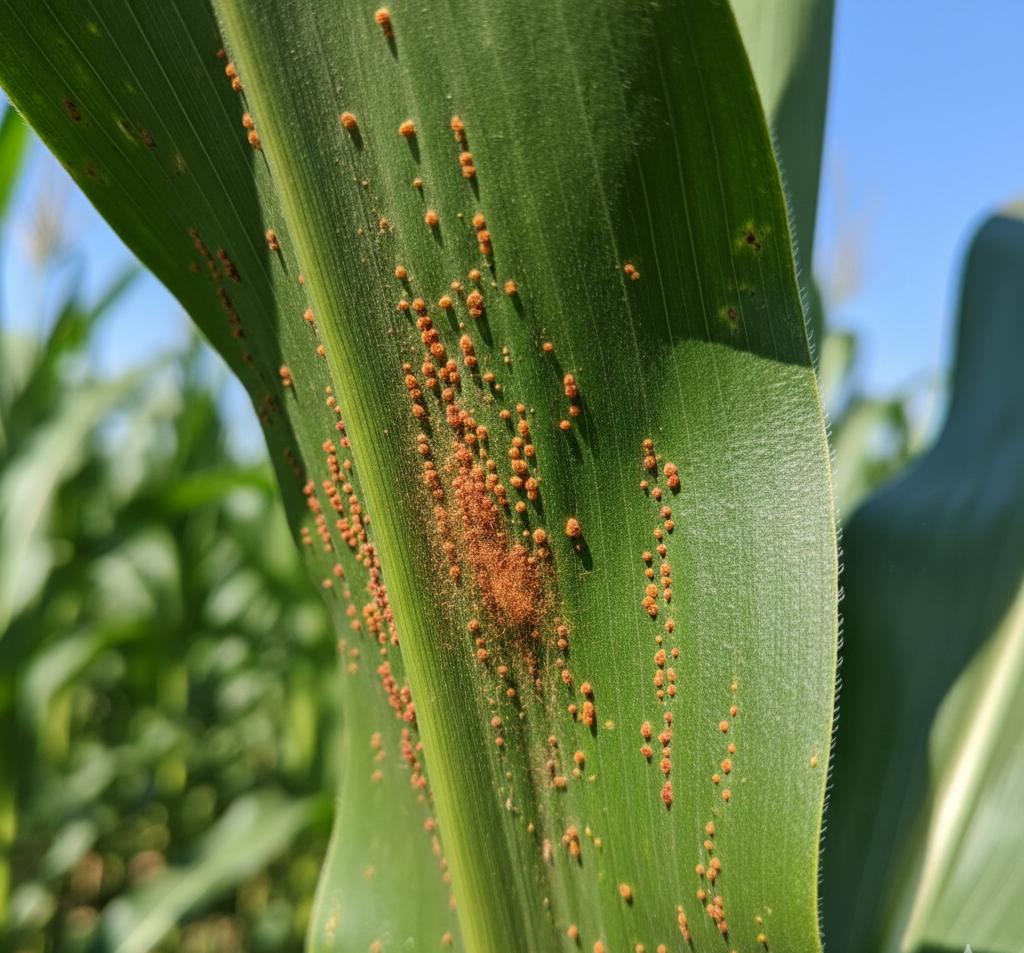
Maize rust is caused by fungal pathogens that infect leaf tissues. It appears as small reddish-brown pustules scattered across leaf surfaces. These pustules contain spores that easily spread to neighboring plants.
Symptoms
- Small brown or orange powdery spots on leaves
- Premature leaf drying
- Reduced photosynthetic activity
Favorable Conditions
Rust thrives in humid environments with moderate temperatures. Dense planting increases leaf wetness duration, which encourages infection.
Management
- Plant resistant hybrids
- Improve spacing for air circulation
- Apply fungicides such as propiconazole when infection is early
Gray Leaf Spot
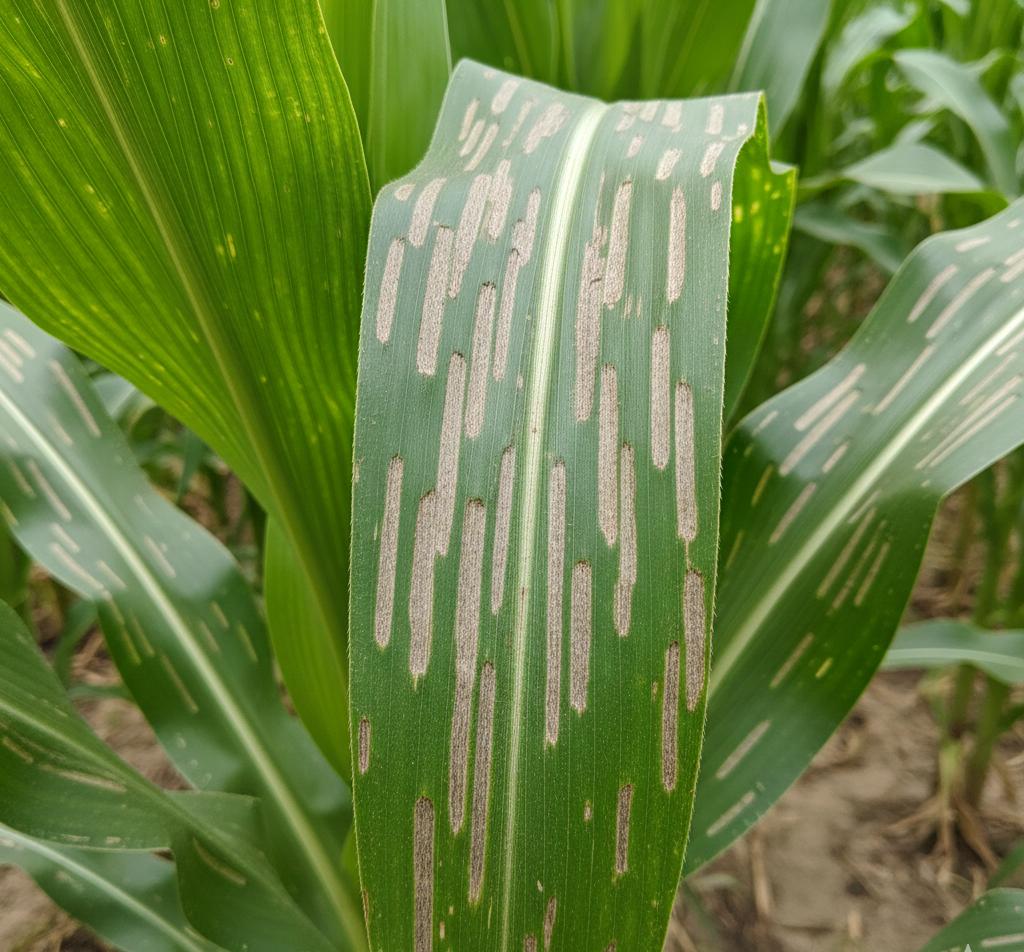
Gray leaf spot is another fungal disease characterized by rectangular gray lesions that run parallel to leaf veins. Severe infections reduce the effective leaf area available for photosynthesis, leading to poor grain filling.
Disease Cycle
The fungus survives in infected crop residues left in the field. During wet conditions, spores are released and infect young maize leaves.
Prevention
- Rotate crops with non-host crops
- Plough under infected residues
- Use certified disease-free seed
Maize Smut
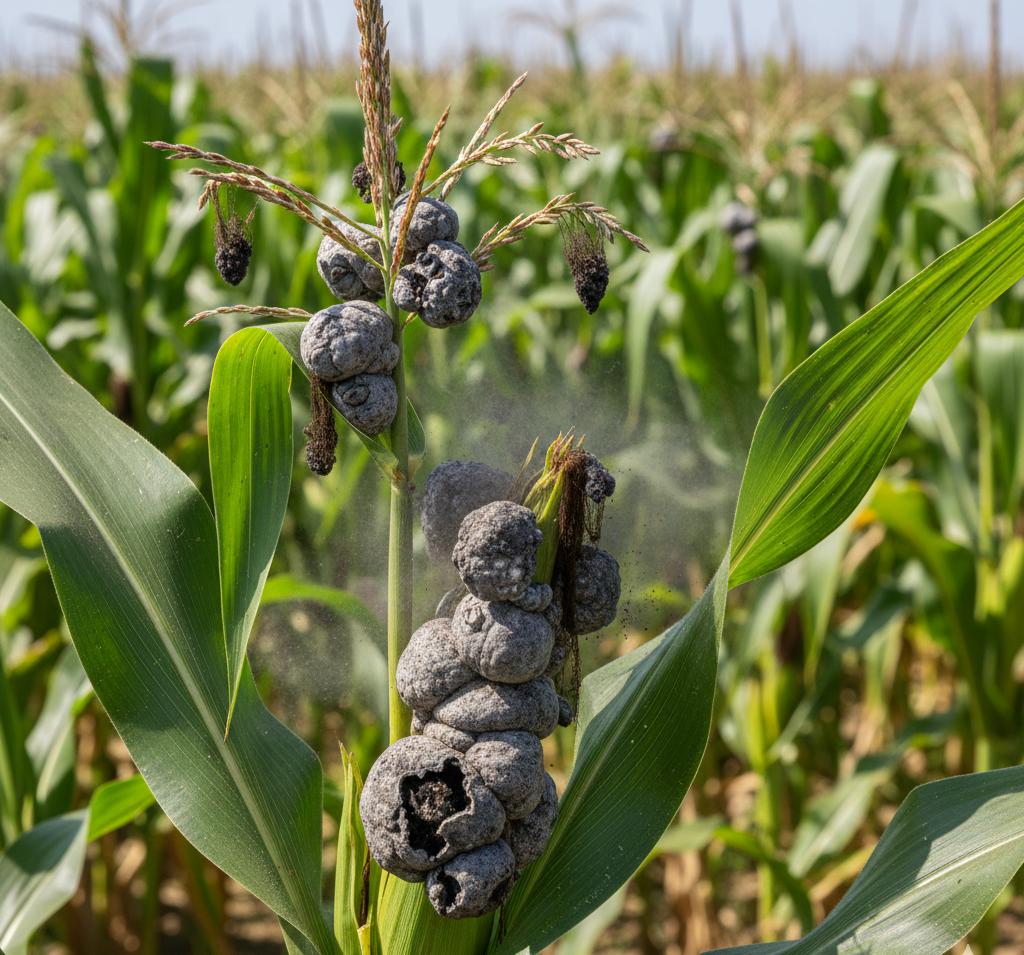
Maize smut causes abnormal tumor-like swellings on cobs, tassels, and leaves. Inside these swellings is a black powder composed of fungal spores.
Although some cultures consume smut as a delicacy, in commercial grain production it reduces market value and yield.
---2. Viral Diseases
Maize Lethal Necrosis (MLN)
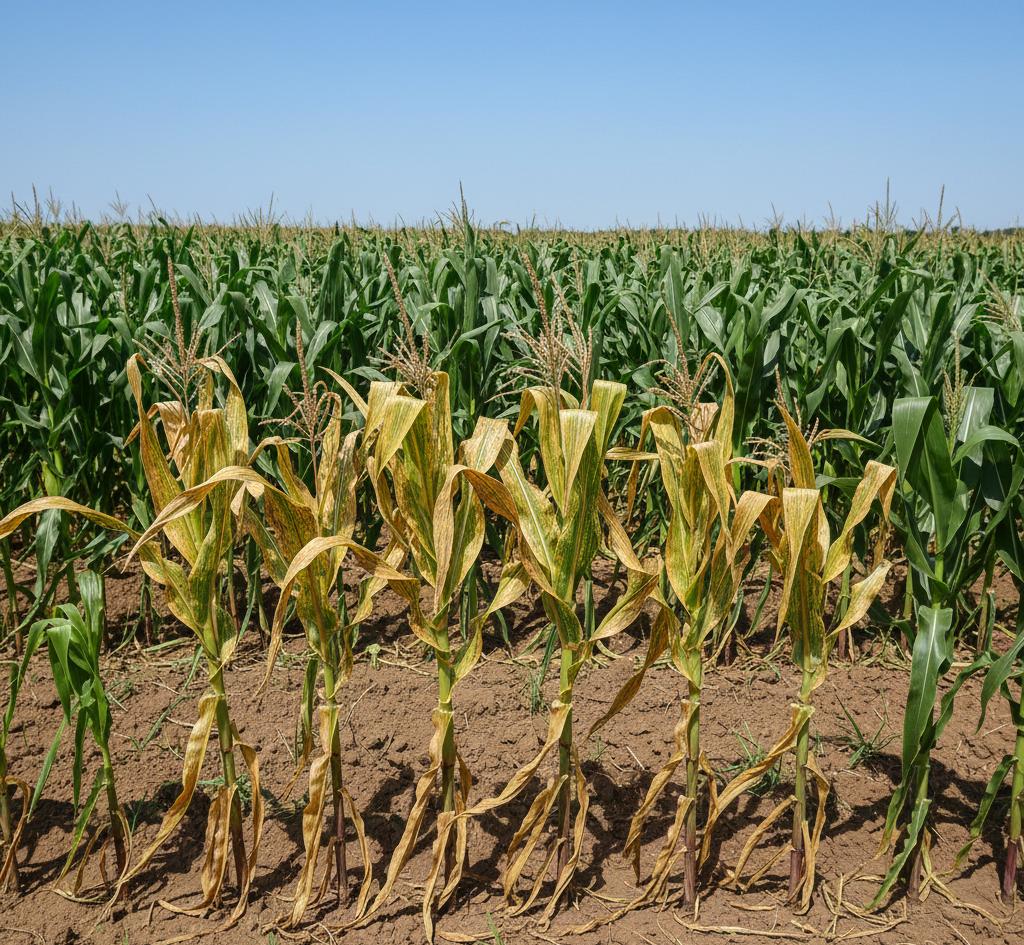
Maize Lethal Necrosis is a devastating viral disease caused by the interaction of two viruses. It spreads primarily through insect vectors such as thrips and beetles.
Symptoms
- Yellow streaking on leaves
- Stunted growth
- Premature plant death
Management
- Use certified virus-free seed
- Control insect vectors
- Remove and destroy infected plants
3. Bacterial Diseases
Bacterial diseases are less common but can occur in regions with high rainfall and poor drainage. They often cause leaf streaking, wilting, or soft rots.
Because chemical control options for bacterial diseases are limited, prevention through sanitation and resistant varieties is critical.
---Integrated Disease Management (IDM)
Effective disease control requires combining multiple strategies. This includes crop rotation, use of resistant varieties, seed treatment, field sanitation, balanced fertilization, and careful irrigation management. Over-reliance on fungicides can lead to resistance and increased production costs.
Farmers who adopt integrated disease management reduce long-term risks and ensure sustainable maize production.
Conclusion
Maize diseases can significantly threaten food security and farm profitability. However, by understanding disease cycles, environmental risk factors, and prevention strategies, farmers can minimize losses. A proactive approach combining scientific knowledge and practical field management ensures healthy crops and improved yields.