Introduction to Millet Cultivation
Millet is a drought-tolerant cereal crop widely grown in semi-arid and tropical regions. It plays a vital role in food security due to its adaptability, short growing season, and high nutritional value.
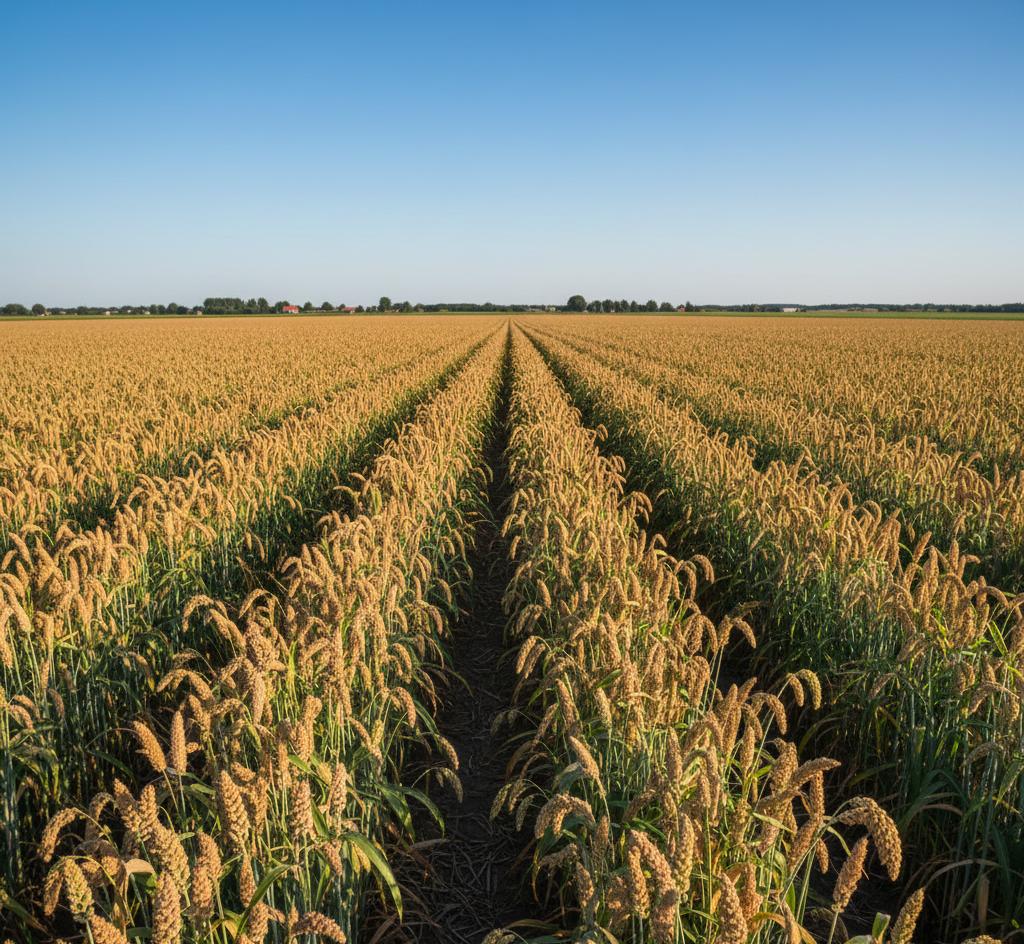
From Land Preparation to Harvesting, Storage & Uses
Millet is a drought-tolerant cereal crop widely grown in semi-arid and tropical regions. It plays a vital role in food security due to its adaptability, short growing season, and high nutritional value.
Millet thrives in temperatures between 25°C and 35°C. It performs well in low rainfall areas and requires well-drained soils. The ideal soil pH ranges from 5.5 to 7.5.
Proper soil testing ensures correct fertilizer application and better yield management.
Prepare the land through plowing and harrowing to create a fine seedbed. Use certified seeds and treat them before sowing.
Sow seeds 2–4 cm deep with proper spacing to ensure optimal plant population and healthy growth.
Millet passes through vegetative growth, tillering, booting, heading, flowering, and grain filling stages.
Weed control during early growth is essential. Apply fertilizers as recommended and irrigate during flowering if necessary.
Harvest millet when grains harden and moisture reaches 18–20%. Dry the crop before threshing to reduce grain damage.
Clean, grade, and dry grains to 12–13% moisture for safe storage.
Store millet in airtight containers in cool, dry conditions. Proper storage prevents mold and insect infestation.
Millet is used for porridge, flour, livestock feed, brewing, and biofuel production.