Introduction to Carrot Cultivation
Carrots (Daucus carota) are highly nutritious root vegetables rich in beta-carotene, vitamin A, fiber, and antioxidants, which support eye health, immunity, and digestion. Carrots are consumed fresh, cooked, or processed into juices, powders, and snacks, making them a versatile and valuable crop for farmers and households alike.
Carrot farming requires careful attention to soil, irrigation, fertilization, and pest management to produce straight, uniform roots of high quality. With proper practices, carrots can provide a steady income through fresh markets, processing industries, and value-added products.
Carrots are adaptable to temperate and subtropical climates. They prefer cooler growing conditions, which enhance sweetness and flavor. Selecting suitable varieties for local climate ensures optimal growth, quality roots, and timely harvests.
Successful carrot production combines good agronomic practices with sustainable methods like organic fertilization, drip irrigation, and integrated pest management to maximize yields and quality.
1. Site Selection and Climate
Carrots thrive in well-drained, sandy loam soils with pH 6–7. Heavy clay soils hinder root growth, causing deformation and poor quality. Raised beds can improve drainage and root uniformity.
Cool temperatures between 16–24°C are ideal. Extreme heat reduces root quality and can cause bolting, while frost can damage seedlings.
Full sunlight for at least 6 hours per day promotes photosynthesis and root development. Avoid shaded areas which reduce root size and sugar content.
Choose fields free of previous root crops to prevent nematode infestations and soil-borne diseases.
2. Land Preparation
Plow and harrow the field to a fine, friable seedbed, free of stones and clumps. Carrots require soft soil to at least 30 cm deep; even small stones or hard clumps can cause roots to fork or bend.
Incorporate well-decomposed compost or organic manure to improve soil structure, fertility, and moisture retention. Avoid fresh manure which can cause root forking.
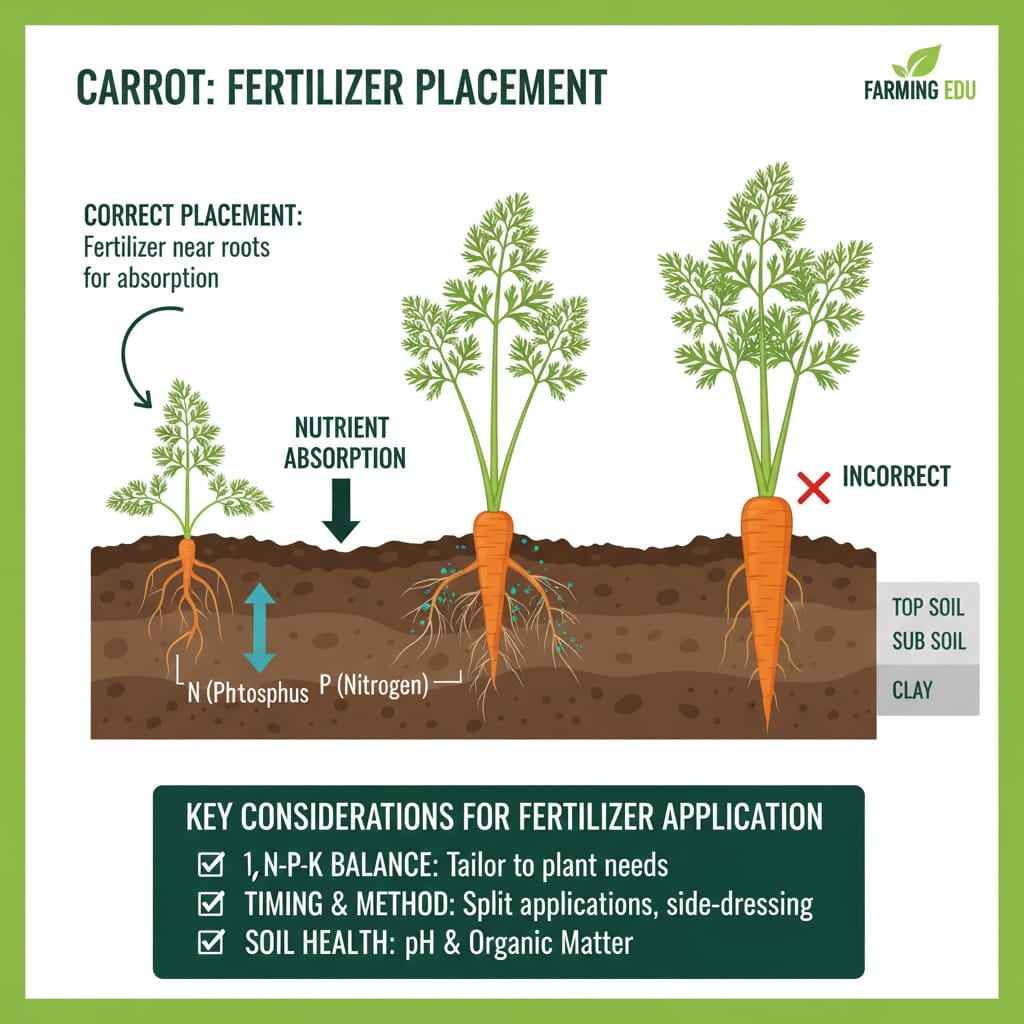
Apply basal NPK fertilizers based on soil tests. Potassium enhances root quality, phosphorus supports early growth, and Nitrogen should be moderate to avoid excessive leafy growth.
Level the land properly to ensure uniform irrigation and prevent waterlogging, which can rot roots.
3. Seed Selection and Sowing
Use certified carrot seeds with known variety characteristics. Choose local or hybrid varieties depending on market demand, taste, and growth duration.
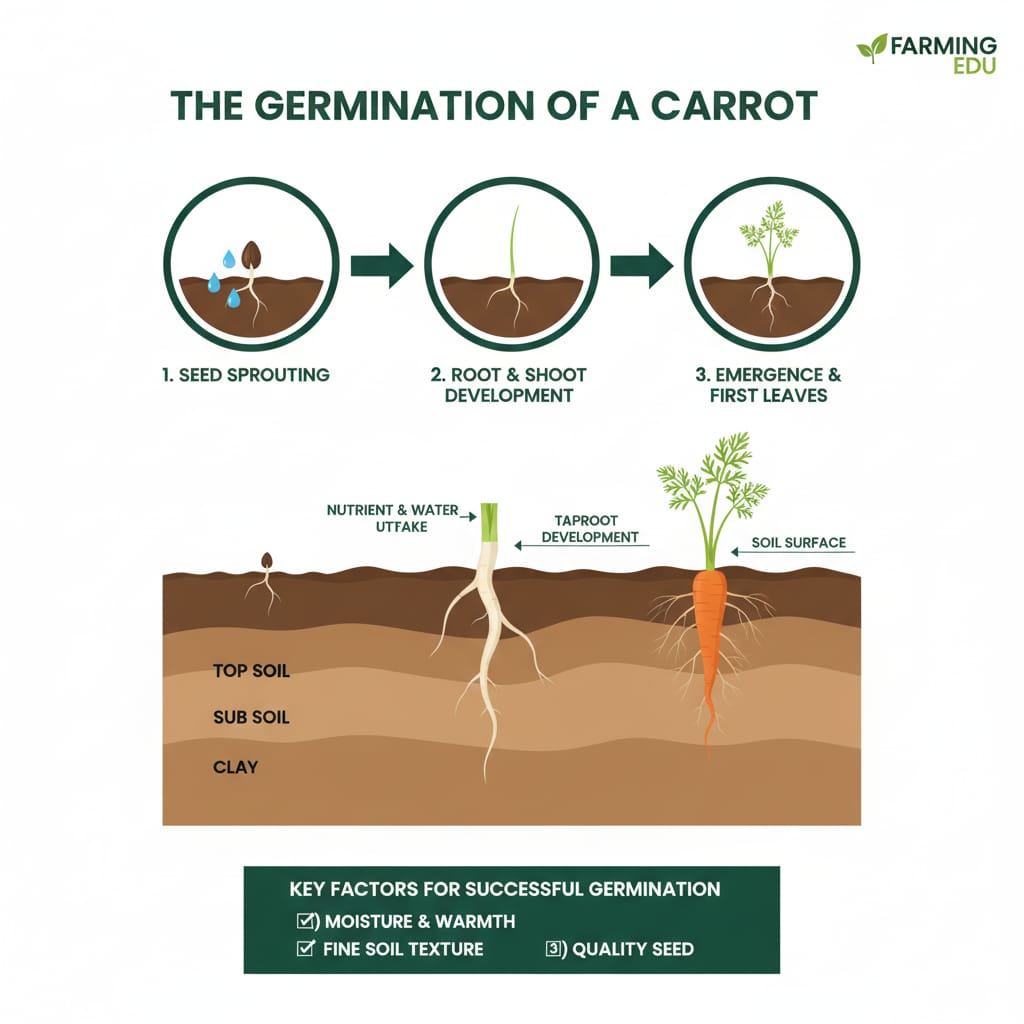
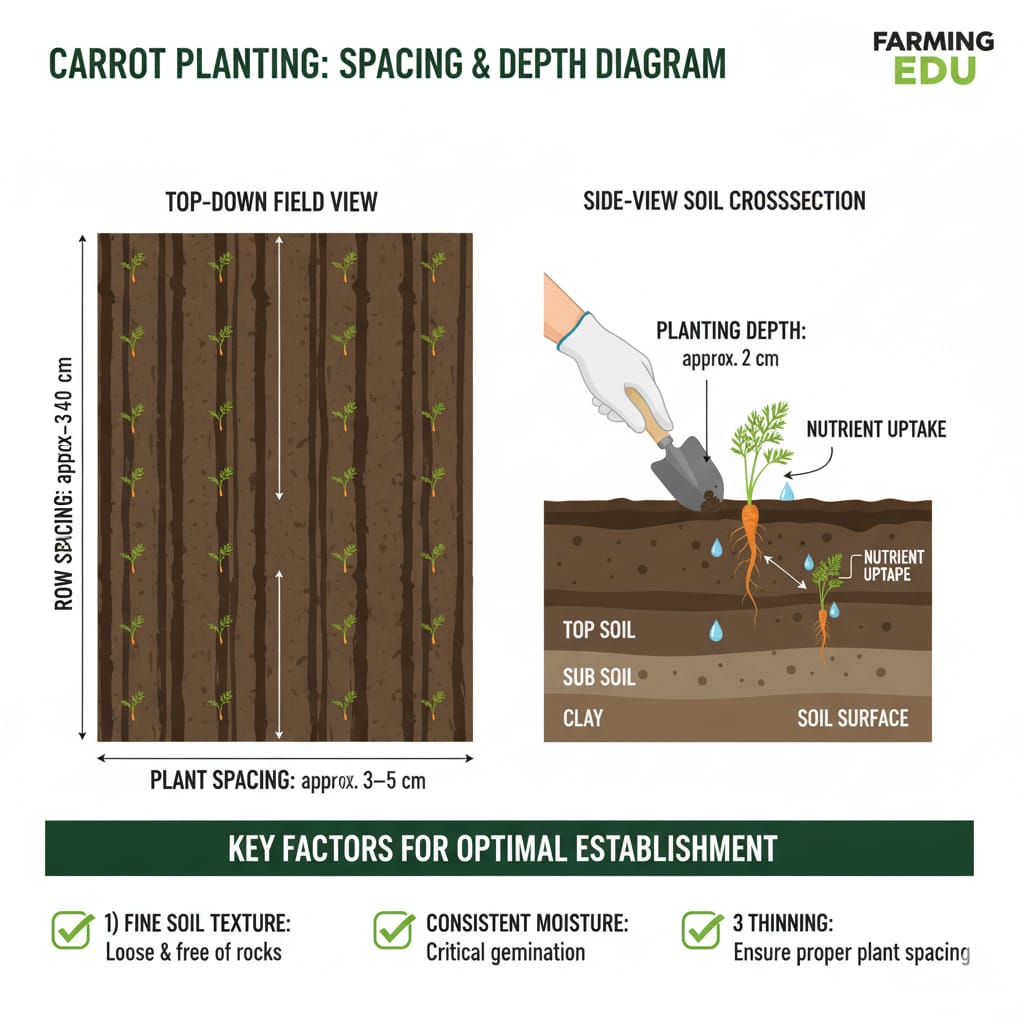
Carrots are usually direct-seeded. Sow seeds thinly to ensure proper spacing, approximately 1–2 cm apart in rows spaced 30–45 cm. Seeds are covered lightly with soil and watered gently.
Pre-germination by soaking seeds 24 hours before sowing can improve germination and uniformity. Maintain consistent moisture during germination, which usually takes 10–14 days.
Thin seedlings when they reach ~5 cm in height, leaving 5–8 cm between plants. Overcrowding results in spindly, small roots and reduces overall yield.
4. Irrigation and Water Management
Carrots have shallow roots and require frequent, consistent watering. Inconsistent moisture can cause cracking or poor root development.
Drip irrigation is preferred to conserve water and reduce leaf wetness, minimizing fungal disease risk.
Mulching helps retain moisture, suppress weeds, and maintain uniform soil temperature for optimal root growth.
Adjust irrigation based on weather and crop stage to achieve the best root size, color, and sweetness.
5. Fertilization and Nutrient Management
Balanced fertilization is key for carrot quality. Nitrogen promotes leaf growth, phosphorus supports root initiation, and potassium improves root size, color, and sugar content.
Use fertilizers with lower Nitrogen (N) and higher Potassium (K) to direct energy into thick, sweet taproots rather than excessive foliage. Micronutrients like boron and zinc improve root formation and quality.
Split applications during the growing season help maintain nutrient availability and avoid over-fertilization, which can lead to forked roots.
Soil testing is recommended for sustainable nutrient management and higher yields.
6. Pest and Disease Management
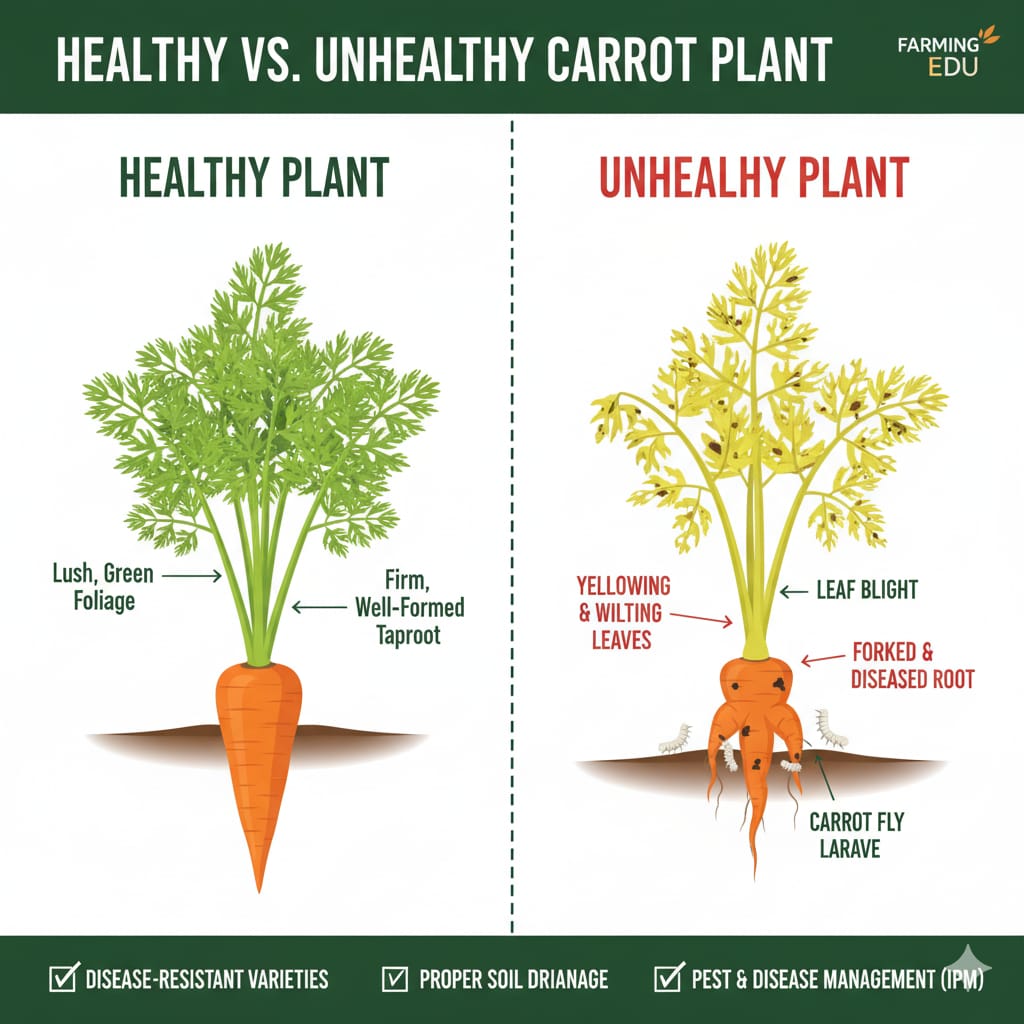
Common pests include carrot fly, aphids, and nematodes. Crop rotation, physical barriers, and IPM strategies are essential to minimize damage.
Diseases such as powdery mildew, leaf blight, and root rot can affect yield and quality. Good field sanitation, resistant varieties, and timely fungicide application prevent outbreaks.
Monitoring and early intervention reduce losses and maintain high-quality roots. Companion planting with onions masks carrot scent and reduces pest pressure.
Biological control and organic pesticides are recommended for sustainable carrot production.
7. Harvesting
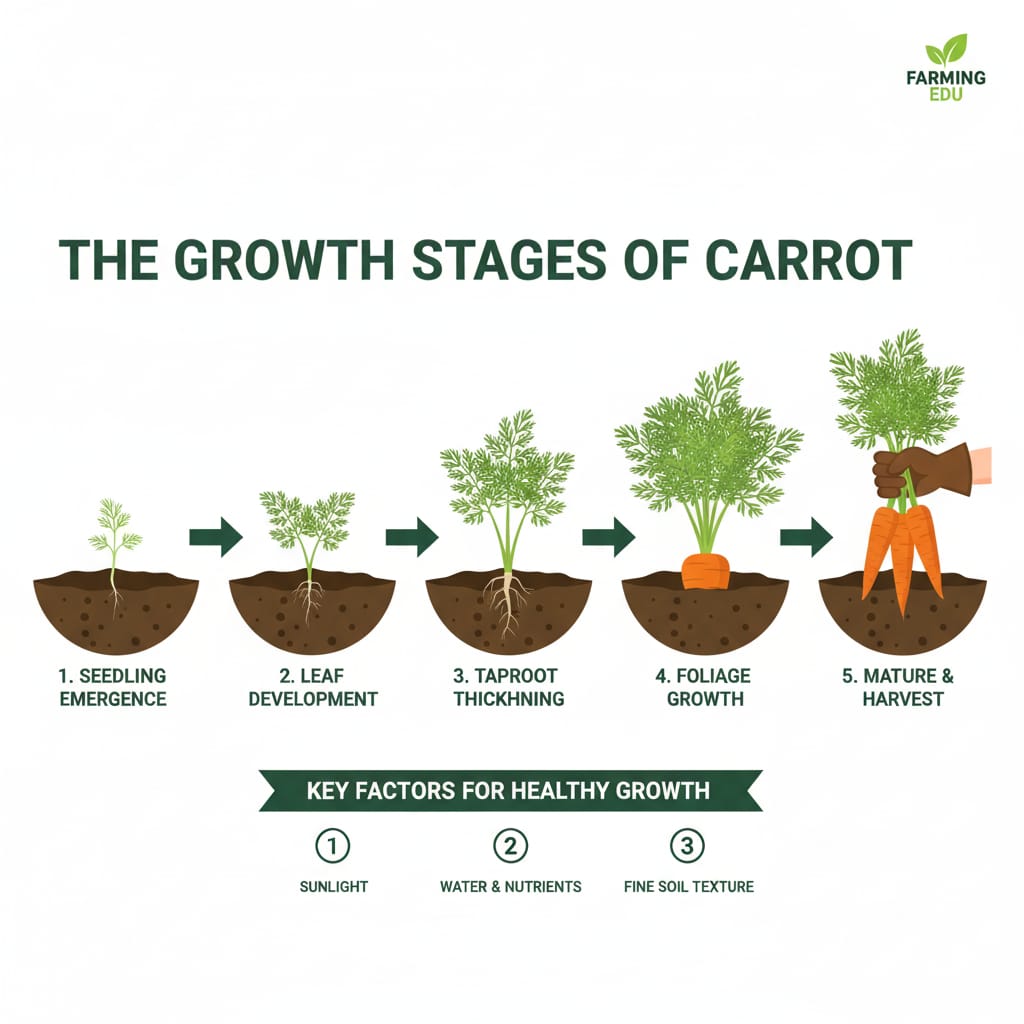
Carrots are ready for harvest 70–120 days after sowing depending on variety. Harvest when roots reach desired size and color, typically 2–3 cm in diameter for table carrots.
Carefully lift roots to avoid bruising or breaking. Regular harvesting ensures continuous market supply and prevents oversized, woody roots.
Remove excess soil gently and sort by size and quality to meet market standards.
Timing harvest properly enhances shelf life, flavor, and market value.
8. Post-Harvest Handling and Storage
Wash roots to remove soil and grade them according to size and quality. Trim greens to reduce moisture loss.
Store carrots at 0–4°C with high humidity (90–95%) for long-term storage. Avoid mechanical damage, which accelerates spoilage.
Carrots can be processed into juices, frozen, or dehydrated for added value.
Proper handling reduces post-harvest losses and ensures a high-quality product for markets or processing.
9. Uses of Carrots
- Fresh consumption: salads, snacks, and cooking.
- Processing: juices, soups, purees, dried carrots, and snacks.
- Medicinal: rich in beta-carotene, antioxidants, and vitamins supporting eye health and immunity.
- Commercial sale: fresh markets, supermarkets, and processing industries.
10. Carrot Companion Planting
Carrots grow well alongside onions. The onion scent masks carrots from the Carrot Rust Fly, while carrots loosen soil for onions. Companion planting improves pest management naturally and boosts yields without chemicals, ideal for organic farms.
11. Carrot Videos & Mini-Gallery