Introduction to Cassava Farming
Cassava is a major root crop grown for its starchy tubers, providing carbohydrates for millions globally.
It is drought tolerant and adaptable to marginal soils, making it an important food security crop.
Cassava is processed into flour, chips, gari, starch and animal feed.
With proper farming practices cassava can provide high yields and stable income.
1. Site Selection and Soil Preparation
Cassava thrives in well drained sandy loam soils with pH between 5.5 and 6.5.
Avoid waterlogged soils because excess moisture causes root rot.
Plow soil to about 25–30 cm depth and incorporate organic manure.
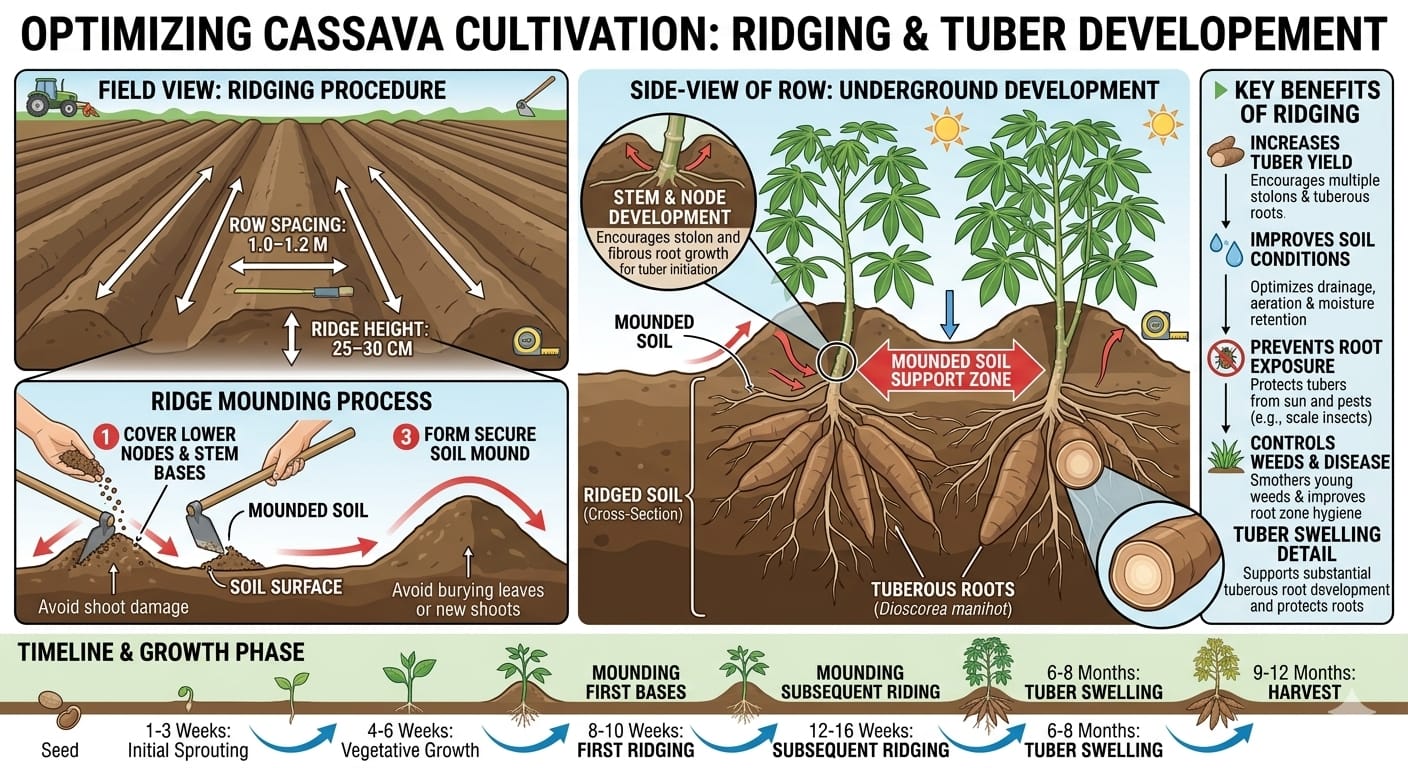
Ridges or mounds should be prepared to improve drainage and root development.
2. Stem Selection and Planting
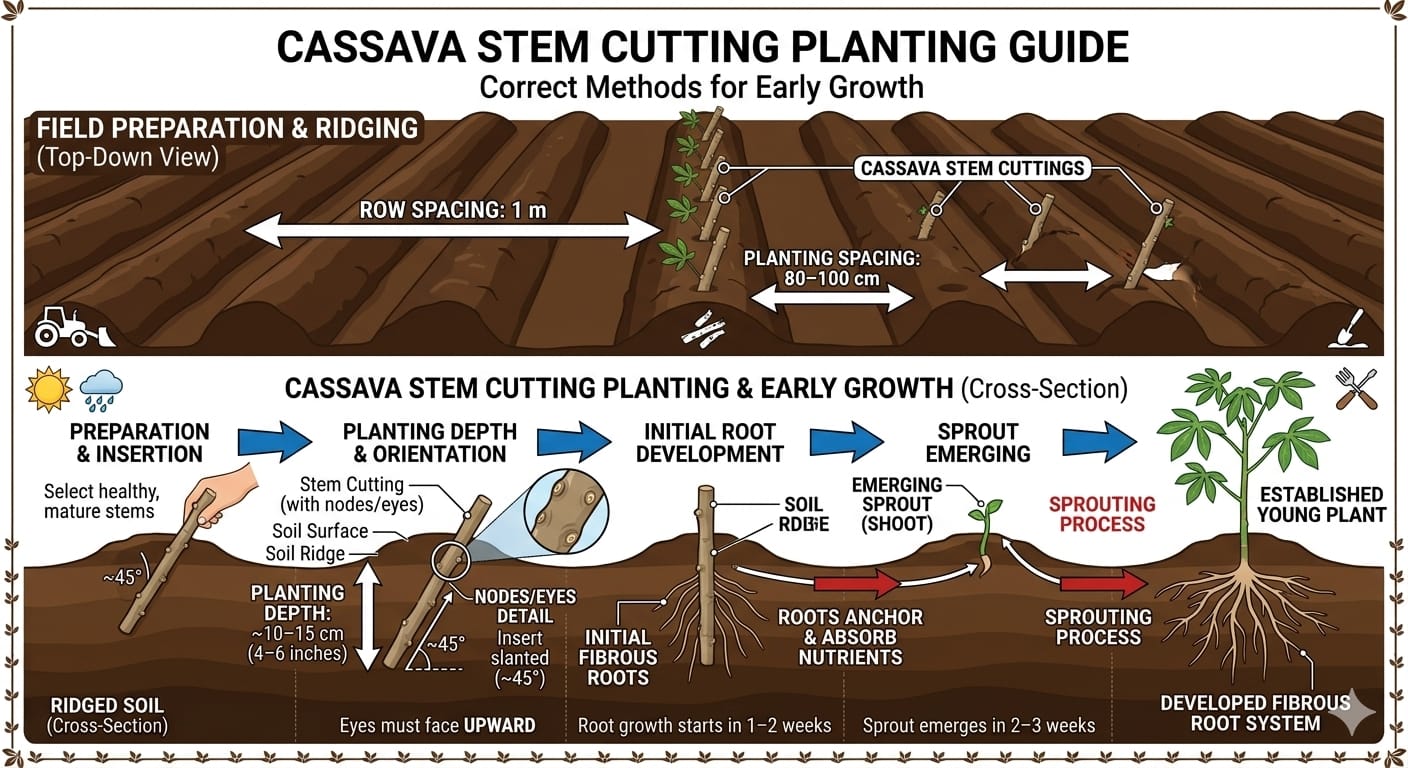
Use healthy disease free cassava stems about 20–30 cm long.
Each cutting should contain 5–7 nodes for successful sprouting.
Plant cuttings vertically or at a 45 degree angle.
Spacing should be about 1–1.2 meters between rows and 0.8–1 meter between plants.
3. Fertilization and Irrigation
Cassava requires moderate nitrogen and adequate phosphorus and potassium.
Organic manure improves soil fertility and microbial activity.
Irrigation is only needed during prolonged drought.
Mulching helps conserve soil moisture and suppress weeds.
4. Pest and Disease Management
Major cassava pests include mealybugs, mites and termites.
Common diseases include cassava mosaic virus and bacterial blight.
Use resistant varieties and practice crop rotation.
Remove infected plants early to prevent spread.
5. Harvesting
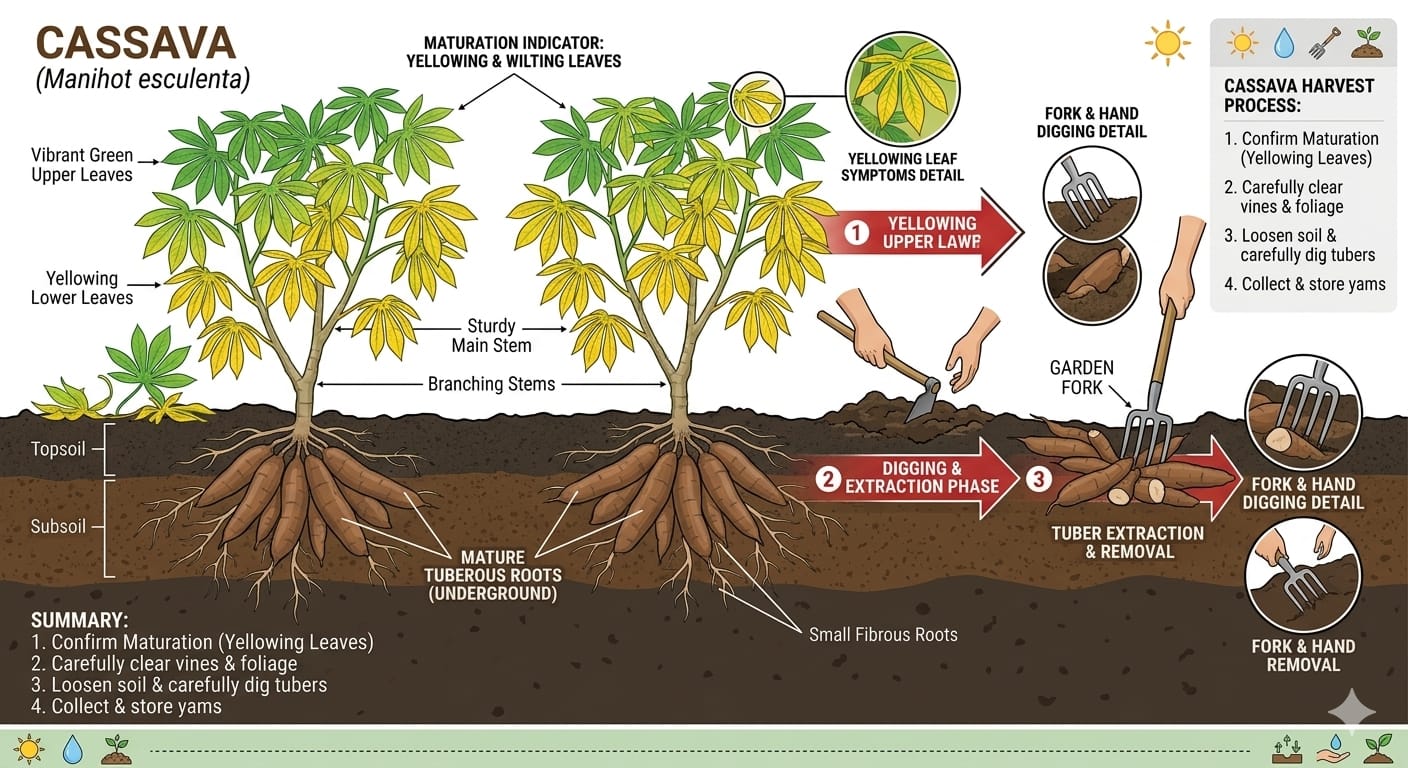
Cassava is harvested 8–18 months after planting depending on the variety.
Harvest carefully to avoid breaking the tubers.
Sort harvested tubers based on quality and size.
Late harvesting can result in woody roots.
6. Post Harvest Handling and Storage
Cassava roots deteriorate quickly after harvest.
They should be processed or consumed within 2–3 days.
Short term storage can be done in shaded ventilated heaps.
Processing into flour chips or gari improves shelf life.
7. Uses of Cassava
- Boiled roasted or fried cassava for human consumption
- Processing into cassava flour chips and gari
- Animal feed from cassava peels
- Industrial starch and ethanol production