Introduction to Potato Farming
Potatoes are one of the most important food crops globally and are grown for their nutritious and energy-rich tubers.
Farmers growing root crops such as cassava, sweet potatoes, and carrots often include potatoes in crop rotation systems.
Potatoes provide high yields and are widely used for food processing such as chips, fries, and flour.
Successful potato farming requires proper seed preparation, soil fertility management, irrigation, and disease control.
1. Site Selection and Soil Preparation
Potatoes grow best in well-drained sandy loam soils with a pH between 5.5 and 6.5.
Deep tillage of 25–30 cm helps loosen soil and allows tubers to expand freely underground.
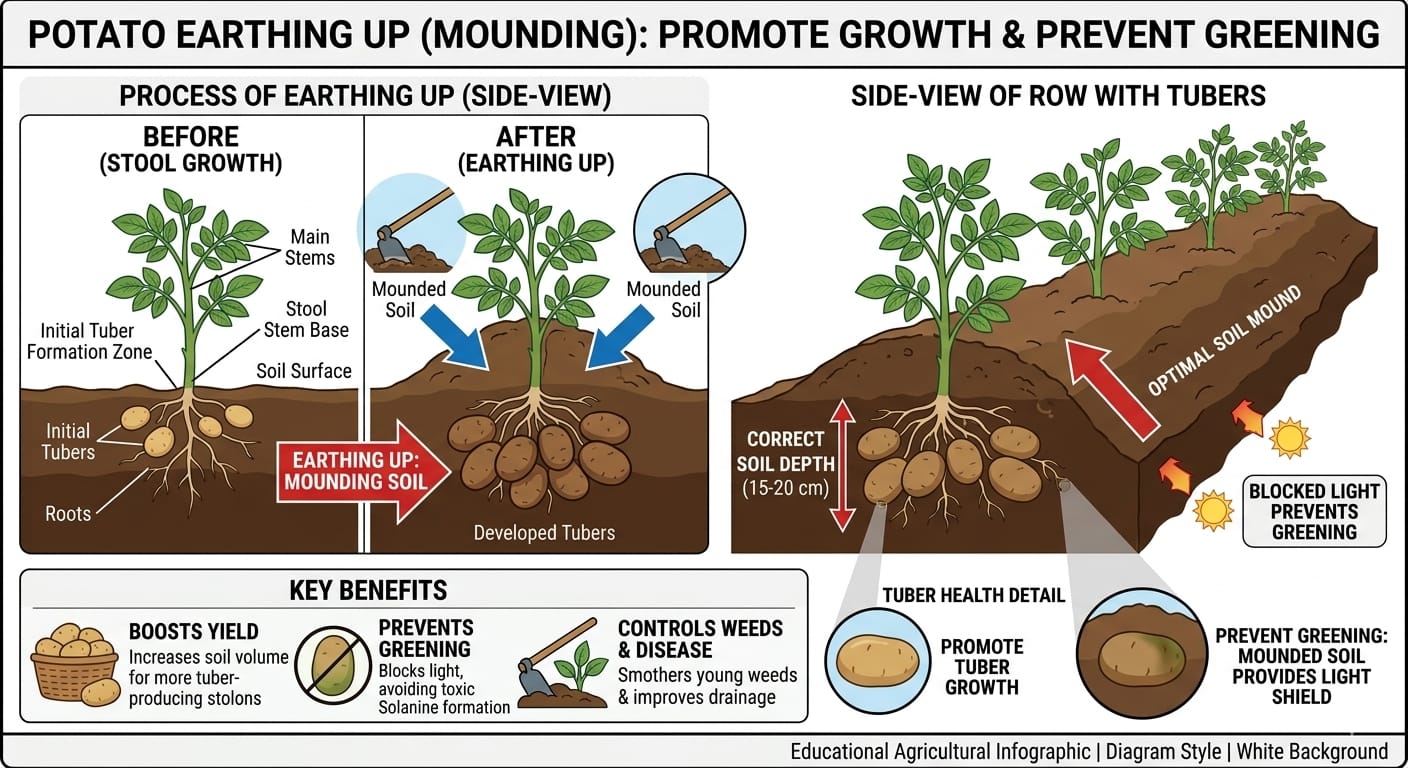
Raised beds or ridges improve drainage and make harvesting easier.
Organic manure or compost improves soil structure and nutrient availability.
2. Seed Selection and Preparation
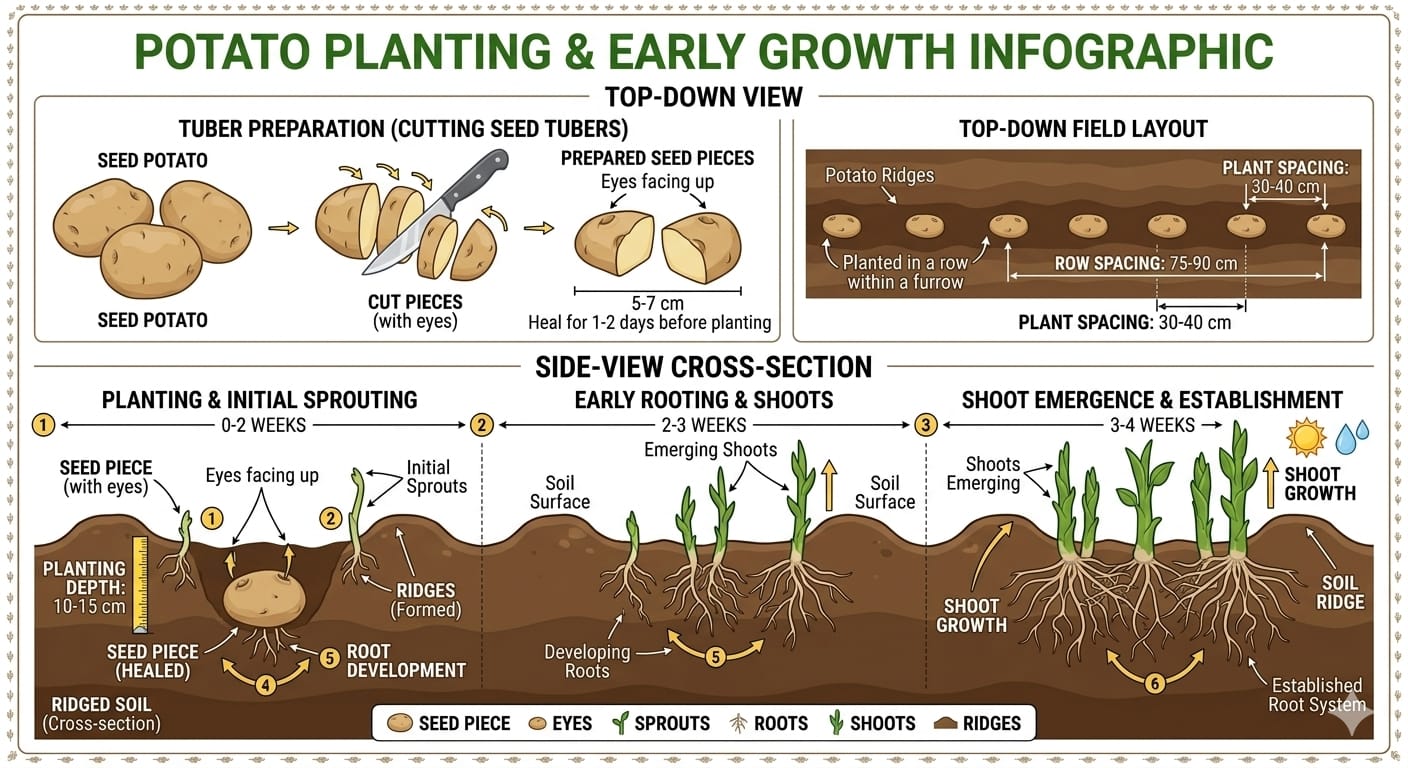
Use certified disease-free seed potatoes for best yields.
Pre-sprouting or chitting seed tubers for 2–4 weeks encourages early emergence.
Larger tubers can be cut into pieces containing at least one healthy eye.
Allow cut seed pieces to dry before planting to prevent rot.
3. Planting
Plant seed potatoes 10–15 cm deep with spacing of 25–35 cm between plants.
Rows should be spaced 60–75 cm apart for easy crop management.
Planting should occur during cool seasons when soil temperatures are suitable for sprouting.
Proper spacing ensures adequate sunlight, airflow, and tuber development.
4. Fertilization and Irrigation
Balanced fertilization is essential for potato growth.
Nitrogen promotes foliage growth while phosphorus and potassium support tuber development.
Regular irrigation is necessary during tuber initiation and bulking stages.
Earthing up prevents tubers from exposure to sunlight which causes greening.
5. Pest and Disease Management
Common potato pests include aphids, beetles and wireworms.
Diseases such as late blight and early blight can severely affect potato yields.
Crop rotation with crops like cassava or yam helps reduce soil-borne diseases.
Integrated pest management strategies help maintain healthy crops.
6. Harvesting
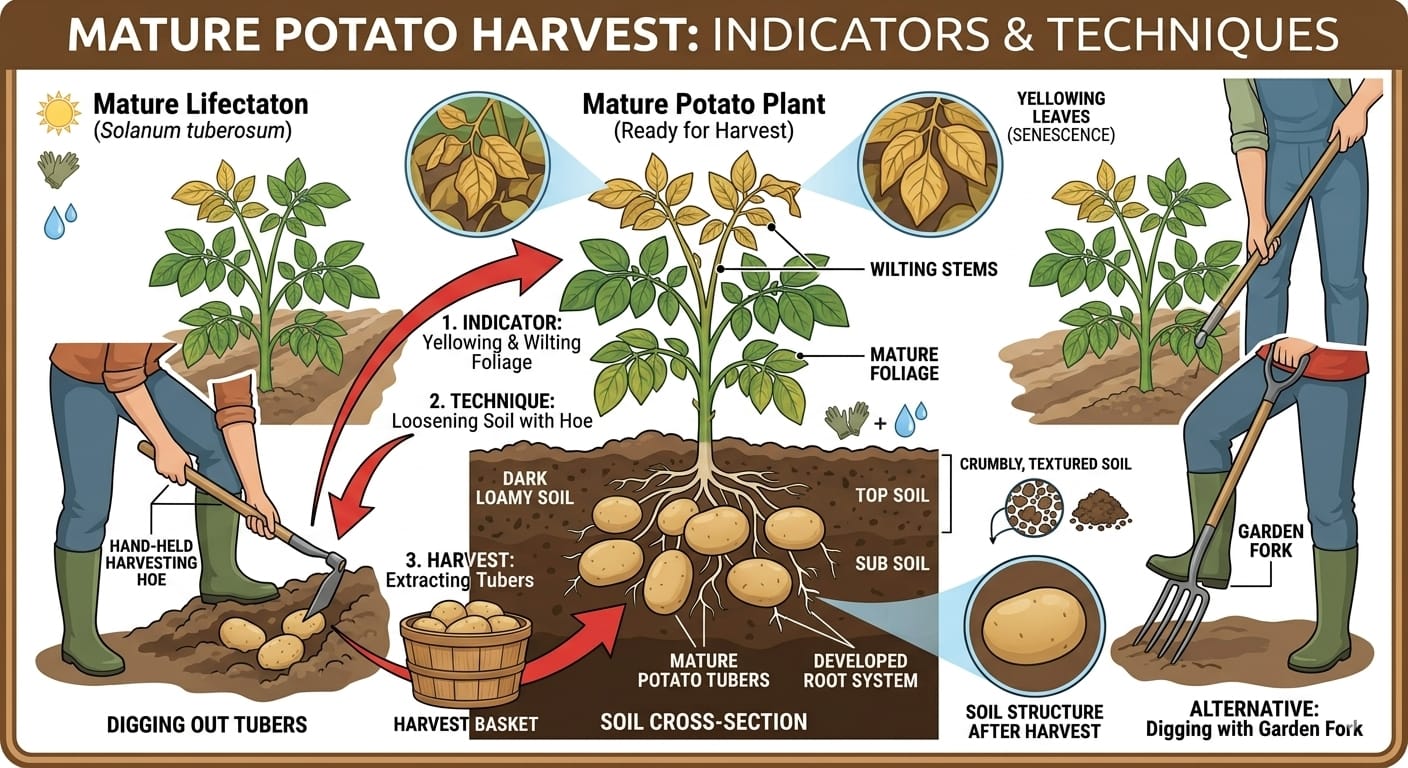
Potatoes are typically harvested 90–120 days after planting.
Harvest when foliage dries and tuber skins become firm.
Handle harvested potatoes carefully to prevent bruising.
Sorting and grading improves market value.
7. Post-Harvest Handling and Storage
Freshly harvested potatoes should be cured in shade for several days.
Curing heals minor wounds and improves storage life.
Store potatoes in cool, dark and well-ventilated conditions.
Avoid sunlight exposure which causes greening and solanine formation.
8. Uses of Potatoes
- Fresh consumption: boiled, baked, roasted or mashed
- Processing: potato chips, fries and starch
- Livestock feed from lower grade tubers
- Commercial food industry applications