Introduction to Sweet Potato Farming
Sweet potatoes are highly nutritious tuber crops rich in carbohydrates, fiber, vitamins, and minerals. They are widely grown for food security, income, and livestock feed.
Sweet potatoes can be rotated with crops like potatoes, cassava, and yam to maintain soil fertility and reduce disease pressure.
They are processed into flour, chips, fries, puree, and used in livestock feed and brewing industries.
1. Site Selection and Soil Preparation
Sweet potatoes prefer well-drained sandy loam soils (pH 5.5–6.5). Avoid waterlogged areas.
Full sunlight with good air circulation reduces fungal disease risks.
Plow and harrow to 20–25 cm depth, add compost, and form ridges or mounds for tuber growth.
Crop rotation with legumes or cereals improves soil fertility and pest control.
2. Vine Preparation and Planting
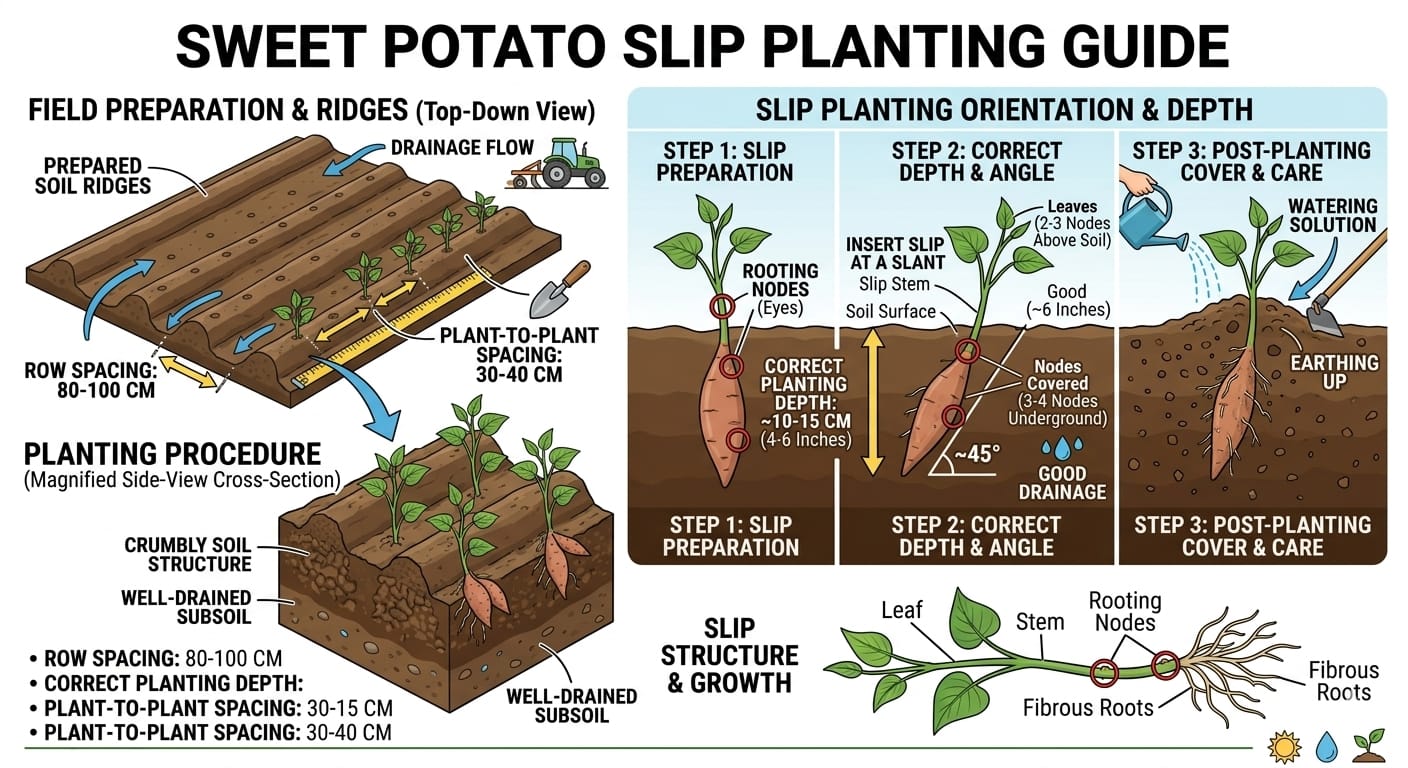
Select healthy disease-free vine cuttings 20–30 cm long with 3–4 nodes.
Plant at 45° angles, cover 2–3 nodes, leave remaining above soil.
Space 30–40 cm between plants, 75–100 cm between rows.
Plant at rainy season start or irrigate to maintain soil moisture.
3. Fertilization and Irrigation
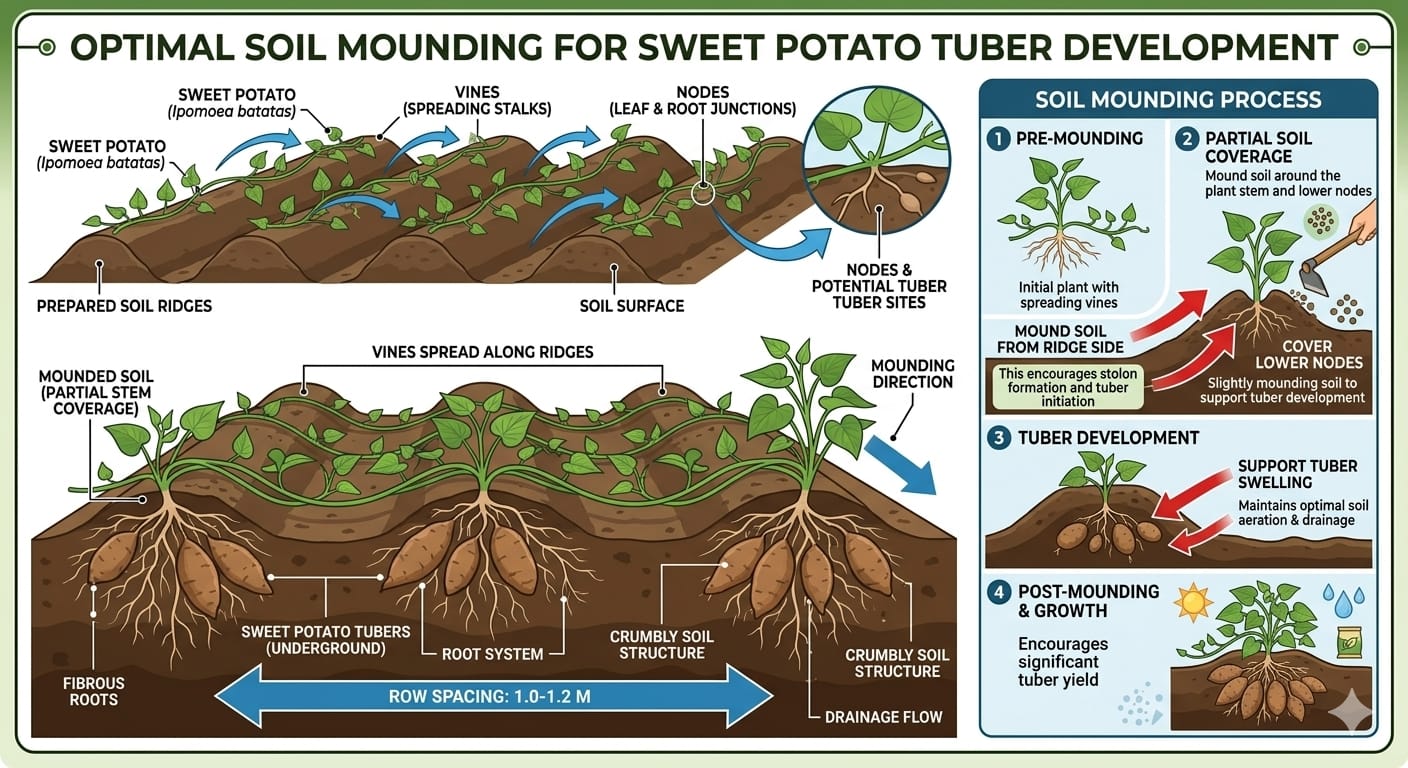
Apply balanced fertilizers: moderate nitrogen, adequate phosphorus & potassium.
Compost/manure improves soil fertility.
Irrigate consistently during first 6–8 weeks, then reduce watering to prevent rot.
Mulch conserves moisture and controls weeds.
4. Pest and Disease Management
Common pests: sweet potato weevils, aphids, nematodes.
Fungal/viral diseases: leaf curl, stem rot, scurf.
Use IPM: resistant varieties, crop rotation, proper spacing, and remove infected material.
Early monitoring is crucial to prevent severe yield loss.
5. Harvesting
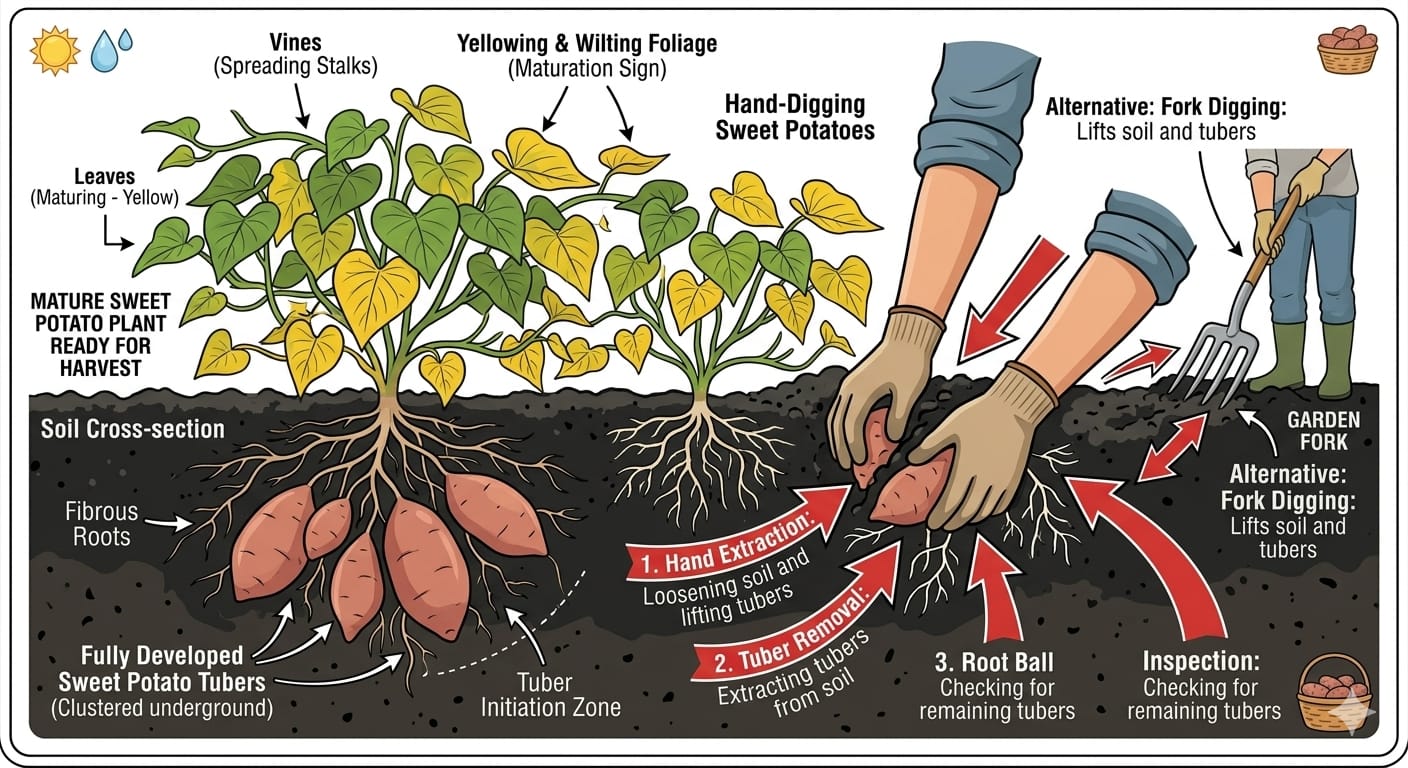
Harvest 90–150 days after planting depending on variety.
Use spade/fork to lift tubers without damaging skin.
Sort and grade tubers; early harvest provides “baby” sweet potatoes for premium markets.
6. Post-Harvest Handling and Storage
Cure at 29–32°C and 85–90% humidity for 5–10 days to toughen skin.
Store in cool, dry, ventilated areas at 13–16°C.
Protect from sunlight to avoid greening.
Proper post-harvest management extends shelf life and market quality.
7. Uses of Sweet Potatoes
- Direct consumption: boiled, baked, roasted, mashed, salads
- Processing: chips, fries, puree, flour, starch
- Animal feed: lower-grade tubers for livestock
- Commercial and export markets