Introduction to Cabbage Cultivation
Cabbage (Brassica oleracea var. capitata) forms compact heads of thick green leaves. It is nutritious, rich in vitamins C, K, fiber, and antioxidants.
Used fresh or processed into products like sauerkraut and coleslaw, high yields and disease-free crops are essential for commercial success.
Varieties include green, red, and savoy types. Selecting suitable varieties for climate and market enhances profitability.
Successful cultivation depends on soil fertility, irrigation, pest management, and proper post-harvest handling.
1. Site Selection and Climate
Fertile, well-drained soils with pH 6–7.5 are ideal. Improve heavy clay soils with organic matter.
Optimal temperatures: 15–25°C. Extreme heat causes bolting, loose heads, and poor leaf quality.
Full sunlight (6–8 hours daily) is essential. Shaded areas reduce leaf expansion and head formation.
Ensure good drainage and absence of soil-borne diseases.
2. Land Preparation
Deep plowing and harrowing create a fine seedbed. Remove stones to prevent deformities.
Incorporate compost for fertility, structure, and moisture retention.
Level field for uniform irrigation; raised beds recommended for heavy soils.
Apply basal fertilizers based on soil tests for balanced NPK.
3. Seedling Production and Sowing
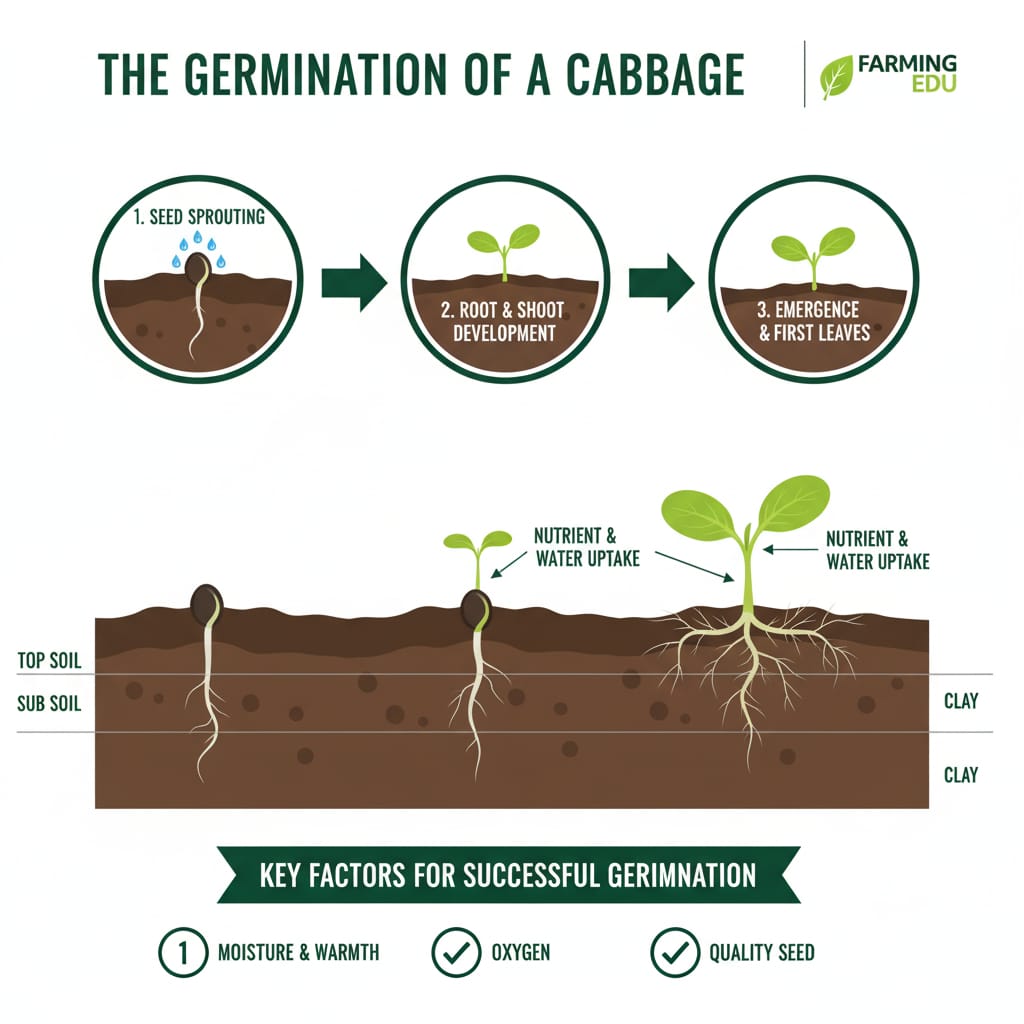
Sow high-quality seeds in trays or nursery beds. Maintain moisture and provide shade.
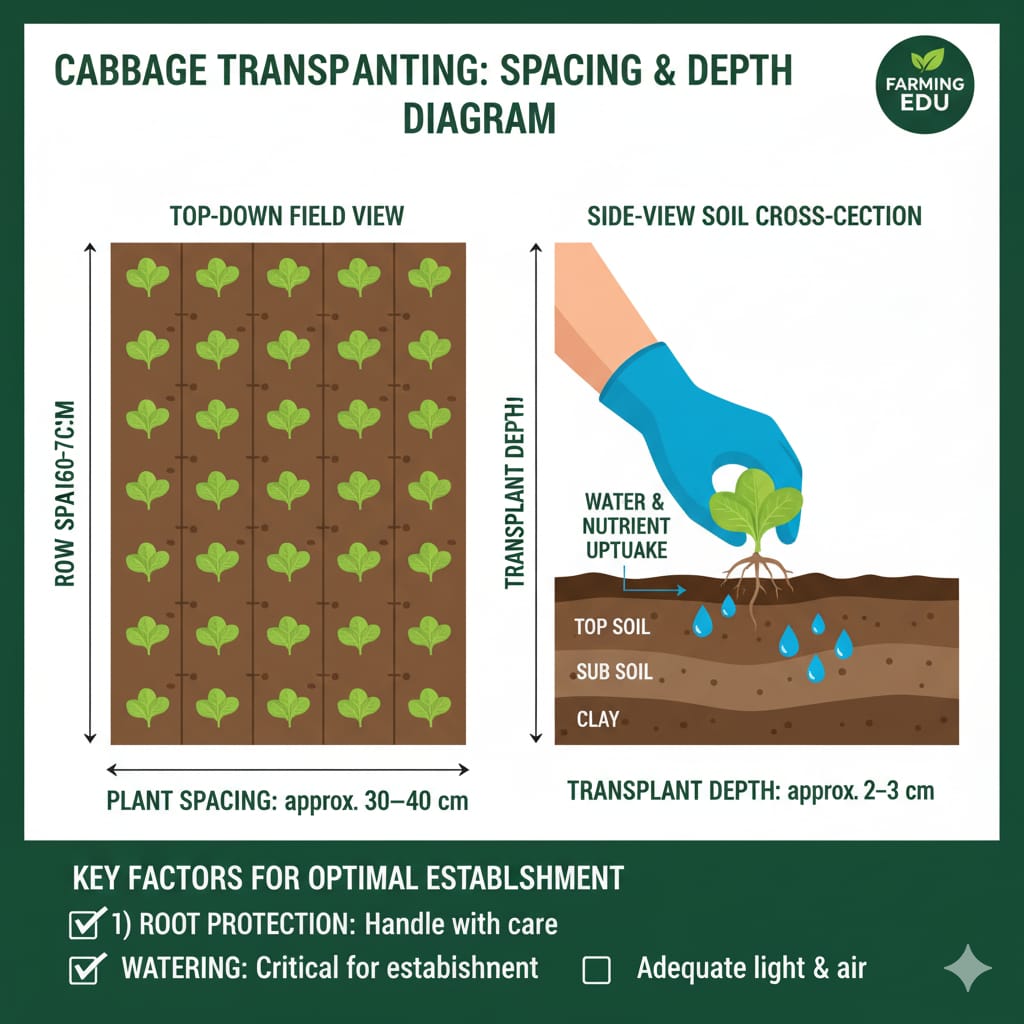
Transplant seedlings at 4–6 weeks old with 4–5 true leaves. Spacing: 45–60 cm between rows, 30–45 cm between plants.
4. Irrigation and Water Management
Consistent moisture is crucial during head formation. Inconsistent watering causes splitting or uneven heads.
Drip or sprinkler irrigation reduces foliar diseases.
Mulching conserves moisture, suppresses weeds, and maintains optimal root temperature.
5. Fertilization and Nutrient Management
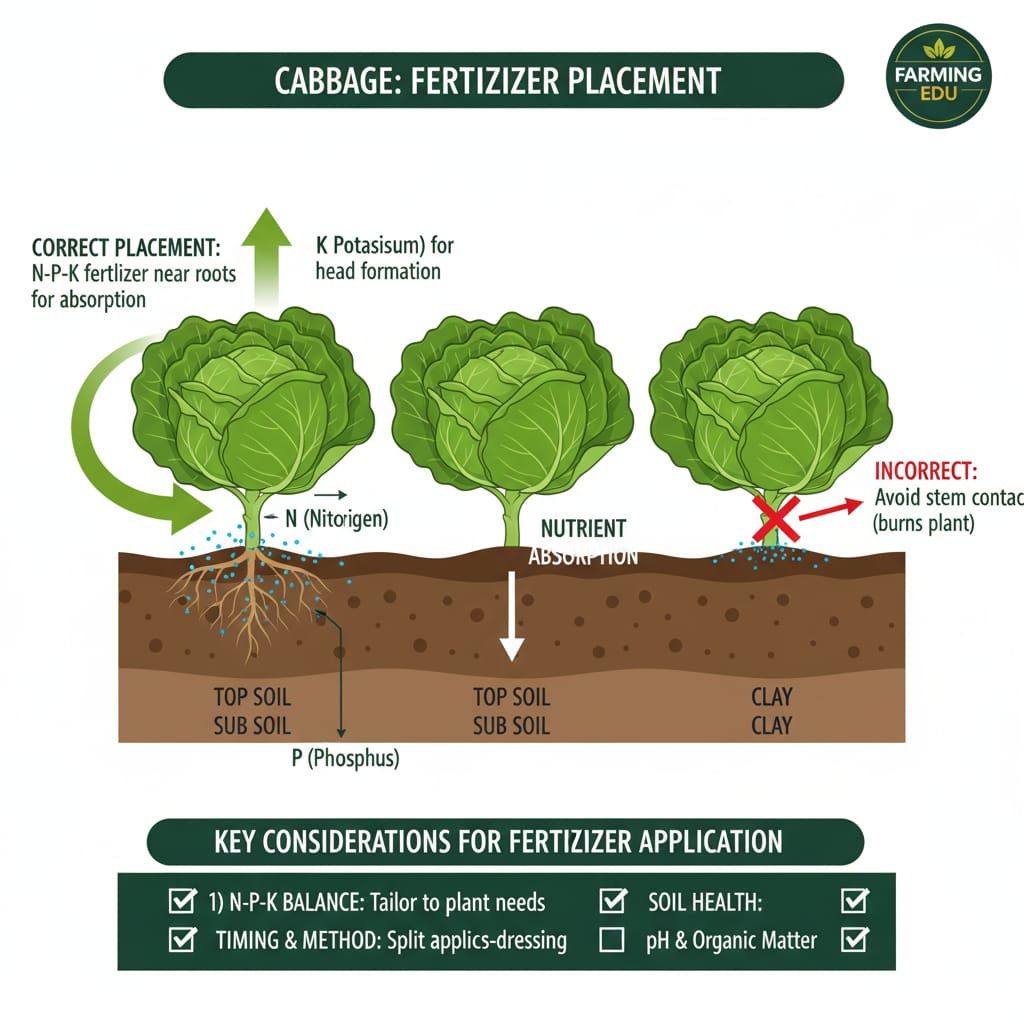
Nitrogen supports leafy growth, phosphorus for roots, potassium for head quality.
Micronutrients (boron, zinc, magnesium) enhance uniform heads and vibrant leaves.
Split nitrogen applications to avoid excessive vegetative growth.
Soil testing helps optimize sustainable fertilization.
6. Pest and Disease Management
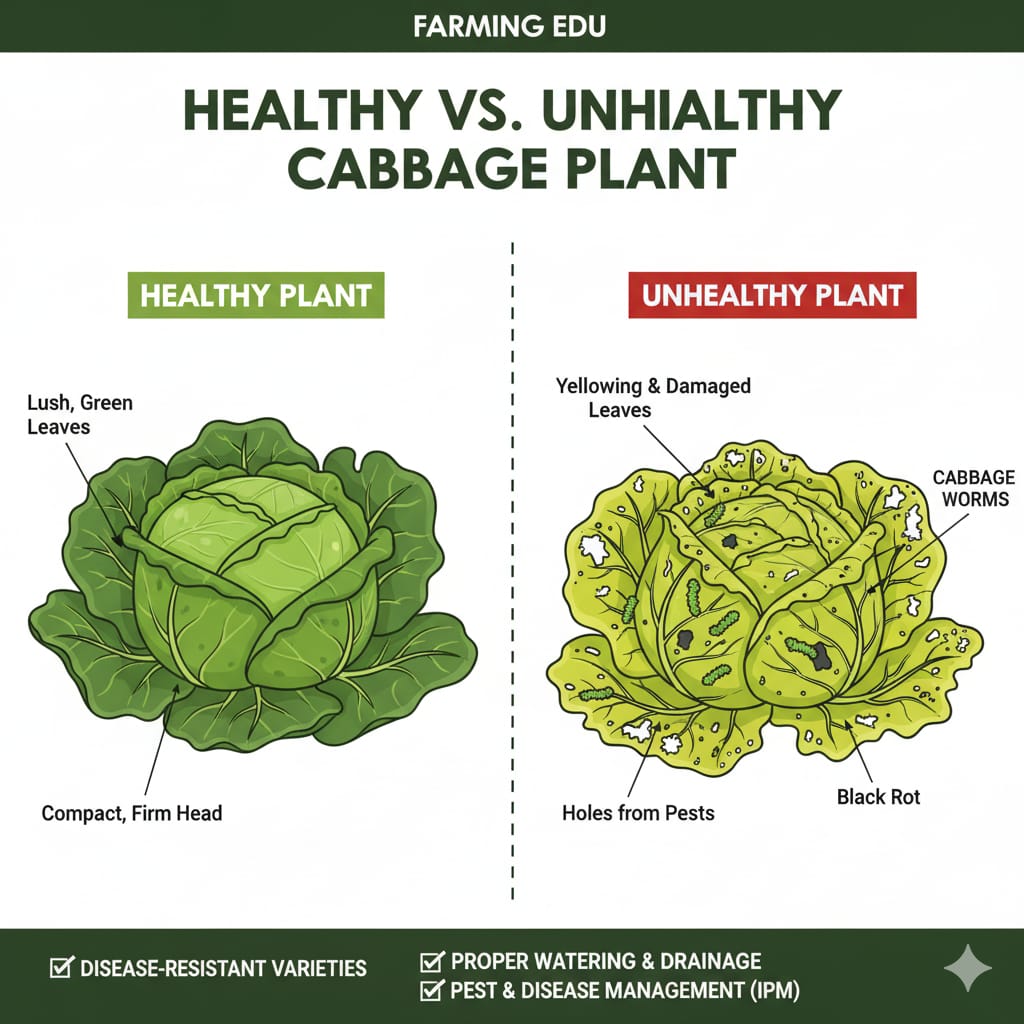
Pests: aphids, cabbage worms, diamondback moths, flea beetles. Use IPM and resistant varieties.
Diseases: black rot, downy mildew, clubroot. Crop rotation and sanitation minimize losses.
Monitor regularly and intervene early. Proper spacing and irrigation reduce fungal/bacterial diseases.
7. Harvesting
Harvest when heads are firm and dense, 70–120 days after transplanting.
Harvest in morning to maintain crispness. Avoid damaging heads.
Sort by size and quality for market standards.
8. Post-Harvest Handling and Storage
Wash and grade heads. Store in ventilated crates to prevent crushing.
Storage temperature: 0–4°C, humidity 90–95%. Extends shelf life to several weeks.
Can be processed into sauerkraut, coleslaw, or frozen products.
9. Uses of Cabbage
- Fresh: salads, stir-fries, soups, garnishes
- Processing: sauerkraut, coleslaw, frozen vegetables, pickles
- Medicinal: antioxidants, vitamins, fiber
- Commercial sale: fresh markets, restaurants, processing industries