Introduction to Capsicum Cultivation
Capsicum, also known as bell pepper (Capsicum annuum), is rich in vitamins A, C, and antioxidants. It promotes immunity, eye health, and reduces oxidative stress.
Used for fresh consumption, cooking, and processing (sauces, pickles, condiments). Market demand is high, making it a profitable crop.
Varieties include green, red, yellow, and orange. Select based on climate, pest resistance, and market preference.
Success requires proper soil fertility, irrigation, pest management, spacing, and timely harvesting.
1. Site Selection and Climate
Prefers fertile, well-drained soils with pH 6–6.8. Sandy loam enriched with compost is ideal. Avoid waterlogged areas.
Optimal temperature: 18–28°C. Extremes affect growth, flowering, and fruit formation.
Full sunlight 6–8 hours/day. Good air circulation reduces fungal diseases.
2. Land Preparation
Plow and harrow to a fine seedbed. Remove stones to prevent fruit deformities.
Incorporate compost or farmyard manure. Raised beds recommended for poorly drained soils.
Apply basal fertilizers per soil test for vegetative growth and fruiting.

3. Seedling Production and Transplanting
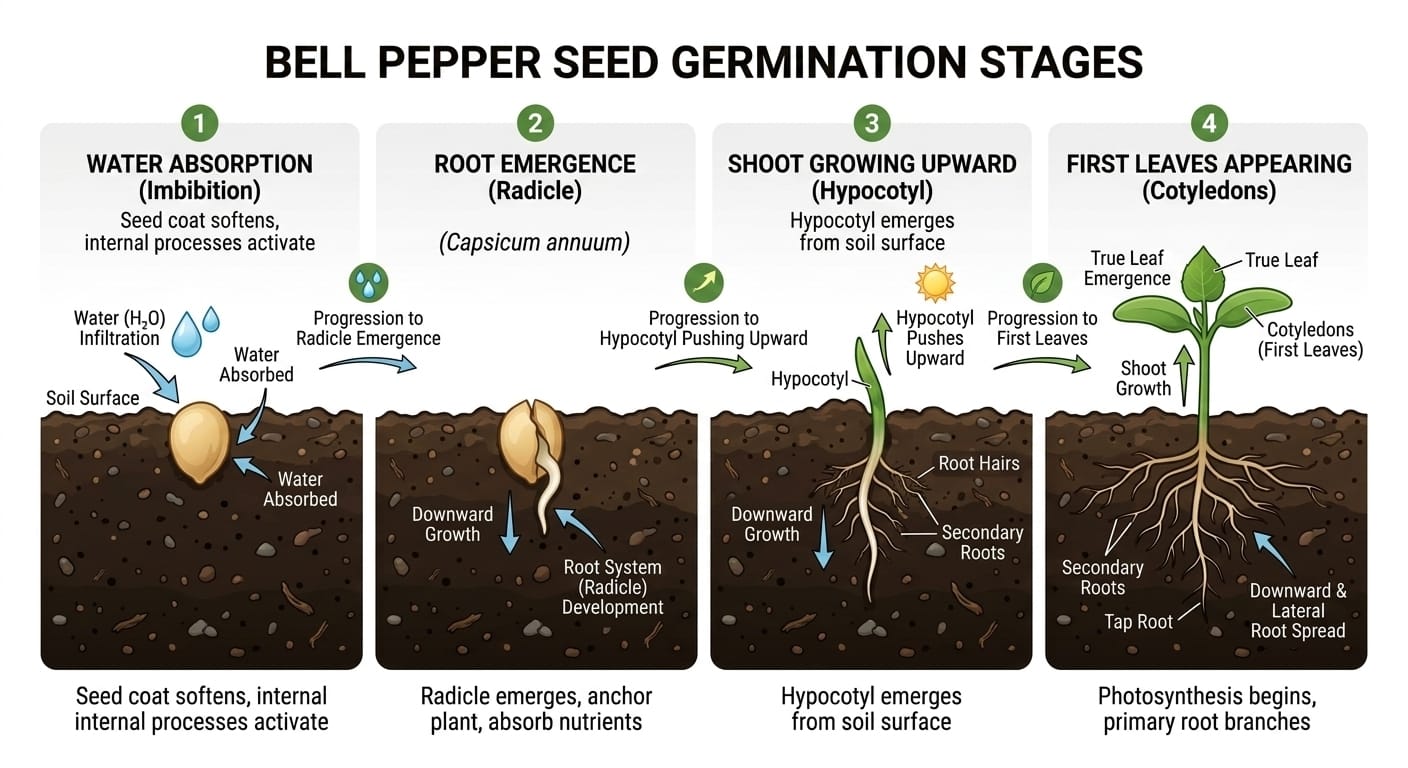
Sow seeds in nursery trays or beds with fertile soil. Maintain moisture and shading.
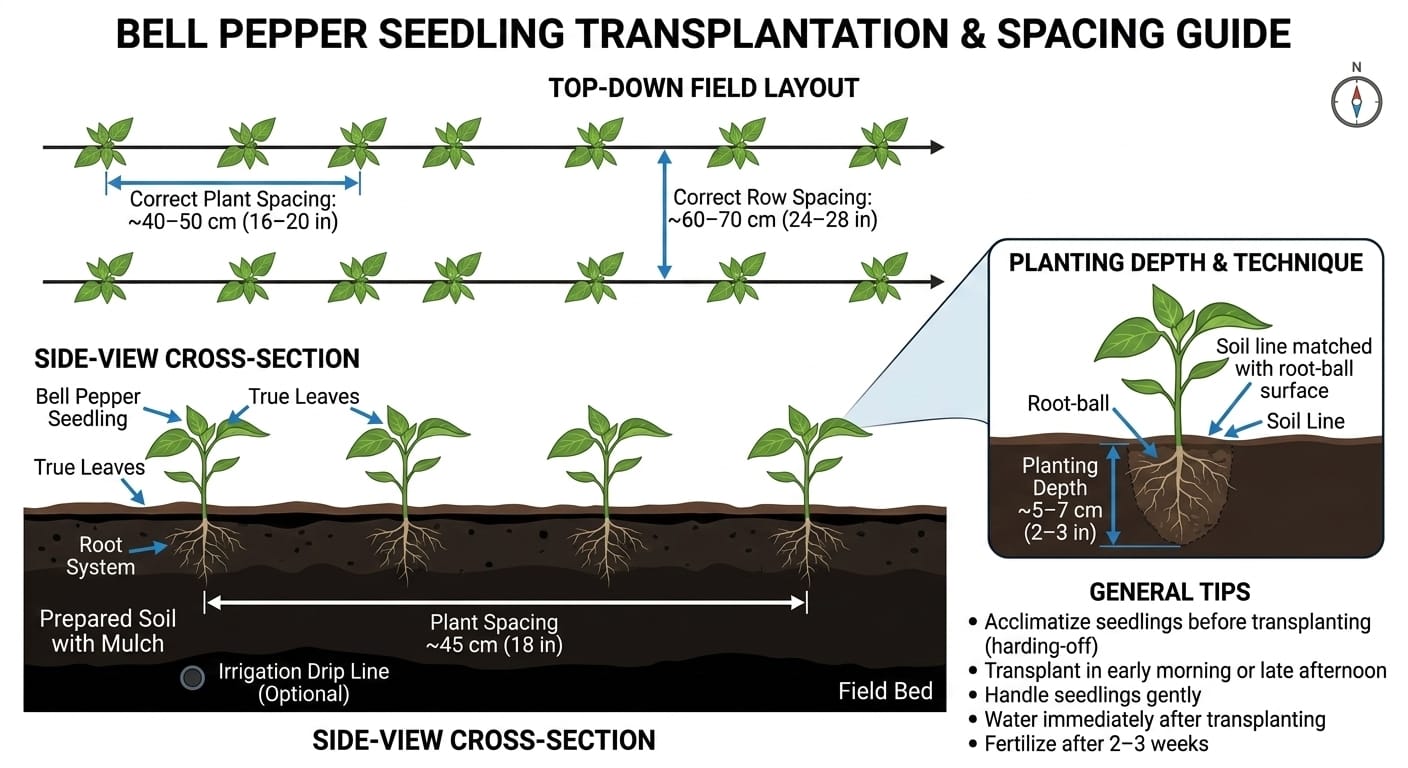
Transplant at 6–8 weeks with 4–6 true leaves. Spacing: 45–60 cm between plants, 60–90 cm between rows. Trellising may be used.
Handle seedlings carefully to reduce transplant shock.
4. Irrigation and Water Management
Maintain consistent soil moisture. Irregular watering causes flower drop, poor fruit set, or splitting.
Drip irrigation recommended; avoid overhead watering in wet climates. Mulch to conserve moisture and suppress weeds.
5. Fertilization and Nutrient Management
Nitrogen for vegetative growth, phosphorus for roots, potassium for fruit quality. Micronutrients: calcium, magnesium, boron.
Split nitrogen applications for balanced growth. Soil testing ensures precise fertilizer management.
6. Pest and Disease Management
Pests: aphids, thrips, whiteflies, spider mites, fruit borers. Use IPM to reduce chemical use.
Diseases: bacterial spot, powdery mildew, fusarium wilt, anthracnose. Resistant varieties, crop rotation, sanitation recommended.
Monitor regularly and intervene early.
7. Flowering and Fruit Development
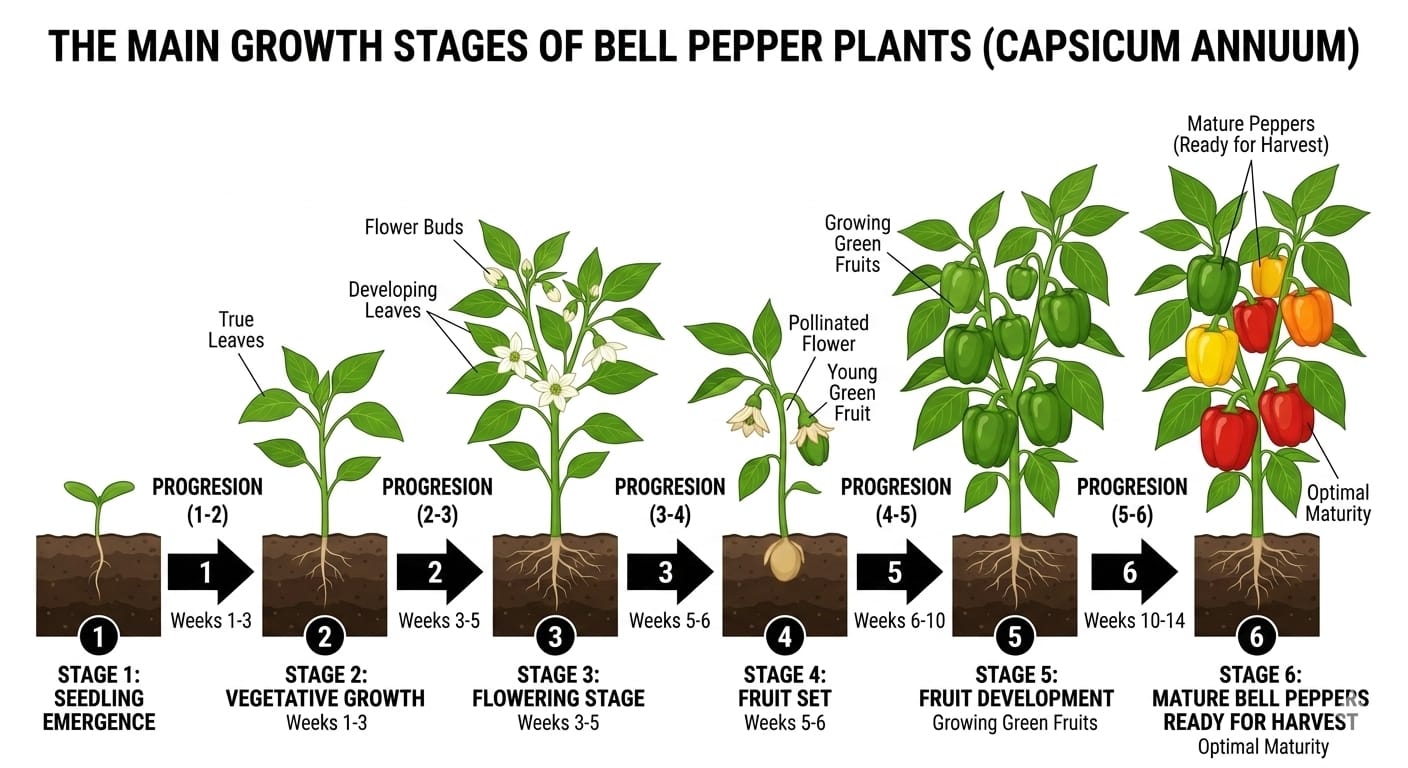
Flowering 8–10 weeks after transplanting. Pollination via bees, wind, or hand improves fruit set.
Thin fruits if necessary, support for proper growth and air circulation. Consistent irrigation and nutrition maximize size, color, and quality.
8. Harvesting
Harvest when fruits reach desired size and color, 70–90 days after transplanting. Early morning harvest reduces stress.
Handle carefully to prevent bruising. Sort and grade by size, color, and quality.
9. Post-Harvest Handling and Storage
Wash and sort. Store in ventilated crates at 12–15°C and 85–90% humidity (1–2 weeks shelf life).
Processing into sauces, powders, or pickles adds value.
10. Uses of Capsicum
- Fresh: salads, stir-fries, sandwiches.
- Processing: sauces, pickles, powders.
- Medicinal: antioxidants and vitamins.
- Commercial: fresh markets, supermarkets, food processing.