Introduction to Celery Cultivation
Celery is a cool-season vegetable valued for its crisp, flavorful stalks, rich in vitamins K, C, A, fiber, and phytonutrients. Its long maturity and high nutrient/water needs make it challenging but rewarding.
Celery is used in salads, soups, juices, and cooked dishes. Success requires attention to irrigation, fertilization, blanching, and pest management.
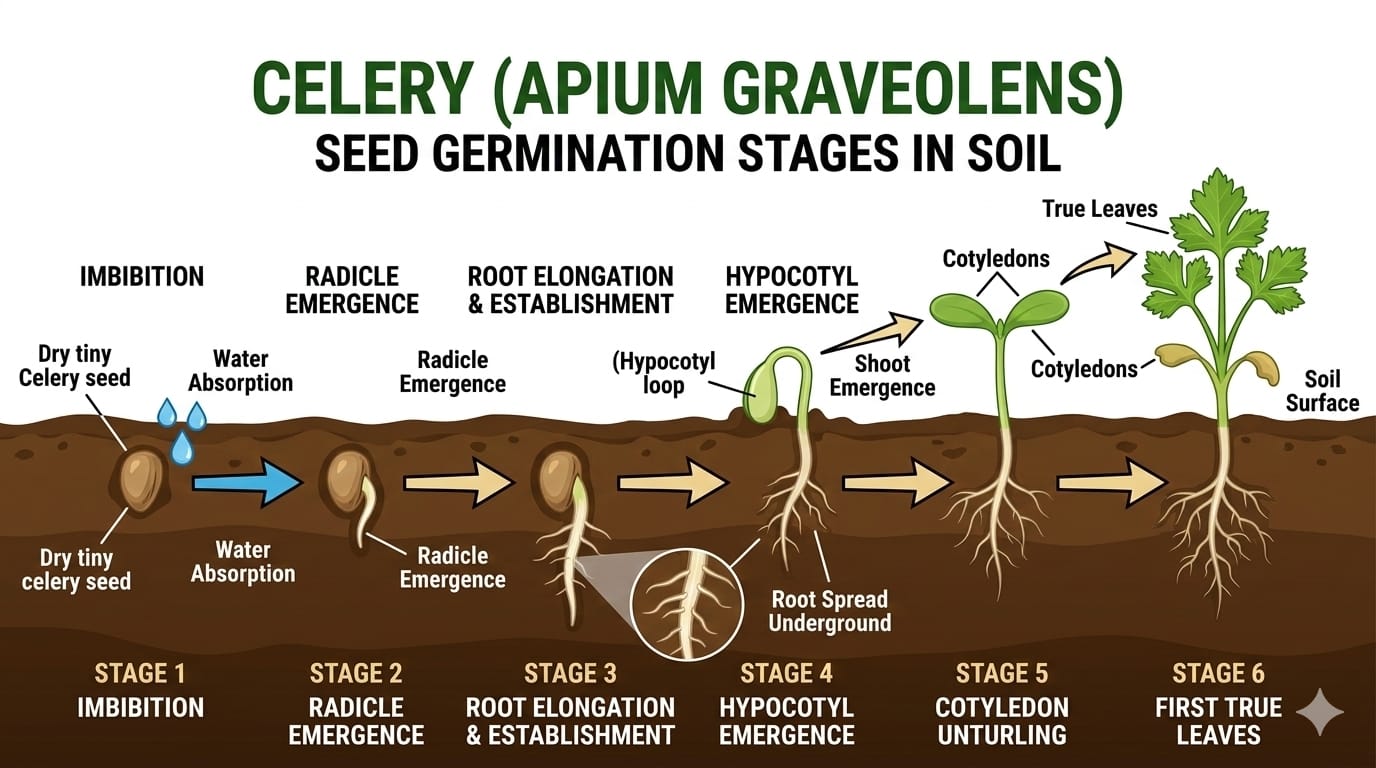
Seed Treatment Pro-Tip: Soak tiny celery seeds in lukewarm water for 24–48 hours before sowing to overcome natural germination inhibitors and speed up nursery growth.
1. Site Selection and Climate
Celery thrives in fertile, well-drained loamy soils (pH 6–7). Full sun or partial shade with good air circulation reduces stress and prevents fungal diseases.
Optimal temperature: 16–24°C. High heat causes bitterness and bolting.
2. Land Preparation
Plow, harrow, and level. Incorporate compost or organic manure. Raised beds improve drainage and encourage straight, uniform stalks.
3. Seed Sowing and Nursery Management
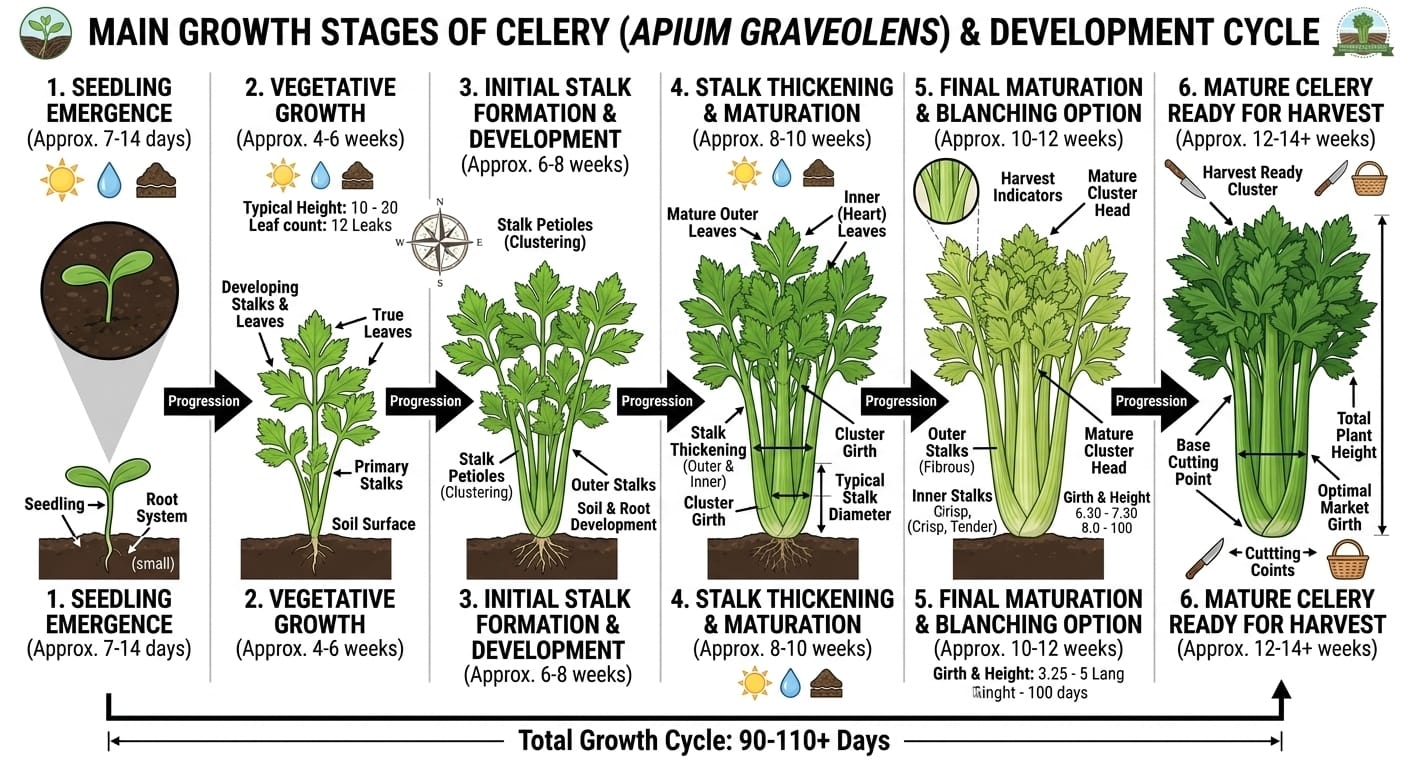
Sow seeds 0.3–0.5 cm deep in trays or seedbeds. Keep soil moist and 20°C. Germination may take 2–3 weeks.
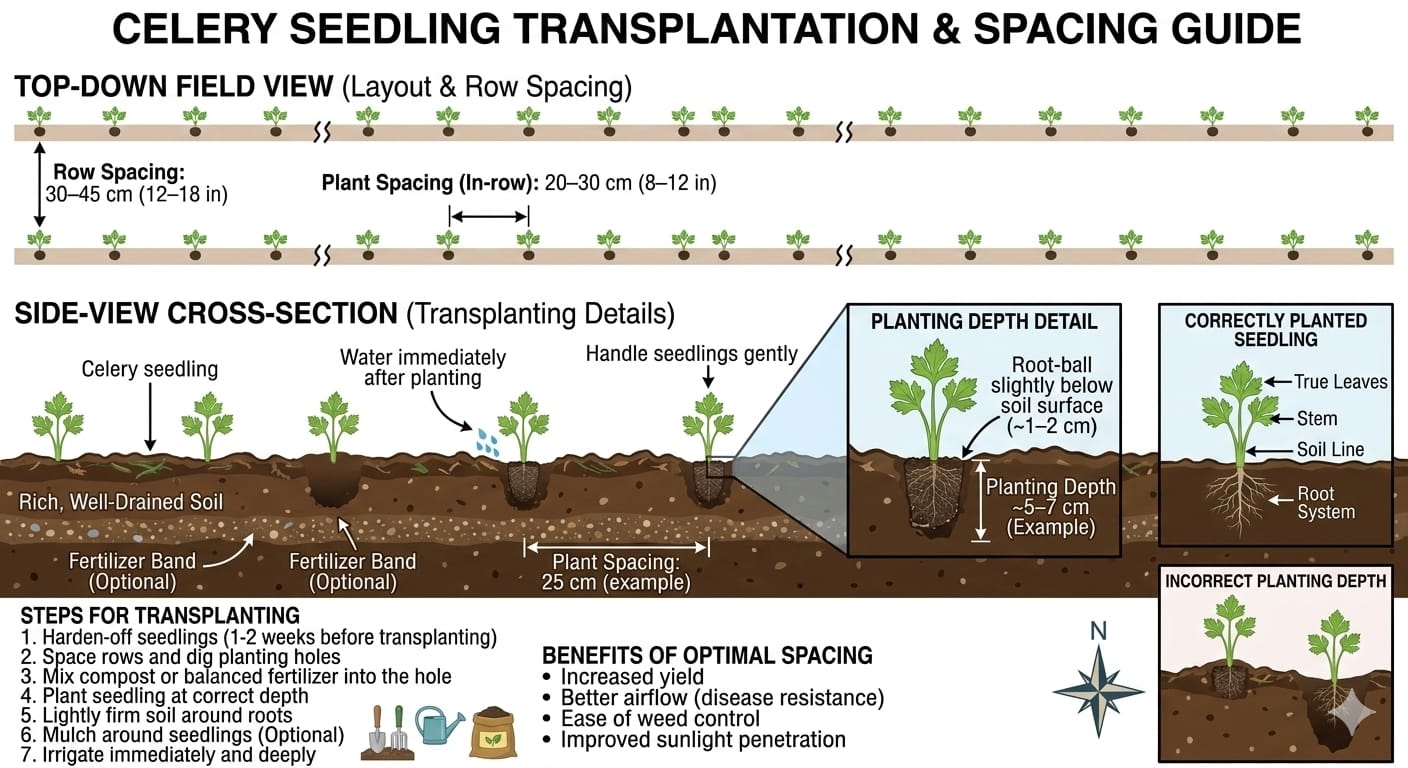
Transplant seedlings with 6–8 true leaves after 8–10 weeks. Healthy nursery seedlings reduce transplant shock.
4. Transplanting and Spacing
Plant seedlings 30–40 cm apart, rows 40–50 cm. Mulch to conserve moisture.
Blanching for Quality: Wrap stalks with brown paper or mound soil 2 weeks before harvest. Keeps out sunlight, reduces chlorophyll, makes stalks paler, sweeter, and less bitter.
5. Irrigation and Fertilization
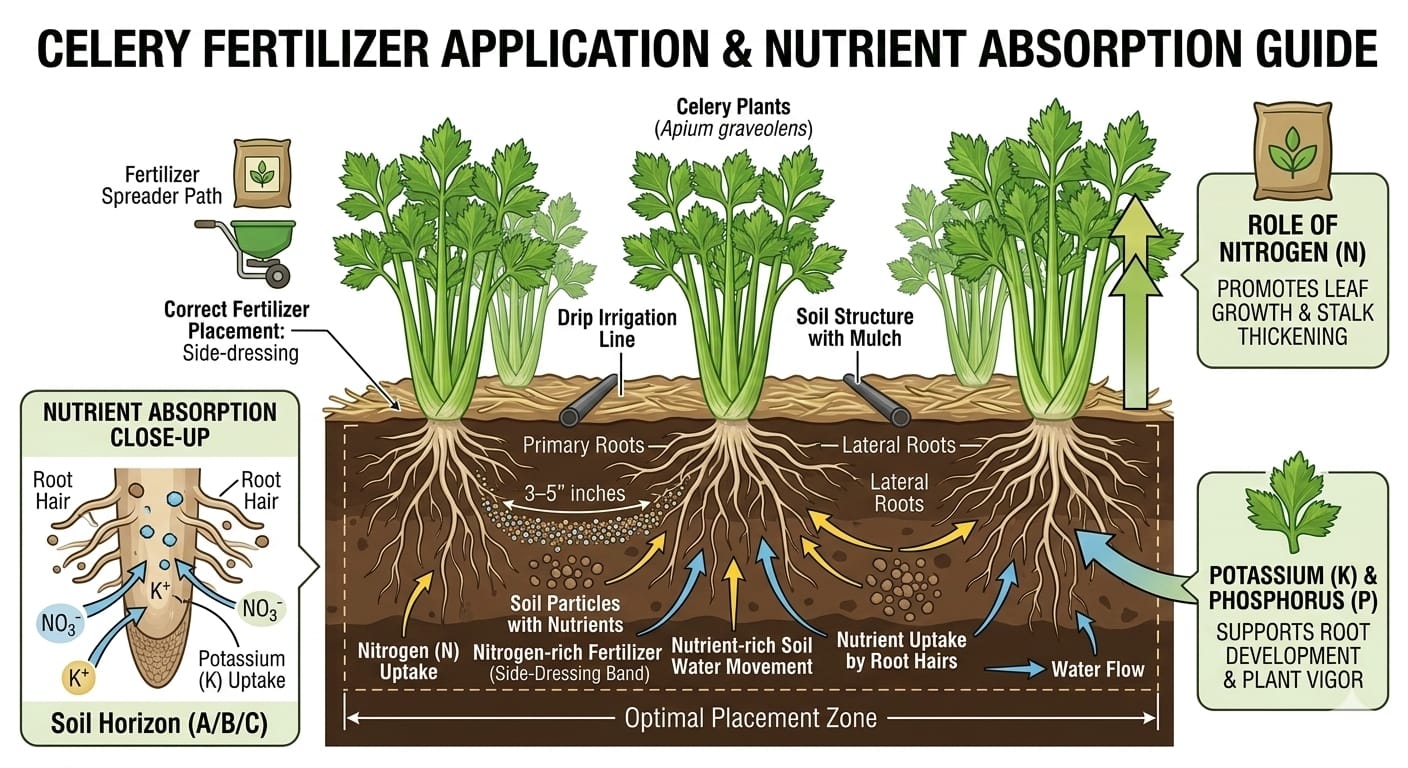
Hungry & Thirsty Rule: Celery has shallow roots and needs consistent moisture. Soil should feel like a "wrung-out sponge." Even one dry period can make stalks stringy and bitter.
Side-dress with high-nitrogen liquid fertilizer every 2 weeks. Potassium and magnesium improve firmness. Foliar calcium sprays help prevent Blackheart (center stalks turning black due to calcium deficiency).
6. Pest and Disease Management
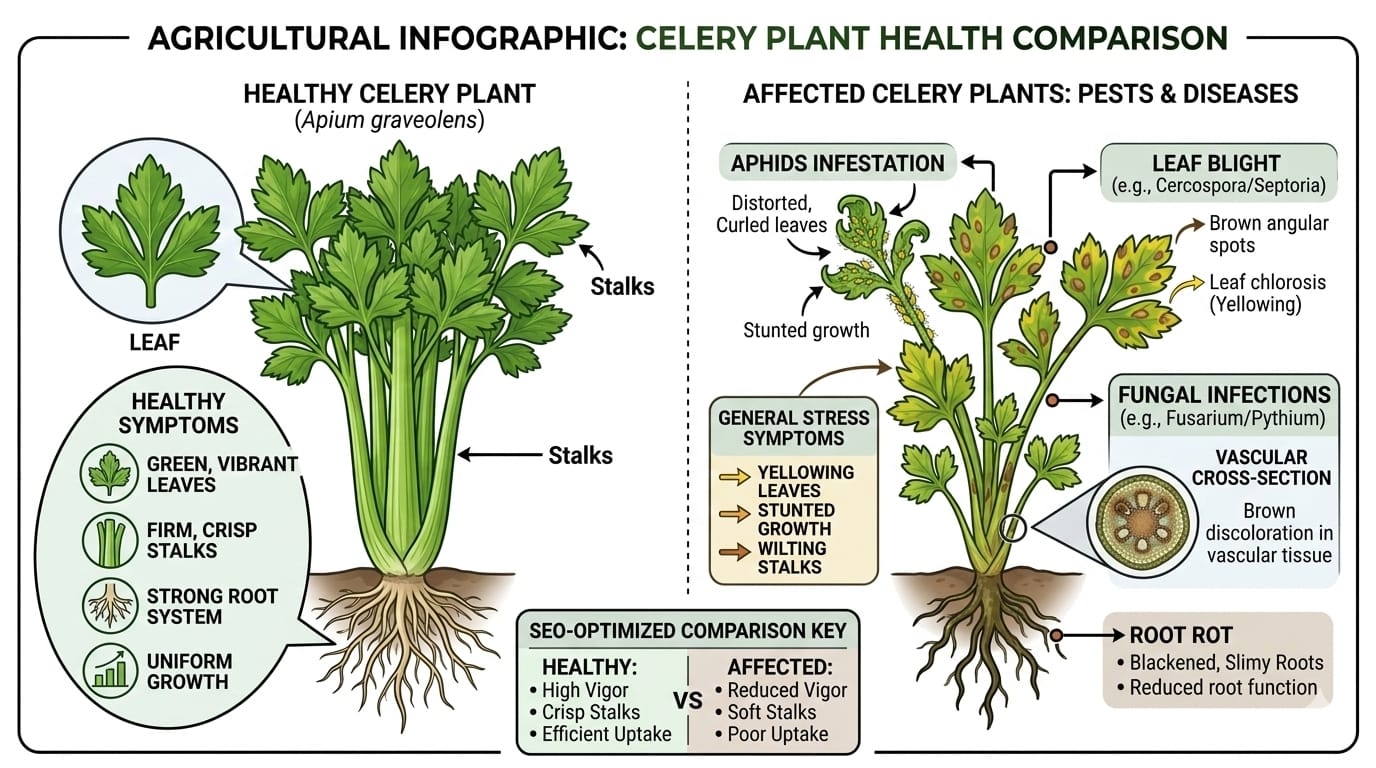
Common pests: aphids, leaf miners, armyworms. Diseases: early blight, late blight, powdery mildew. Use IPM, crop rotation, proper spacing, and remove infected plants early.
7. Harvesting
Harvest 90–120 days after transplanting depending on variety. Cut outer stalks or entire plants carefully to maintain crispness. Frequent harvesting ensures continuous quality.
8. Post-Harvest Handling and Storage
Wash, trim, and package to prevent mechanical injury. Store at 0–5°C with 95% humidity for 2–3 weeks. Blanching and freezing extend shelf life for processing into juices, soups, or dehydrated sticks.
9. Uses of Celery
- Fresh: salads, juices, garnishes
- Cooking: soups, stews, stir-fries
- Processing: dehydrated flakes, frozen sticks, powders
- Medicinal: antioxidants, supports digestion, reduces blood pressure, promotes heart health
Celery Images Gallery