Introduction to Cucumber Cultivation
Cucumber is a fast-growing, vining vegetable consumed fresh, in salads, pickles, or processed products. Rich in water, vitamins K & C, and antioxidants.
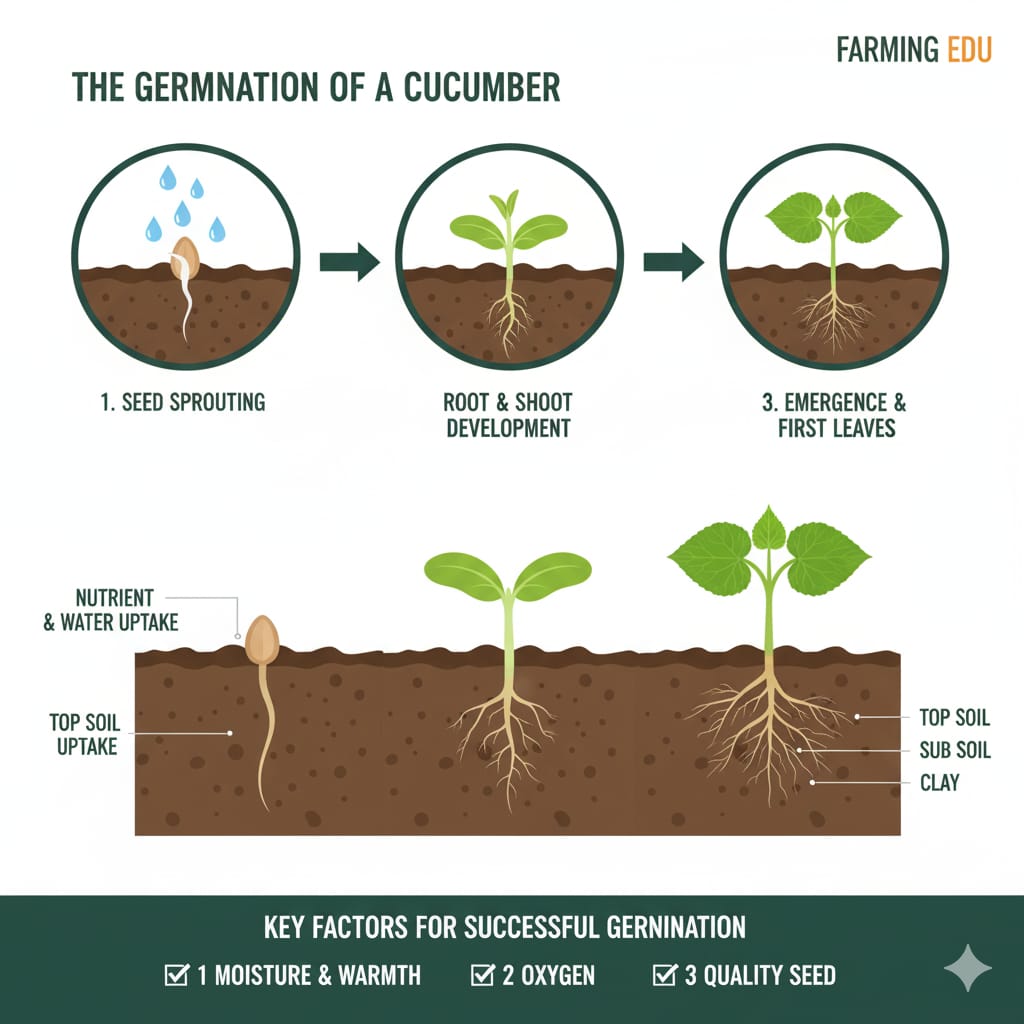
High-turnover crop ideal for commercial and home growers. Proper practices ensure straight, uniform fruits with high market value.
1. Site Selection and Climate
Well-drained, fertile soils with pH 6–7. Sandy loam is ideal. Temperature 18–30°C. Full sun and good air circulation reduce fungal diseases. Avoid waterlogged areas.
2. Land Preparation
Plow, harrow, remove debris. Incorporate compost or well-rotted manure. Raised beds improve drainage and root development.
3. Seed Sowing and Trellising
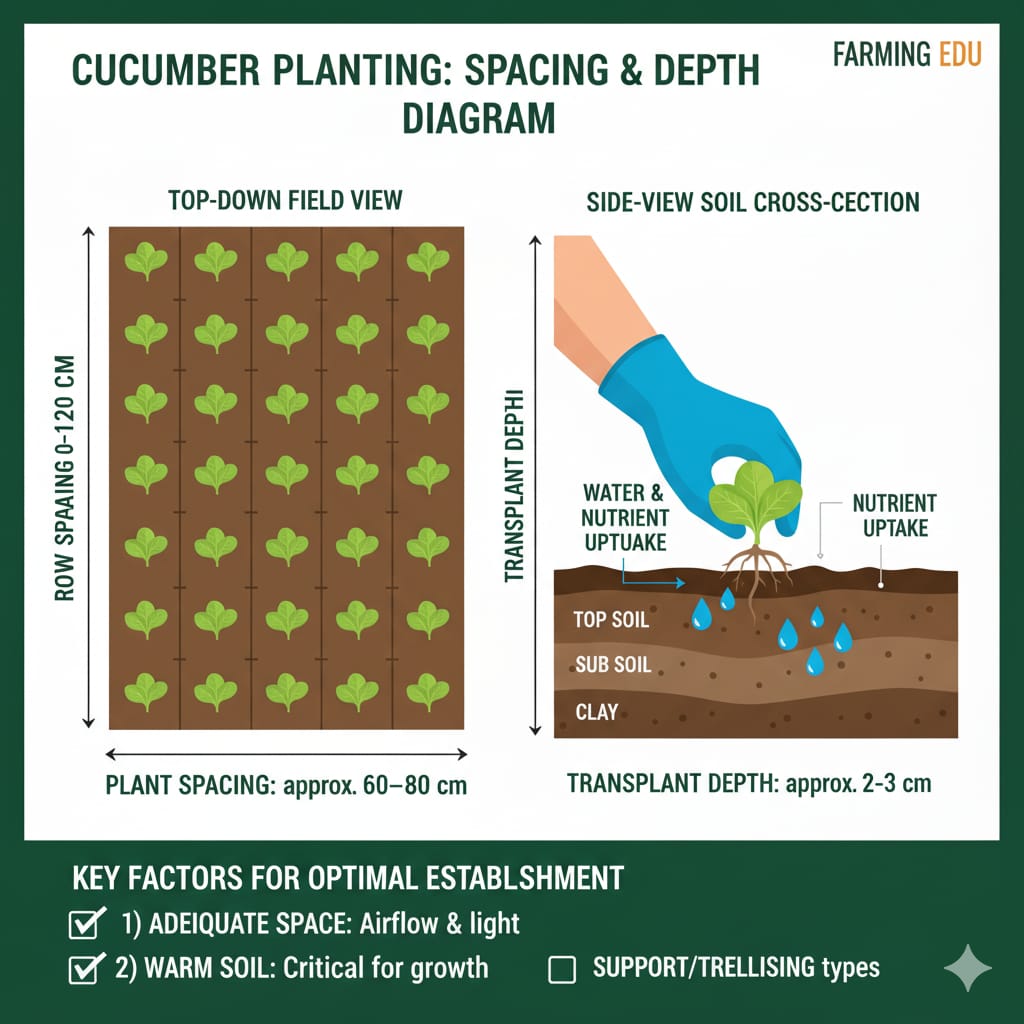
Sow seeds directly or in nurseries. Transplant seedlings at 3–4 weeks with 2–3 true leaves.
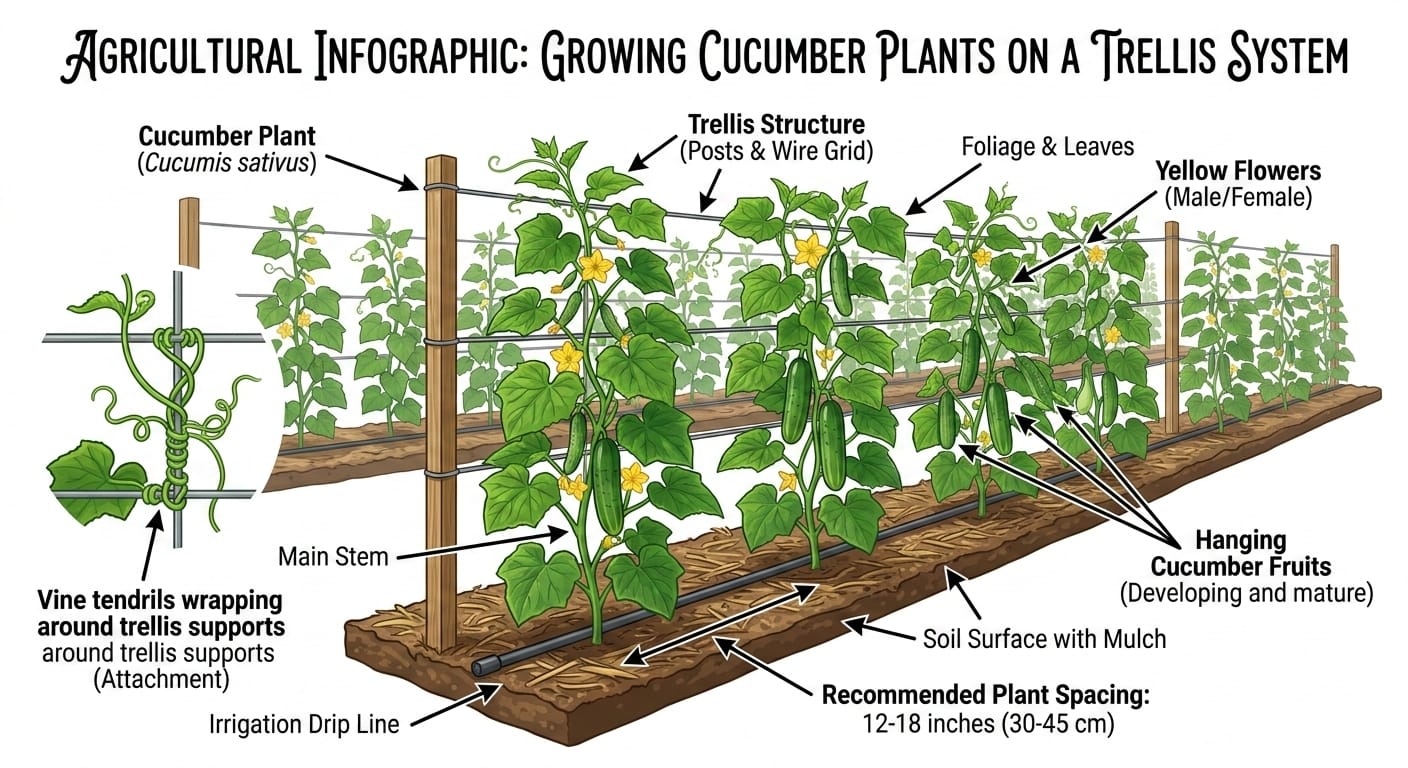
Trellising Tip: Support vining cucumbers to keep fruits off the ground, reduce soil-borne pests, and improve air circulation, which lowers the risk of Downy Mildew.
4. Irrigation and Water Management
Maintain consistent moisture to prevent bitterness caused by cucurbitacin. Drip irrigation is preferred. Mulching is essential to conserve moisture and reduce stress.
5. Fertilization and Nutrient Management
Balanced nutrients: nitrogen for leaves, phosphorus for roots & flowers, potassium for fruit quality. Micronutrients: magnesium, zinc, boron for healthy fruit set. Split nitrogen applications to prevent excessive vegetative growth.
6. Pest and Disease Management
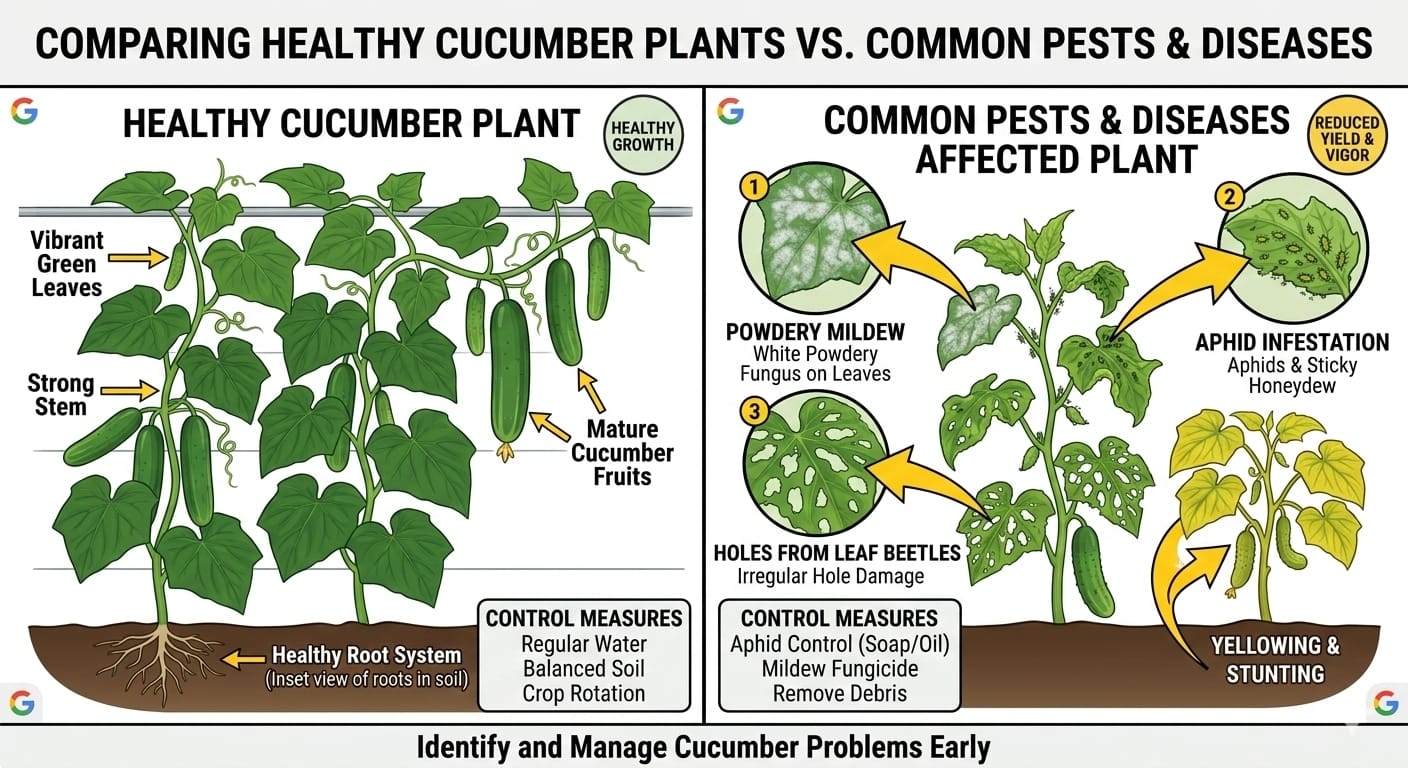
Major pests: cucumber beetles, aphids, whiteflies, spider mites. Fungal diseases: powdery mildew, downy mildew, fusarium wilt. Use IPM and resistant varieties.
Pest Identification Guide
- Cucumber Beetle: Yellow-green beetles with black stripes or spots. Larvae feed on roots; adults damage leaves and flowers. Early detection is critical.
- Powdery Mildew: White, powdery growth on leaves. Reduces photosynthesis and fruit yield. Ensure airflow, remove infected leaves, and apply fungicides if necessary.
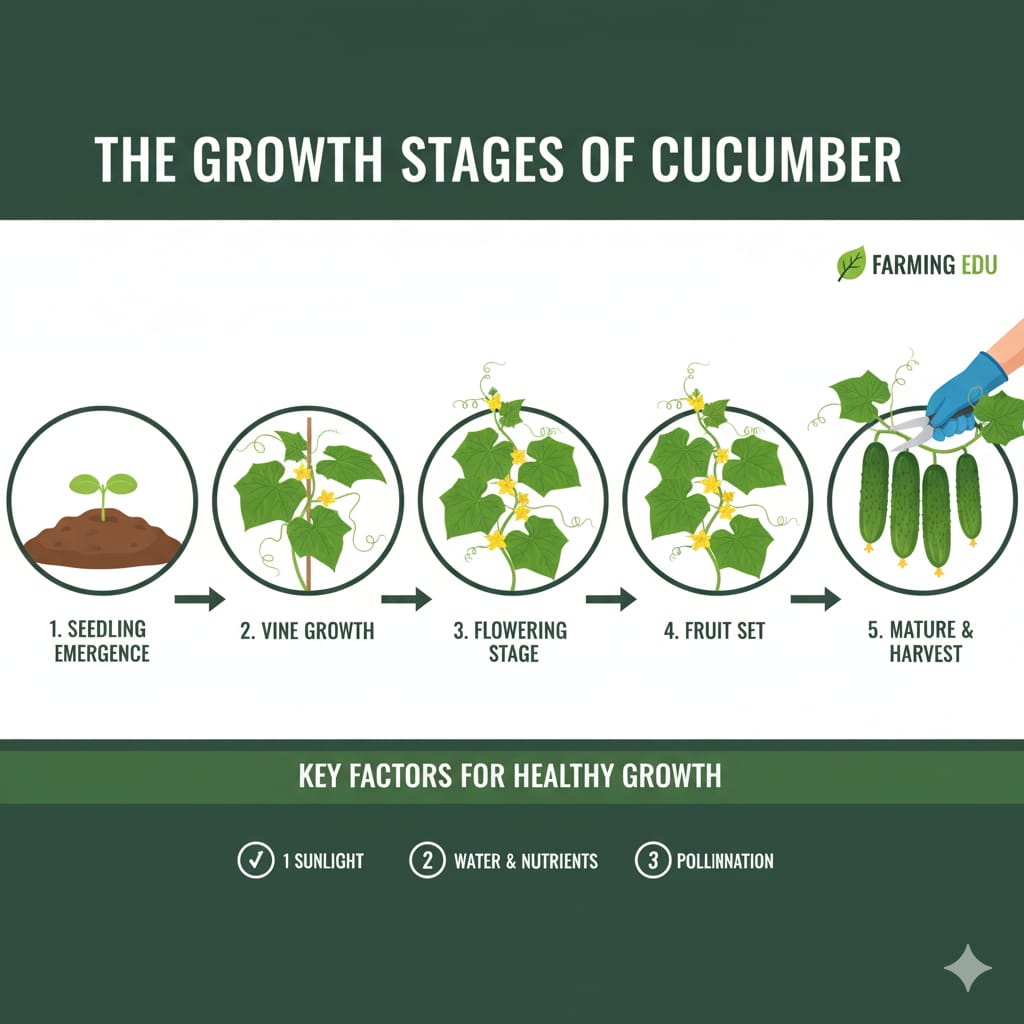
7. Flowering and Fruit Development
Flowers appear 4–6 weeks after sowing. Both male and female flowers are produced; pollination is essential for fruit set. Without pollination, fruits remain small ("nubbins").
Greenhouse growers may use parthenocarpic varieties or manually transfer pollen with a brush to ensure fruit set.
8. Harvesting
Harvest when fruits reach marketable size (50–70 days). Early morning picking reduces stress. Handle gently to avoid bruising. Sort and grade fruits.
9. Post-Harvest Handling and Storage
Wash gently, pack in ventilated containers. Store at 10–12°C with 85–90% humidity for 7–14 days. Processing into pickles adds value and reduces losses.
10. Uses of Cucumber
- Fresh consumption: salads, sandwiches, smoothies
- Processing: pickles, sauces, preserved products
- Medicinal: hydration, vitamins, antioxidants
- Commercial sale: fresh markets, supermarkets, processing industries
Cucumber Images Gallery