Introduction
Eggplant, also known as Brinjal, is a heat-loving Solanaceous crop widely grown for its edible fruits. Rich in fiber, vitamins, and antioxidants, eggplants are versatile in cooking and valuable commercially.
Maintaining consistent growth conditions, proper pest and disease management, and strategic crop rotation ensures high-quality harvests.
1. Site Selection & Climate
Eggplants thrive in well-drained loamy soils with pH 5.5–7.0. Full sun is essential for flowering and fruiting.
Heat Seeker Tip: Soil temperatures below 15°C drastically slow growth. Wait for warm weather or use black plastic mulch to pre-warm the soil.
2. Land Preparation
Deep plowing, harrowing, debris removal, compost incorporation, and basal fertilization are crucial. Raised beds improve drainage and reduce waterlogging.
3. Seed Sowing & Nursery
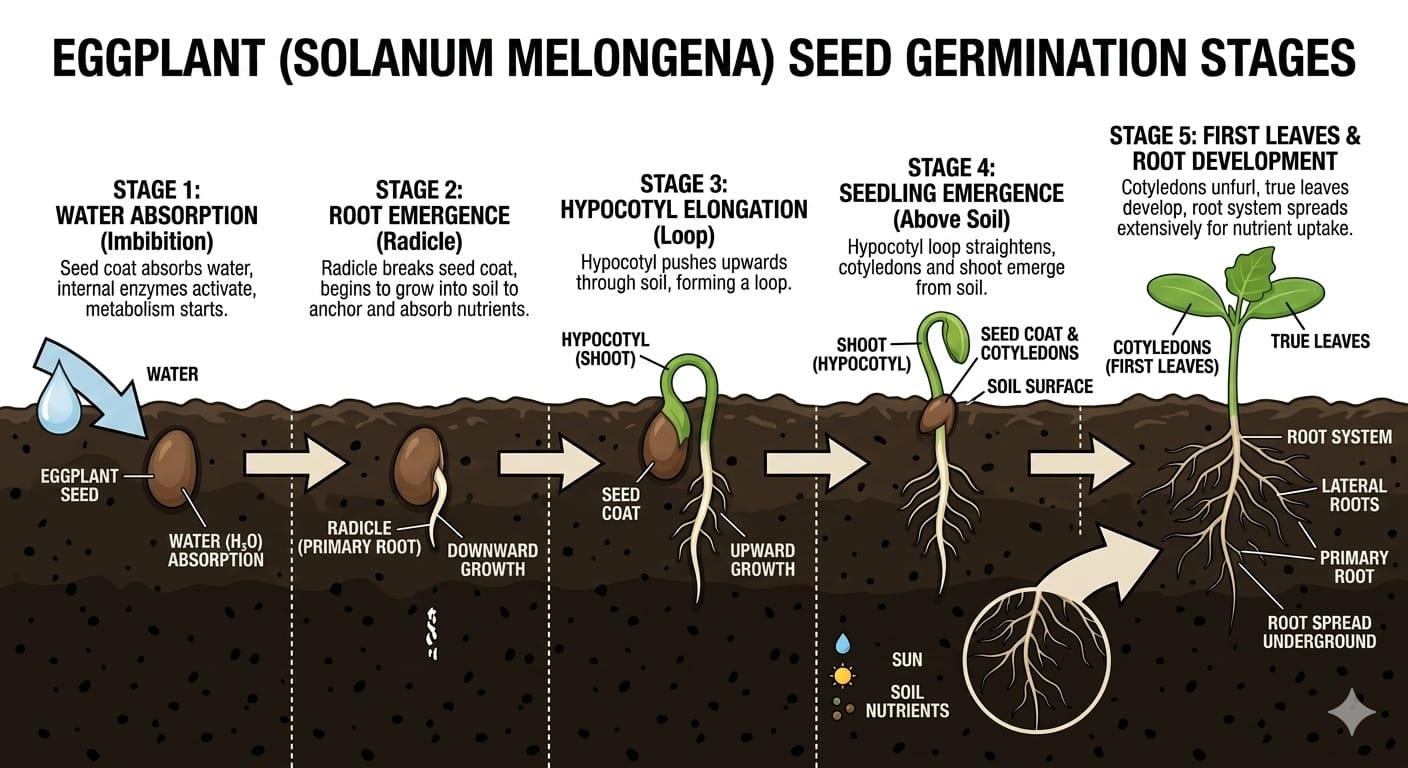
Sow seeds 0.5–1 cm deep in seedbeds or trays. Maintain soil at ~25°C for 7–14 days germination. Transplant seedlings with 4–6 true leaves (10–15 cm tall).
4. Transplanting & Spacing
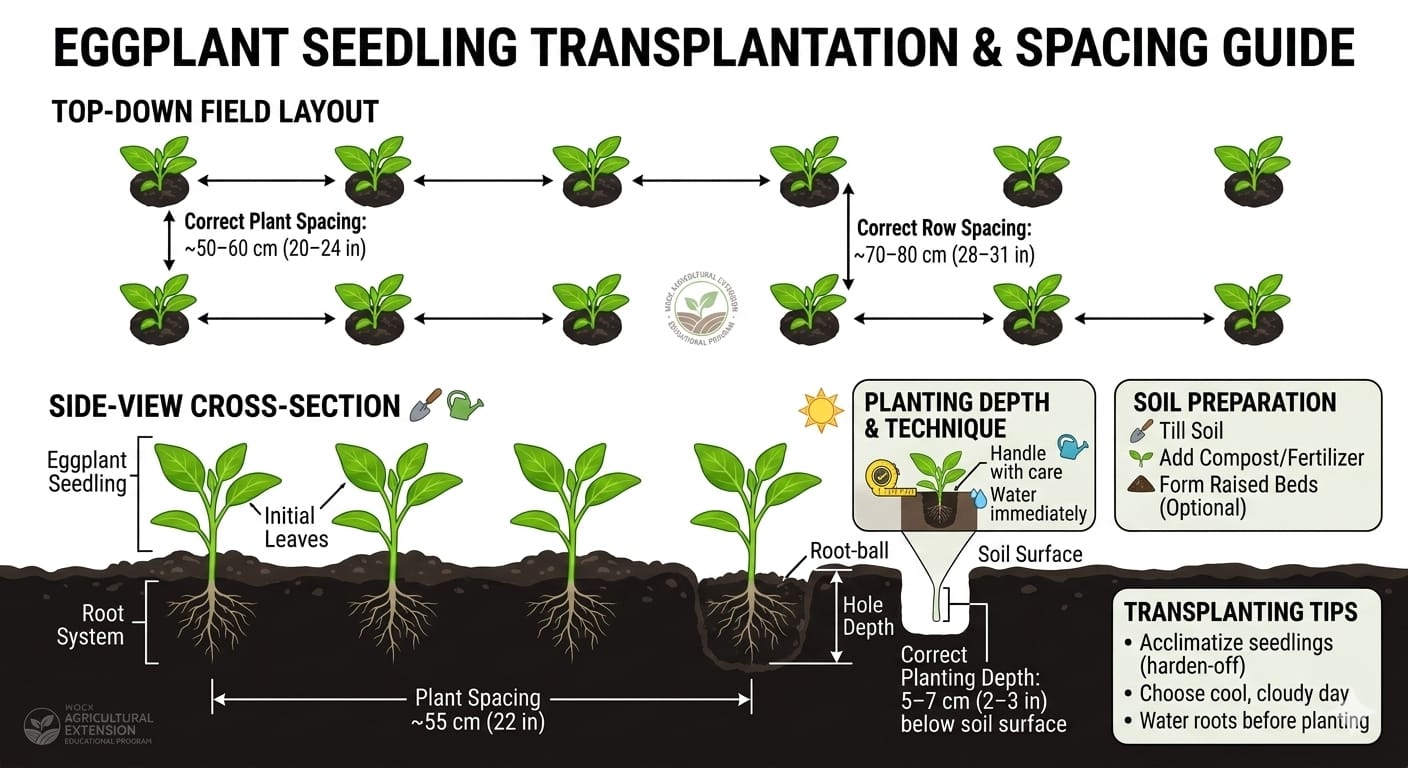
Space seedlings 50 cm apart with 60–75 cm between rows. Mulch to conserve moisture. Stake taller varieties to prevent lodging.
5. Irrigation & Fertilization
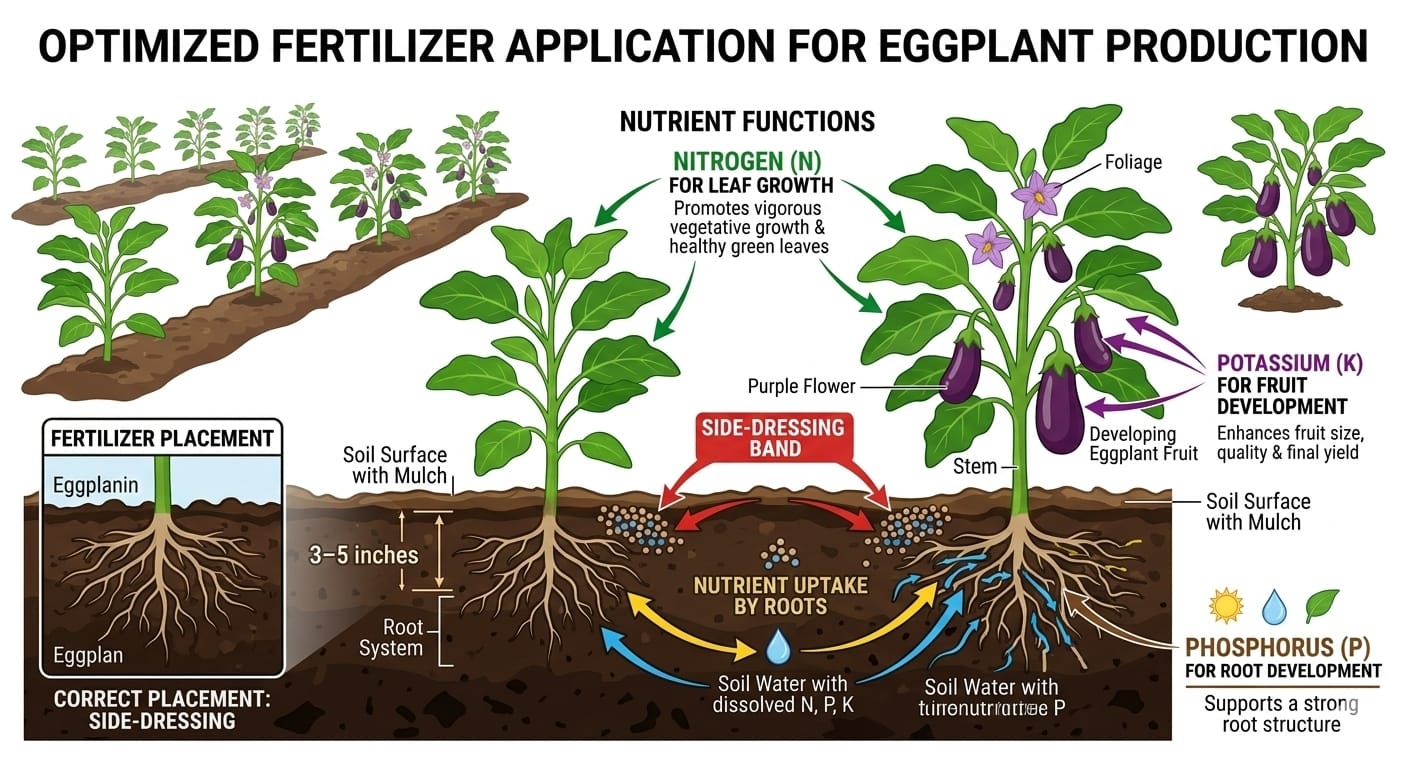
Consistent soil moisture is critical. Drip irrigation is recommended. Side-dress with nitrogen; phosphorus & potassium for fruiting. Calcium and magnesium sprays prevent blossom end rot.
6. Pest & Disease Management
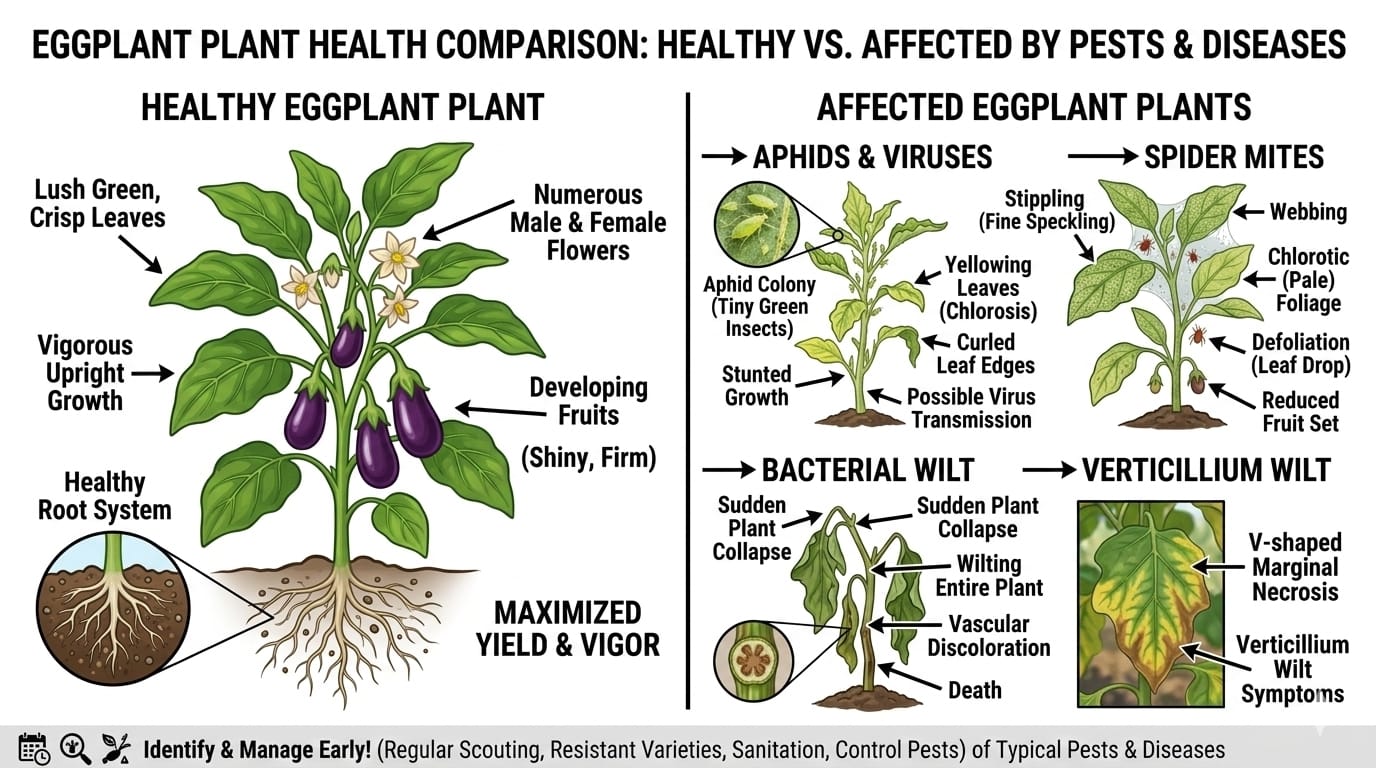
- Flea Beetle: Causes shotholes on leaves. Use row covers for seedlings or interplant Marigolds as deterrent.
- Verticillium & Bacterial Wilt: Drooping and plant death. Follow the Four-Year Rule: avoid planting Solanaceous crops on the same soil for 4 years.
- Other pests: Aphids, whiteflies, spider mites.
- Other diseases: Powdery mildew. Use resistant varieties and proper spacing.
7. Harvesting
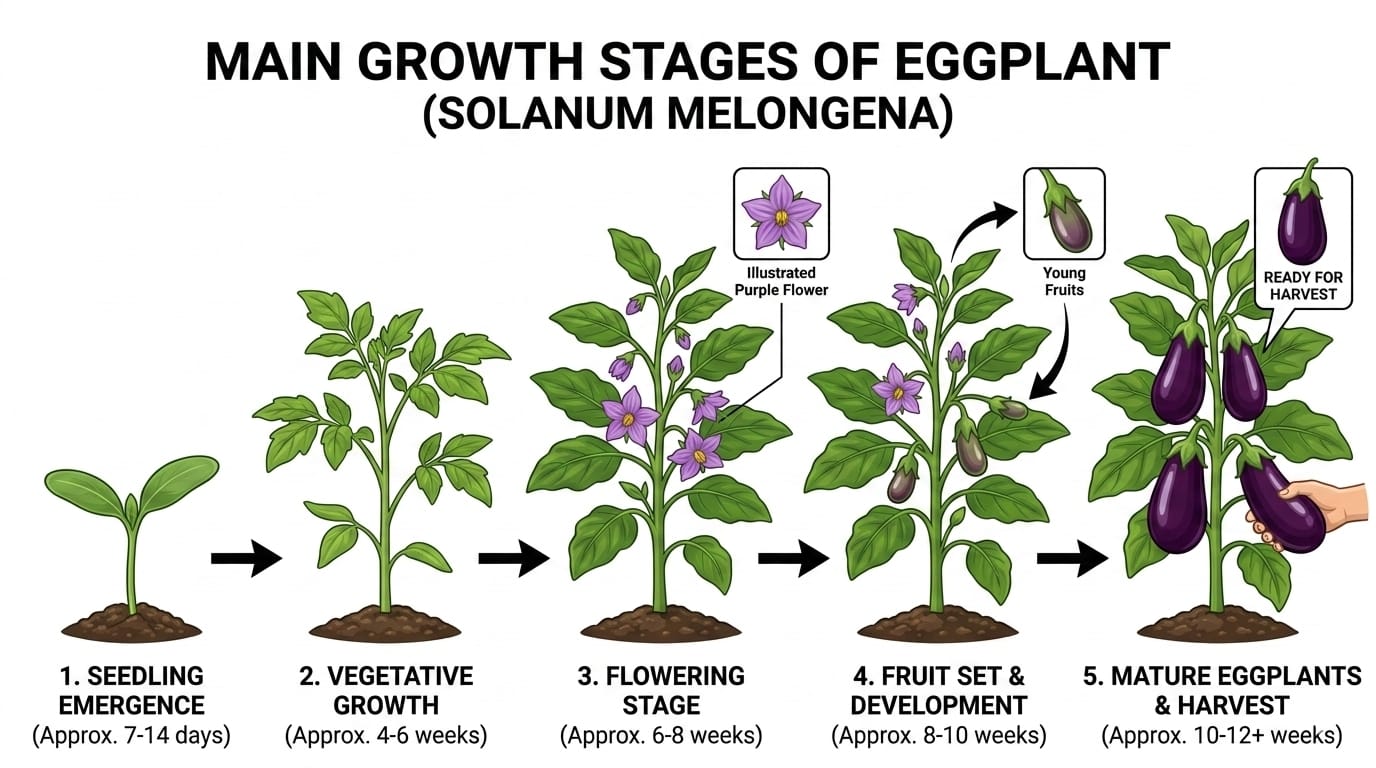
Eggplants mature 70–85 days after transplanting. Harvest Gloss Tip: Pick fruits while skin is shiny. Dull skin indicates overripeness and bitter flesh.
8. Post-Harvest Handling
Handle fruits carefully to avoid bruising. Wash, cool, and store at 10–12°C with 85–90% humidity for 1–2 weeks.
9. Solanaceous Crop Rotation
| Year | Crop | Purpose |
|---|---|---|
| Year 1 | Eggplant | Main cash crop |
| Year 2 | Legumes (beans, peas) | Soil nitrogen fixation |
| Year 3 | Leafy greens (spinach, kale) | High biomass, low Solanaceous pest risk |
| Year 4 | Cereal/Root crops (maize, carrot) | Break pest & disease cycles |
| Year 5 | Return to Eggplant or other Solanaceous crops | Repeat cycle |
Eggplant Images Gallery