Introduction to Kale
Kale is a nutrient-dense leafy vegetable rich in vitamins A, C, K, calcium, iron, and antioxidants. Cultivated year-round in cooler climates, kale is used fresh in salads, soups, smoothies, or processed into powders and supplements.
Varieties include Curly Kale, Lacinato (Dinosaur) Kale, and Russian Kale. Select varieties based on climate, pest resistance, and market demand.
1. Site Selection and Climate
Kale prefers fertile, well-drained loamy soil with pH 6–7. Cool temperatures (15–24°C) enhance leaf flavor; heat can induce bolting. Full sun is preferred, partial shade can reduce heat stress.
Frost Sweetener Effect: Light frosts convert starches into sugars, producing sweeter, less bitter leaves. Harvesting after the first frost maximizes fresh market quality.
2. Land Preparation
Plow and harrow to create a fine seedbed. Incorporate organic compost/manure. Raised beds improve drainage and root growth. Apply basal fertilizers based on soil testing.
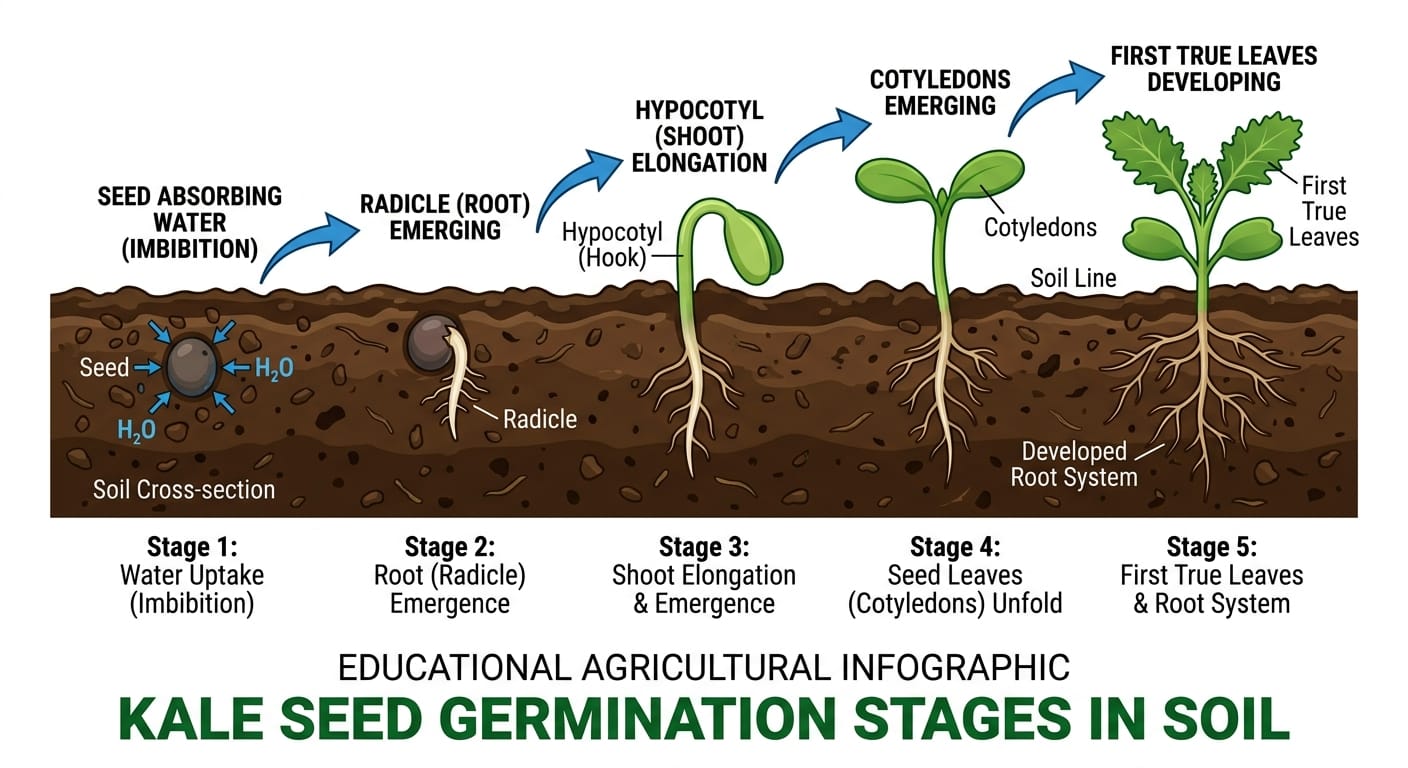
3. Seed Sowing & Seedling Production
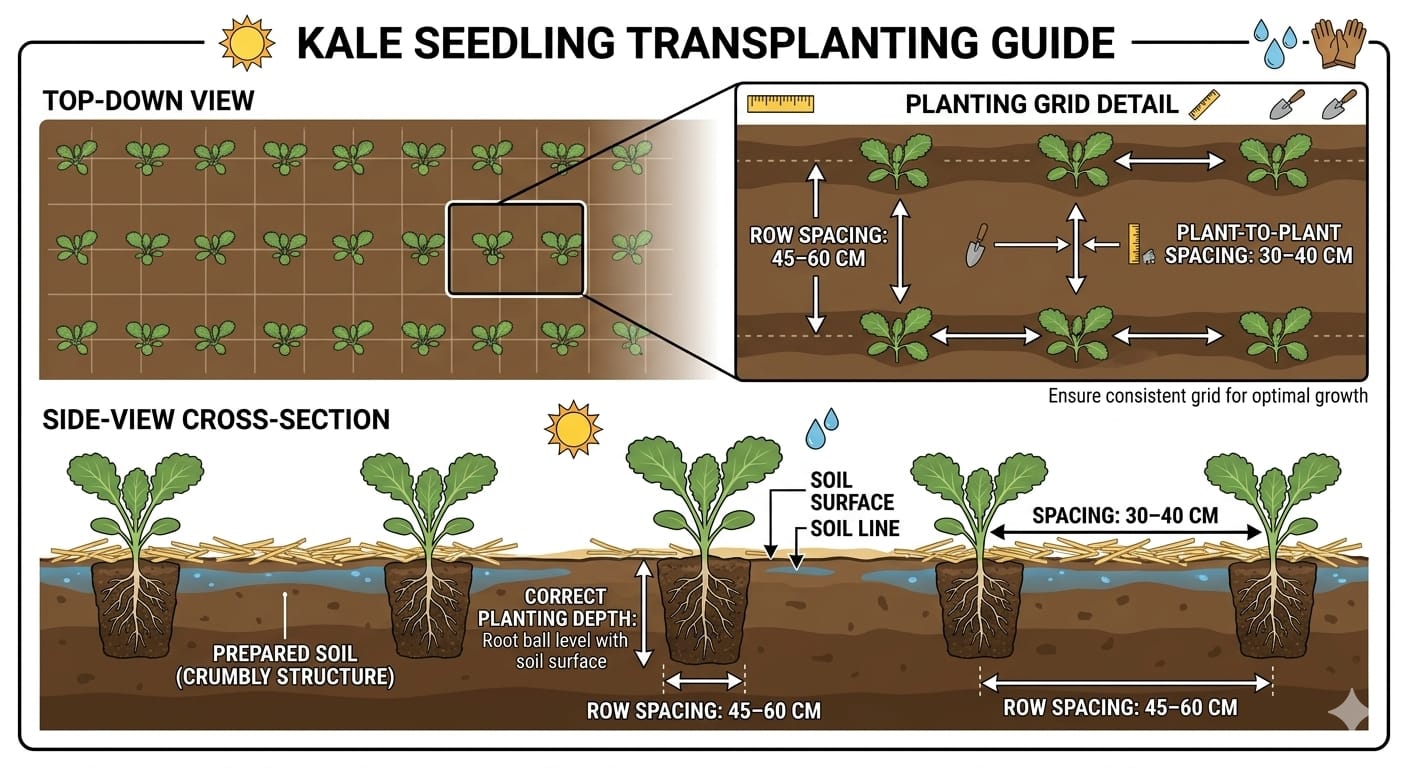
Sow seeds thinly in nursery trays/beds. Keep medium moist. Transplant seedlings at 4–6 weeks with 30–45 cm spacing between plants and 45–60 cm between rows. Handle carefully to avoid transplant shock.
4. Irrigation & Water Management
Maintain consistent soil moisture. Drip irrigation is ideal; minimize overhead watering. Mulch to conserve moisture and suppress weeds.
5. Fertilization & Nutrient Management
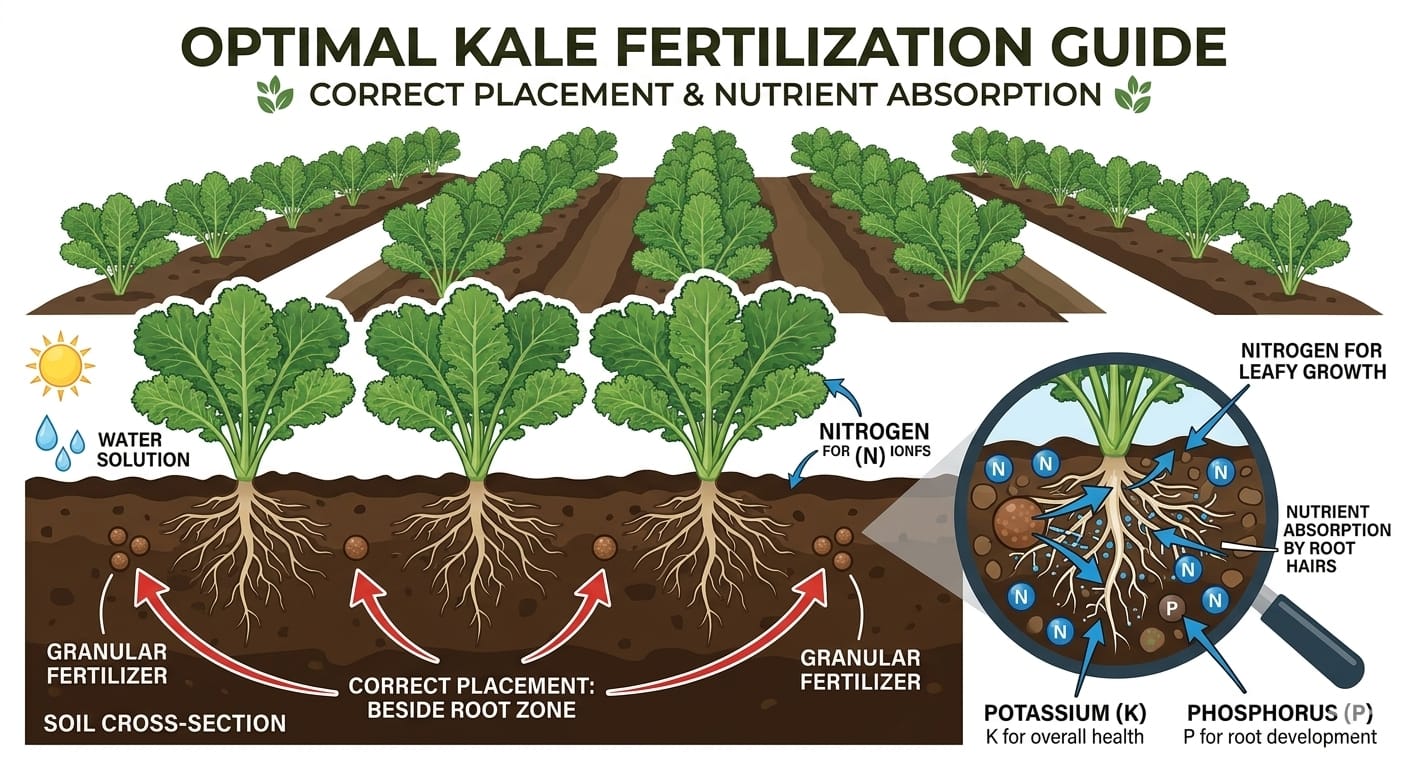
Kale is a heavy feeder: nitrogen for leaves, phosphorus for roots, potassium for stress tolerance. Micronutrients like calcium, magnesium, boron improve leaf quality. Split nitrogen applications encourage continuous growth.
6. Pest & Disease Management
- Aphids, cabbage worms, flea beetles, whiteflies. Use IPM: natural predators, row covers, minimal chemicals.
- Fungal diseases: downy mildew, powdery mildew, black rot. Prevent with resistant varieties, spacing, crop rotation, fungicides.
- Clubroot Prevention: Avoid planting any Brassicas (Kale, Cabbage, Broccoli) in infected soil for 7–10 years due to long-lived spores.
- Regular monitoring and early intervention reduce leaf loss and improve yield.
7. Leaf Harvesting
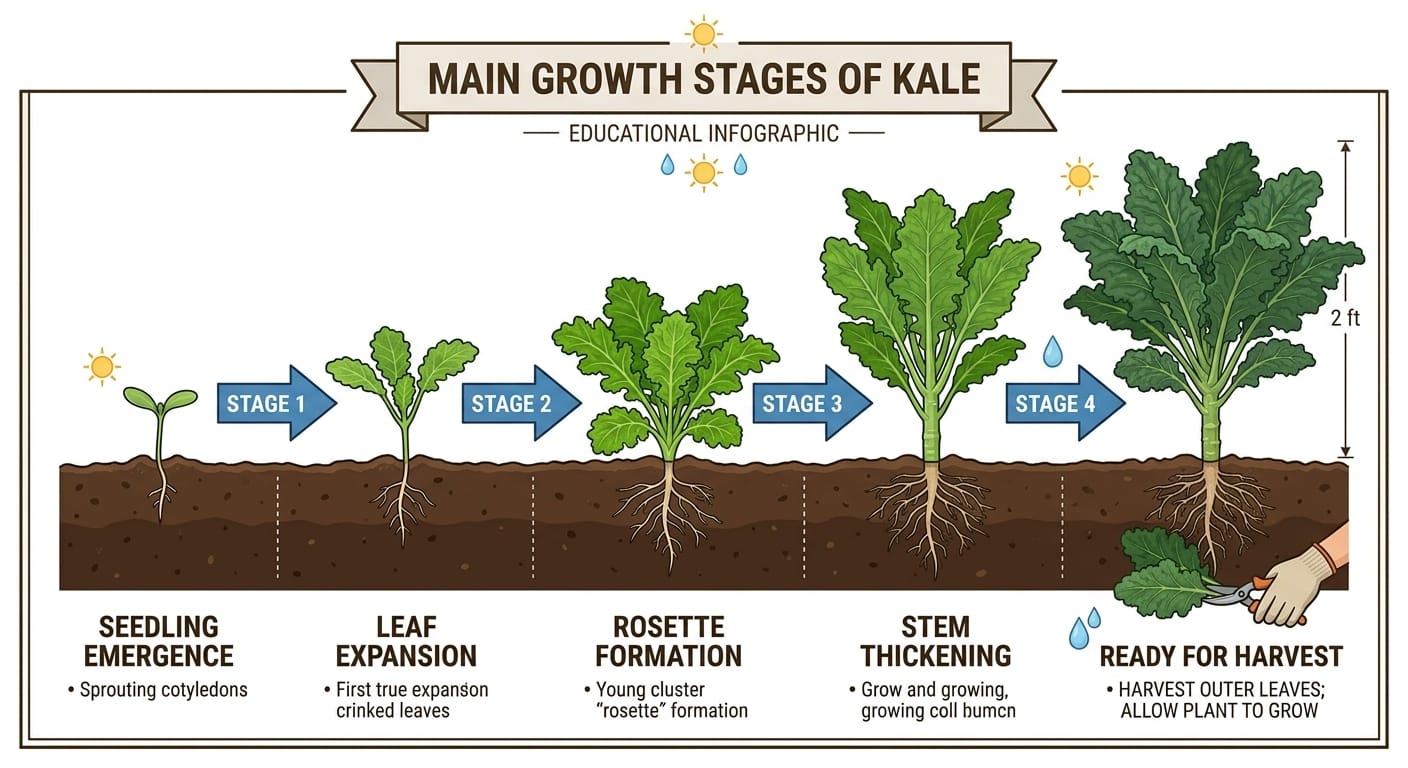
Harvest outer leaves 15–25 cm long, leaving inner leaves to continue growing. Canopy Rule: Always harvest from the bottom up; never touch the apical bud to allow continuous growth and produce a “kale tree.” Avoid removing more than one-third at a time.
8. Post-Harvest Handling & Storage
Handle leaves gently to prevent bruising. Store at 0–5°C and 90–95% humidity for up to 2 weeks. Processing into frozen products or powders reduces losses and adds value.
9. Crop Rotation for Kale
| Year | Crop | Purpose |
|---|---|---|
| Year 1 | Kale | Main leafy crop |
| Year 2 | Legumes (beans, peas) | Fix soil nitrogen |
| Year 3 | Root/Cereal crops (carrot, maize) | Break pest & disease cycles |
| Year 4 | Other leafy greens (spinach, lettuce) | High biomass, low pest risk |
| Year 5 | Return to Kale | Repeat cycle |
Kale Images Gallery