Introduction to Tomato Cultivation
Tomatoes are globally consumed vegetables valued for their nutritional content, culinary versatility, and market demand. High in vitamins, minerals, and lycopene, tomatoes improve heart health and reduce cancer risk. Profitable tomato farming depends on selecting the right variety, maintaining optimal soil fertility, water management, and disease control.
They can be grown in open fields, greenhouses, or tunnels, producing multiple harvests annually in suitable climates. Following proper agronomic practices ensures high yields, quality fruits, and increased profitability.
1. Site Selection and Climate Requirements
- Optimal temperature: 20–28°C; avoid frost and extreme heat above 35°C.
- Full sun for 6–8 hours/day.
- Well-drained loam or sandy loam soil, pH 6–6.8; avoid heavy clay.
- Raised beds or tunnels recommended in areas with heavy rainfall or erratic temperatures.
- Good air circulation reduces fungal diseases and improves fruit quality.
2. Land Preparation
- Clear previous crop residues and weeds.
- Deep plowing (20–25 cm) and harrowing to create a fine seedbed.
- Incorporate compost or farmyard manure; apply basal NPK based on soil test.
- Raised beds or ridges improve drainage and reduce soil-borne diseases.
- Mulch with straw or black plastic for moisture retention and weed control.
3. Seed Selection and Nursery Management
- Choose high-quality, certified, disease-resistant seeds.
- Hybrid varieties ensure uniform fruits and higher yields.
- Sow seeds in sterilized nursery beds 6–8 weeks before transplanting.
- Maintain proper watering, sunlight, and ventilation; avoid waterlogging.
- Seedlings ready for transplanting: 20–25 cm tall, 4–6 true leaves.
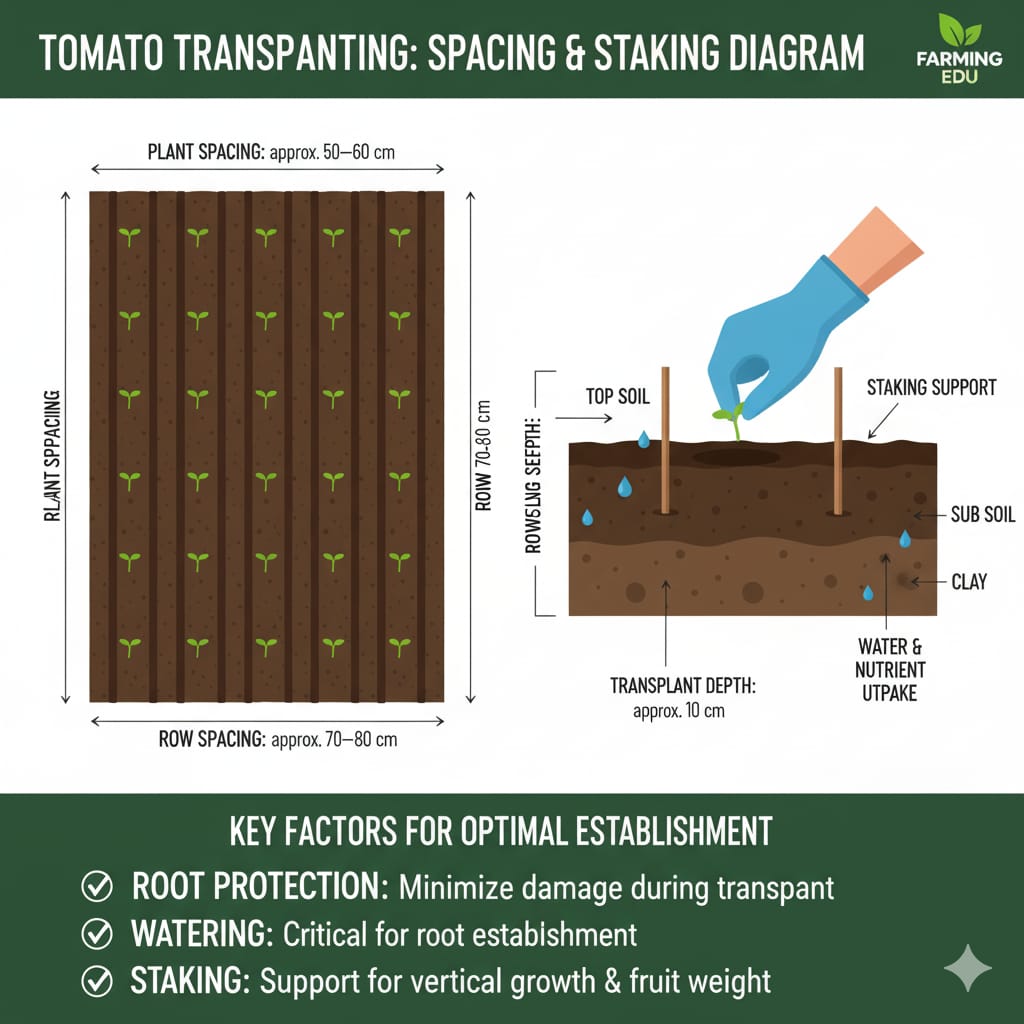
4. Transplanting and Spacing
- Transplant during cooler hours (morning/late afternoon).
- Water seedlings before transplanting to reduce shock.
- Spacing: 50–60 cm between rows, 40–50 cm between plants.
- Stake or cage indeterminate varieties for better fruit support.
- Shading in hot climates improves establishment and growth.
5. Irrigation and Water Management
- Maintain consistent soil moisture; irregular watering leads to blossom end rot and cracking.
- Drip irrigation is recommended for water efficiency and fertigation.
- Mulching conserves moisture and prevents weeds.
- Avoid overhead irrigation to reduce fungal disease incidence.
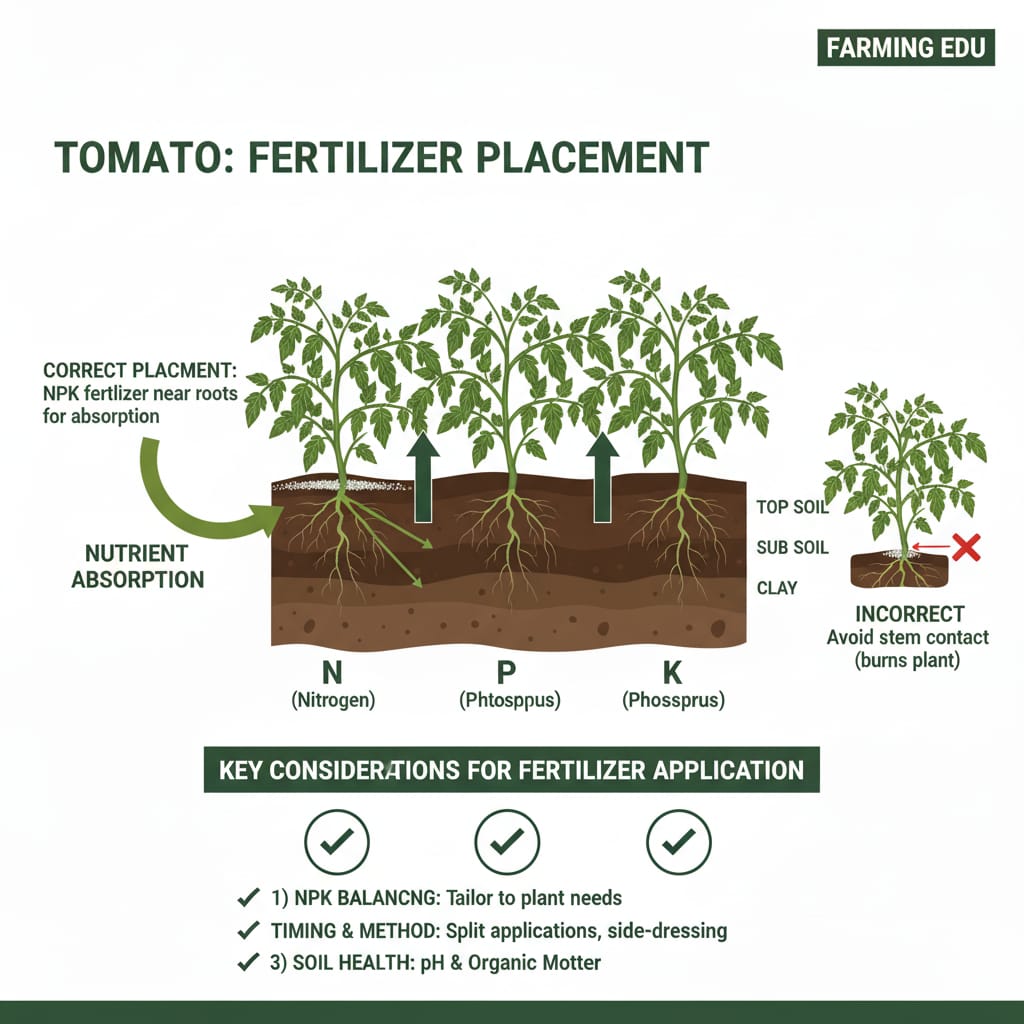
6. Fertilization and Nutrient Management
- Apply organic manure, compost, and balanced NPK fertilizer.
- Side-dress nitrogen during flowering/fruit set; avoid excess vegetative growth.
- Micronutrients: calcium, magnesium, zinc prevent physiological disorders.
- Regular soil testing ensures optimal nutrient application.
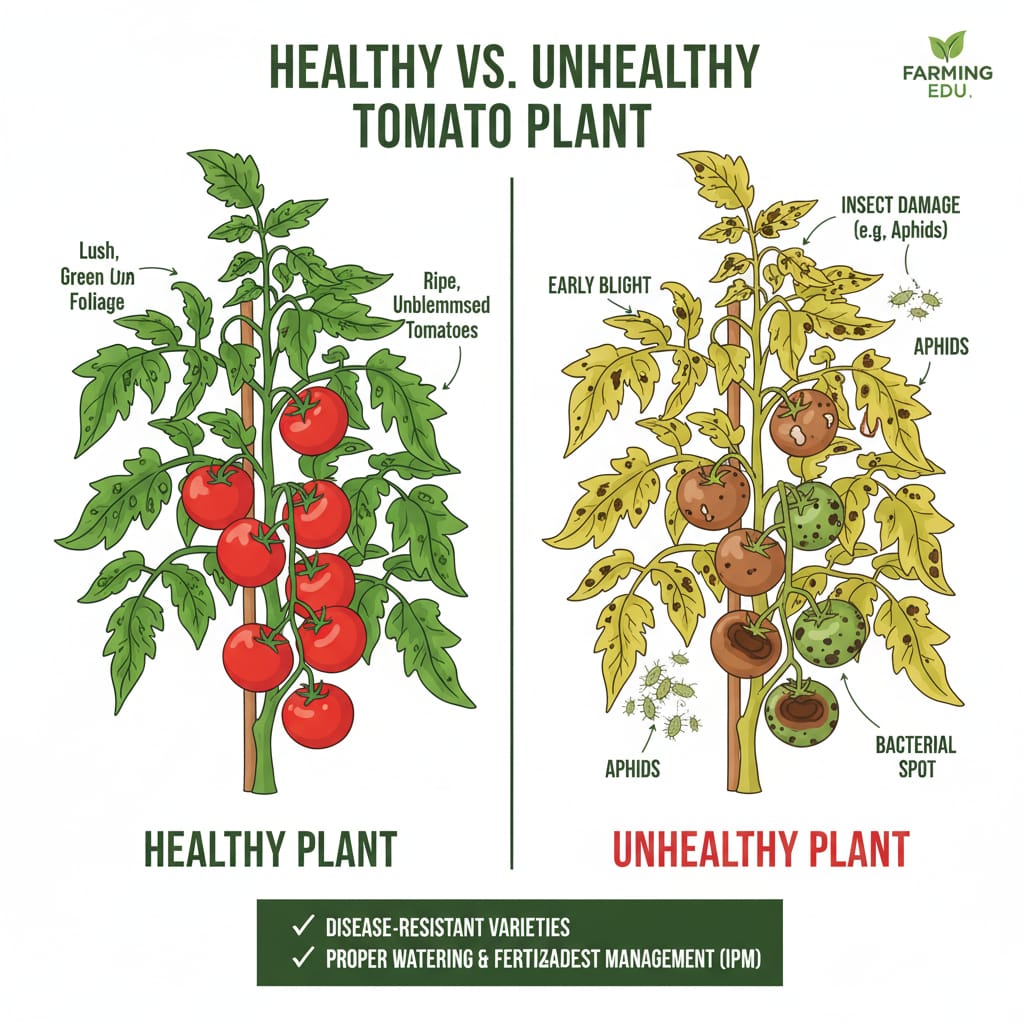
7. Pest and Disease Management
- Common pests: aphids, whiteflies, tomato fruit borer, spider mites.
- Common diseases: early blight, late blight, fusarium wilt, bacterial spot.
- Integrated Pest Management (IPM) and resistant varieties reduce chemical use.
- Crop rotation, sanitation, and biological controls help maintain healthy plants.
| Pest/Disease | Symptoms | Control/Management |
|---|---|---|
| Aphids | Small green, yellow, or black insects on leaves; sticky honeydew; leaf curling | Use neem oil or insecticidal soap; encourage ladybugs and natural predators; remove heavily infested leaves |
| Whiteflies | Tiny white insects under leaves; yellowing leaves; reduced growth | Yellow sticky traps; neem oil sprays; promote natural predators like parasitic wasps |
| Tomato Fruit Borer (Helicoverpa armigera) | Holes in fruits; larvae inside fruit; frass around entry points | Handpick infested fruits; Bacillus thuringiensis sprays; pheromone traps; crop rotation |
| Spider Mites | Yellow speckles on leaves; webbing; leaf drop in severe cases | Regular water sprays to remove mites; miticides; encourage predatory mites |
| Early Blight (Alternaria solani) | Dark concentric spots on older leaves; leaf yellowing; reduced yield | Remove infected leaves; rotate crops; apply copper-based fungicides |
| Late Blight (Phytophthora infestans) | Water-soaked lesions on leaves and fruits; rapid crop decay in wet conditions | Use resistant varieties; fungicides like mancozeb; avoid overhead irrigation; remove affected plants |
| Fusarium Wilt | Yellowing of lower leaves; wilting; brown streaks in stem vascular tissue | Plant resistant varieties; solarize soil; avoid planting in infected fields for 2–3 seasons |
| Bacterial Spot | Small water-soaked spots on leaves and fruits; leaf drop; reduced fruit quality | Use certified seeds; copper-based sprays; remove infected debris; maintain good air circulation |
8. Harvesting Tomatoes
- Harvest fruits when they reach desired maturity: mature green, turning, or fully red.
- Handpick carefully to avoid bruising; frequent harvesting every 2–3 days ensures continuous production.
- Use ventilated crates for transportation.
- Proper timing affects fruit quality, shelf-life, and market value.
9. Post-Harvest Handling and Storage
- Sort and grade fruits by size, color, and quality; remove damaged or diseased fruits.
- Store at 12–15°C with 85–90% relative humidity.
- Avoid temperatures below 10°C to prevent chilling injury.
- Processing: wash, blanch, or transport in controlled conditions to market.
10. Tomato Varieties and Their Uses
| Variety | Yield | Best Use |
|---|---|---|
| Roma | High | Processing, sauces, paste |
| Cherry | Medium | Fresh consumption, salads |
| Beefsteak | High | Fresh market, sandwiches |
11. Uses of Tomatoes
- Fresh consumption: salads, sandwiches, juices.
- Processing: sauces, ketchup, soups, canned tomatoes.
- Medicinal: rich in lycopene and antioxidants for heart health and cancer prevention.
- Commercial sale: local markets, supermarkets, and export.
Tomatoes Videos & Images